What Is Shadow IT? A 2026 Guide for IT, Finance & Security Teams
Hemant Wadhwani · June 30, 2026
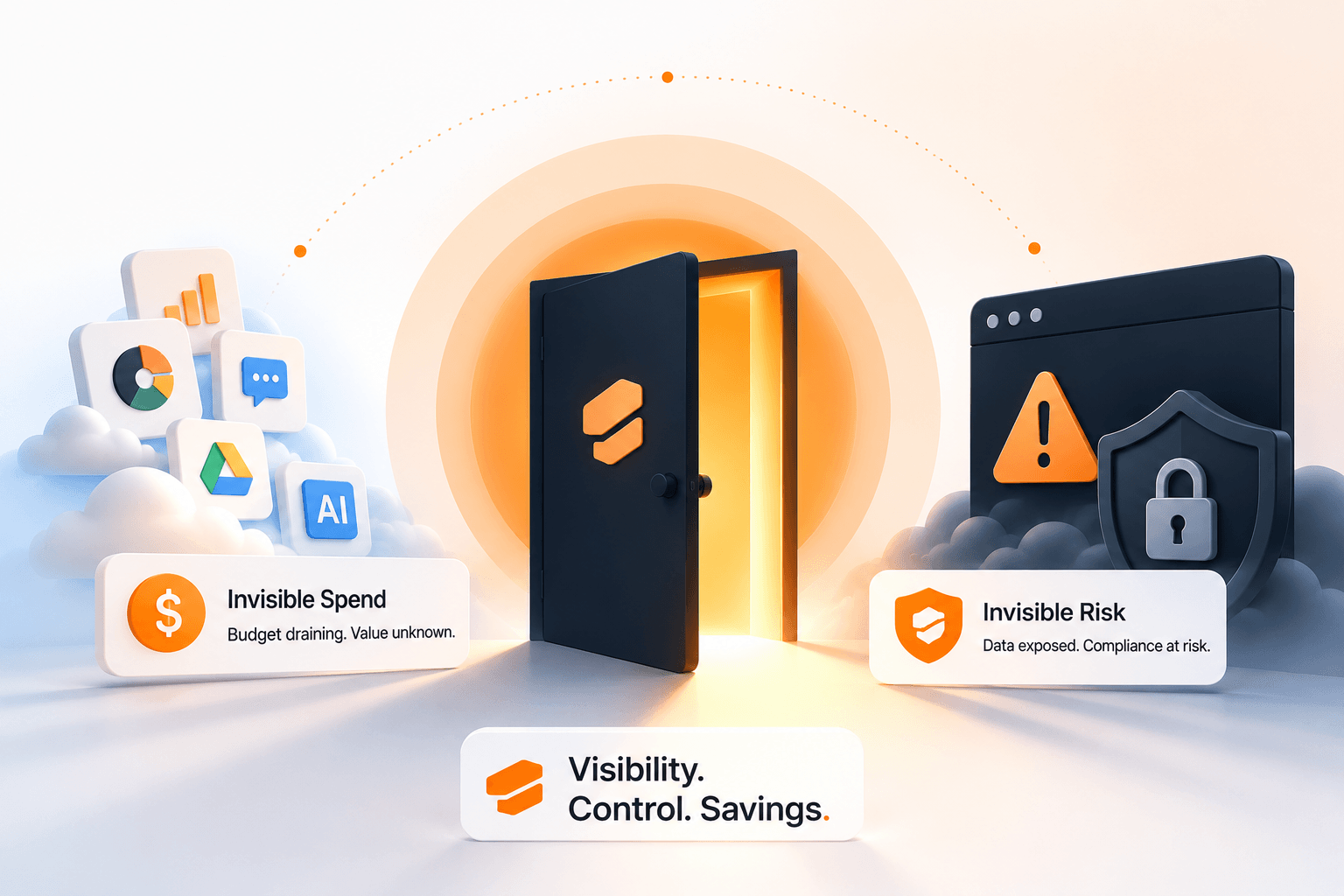
Shadow IT sounds like a security buzzword, but it's really a budget problem hiding behind a security one. Here's what shadow IT actually is in 2026, why it keeps happening, and how IT, finance, and security teams can get ahead of it without blocking the tools people need.
What Is Shadow IT? A 2026 Guide for IT, Finance & Security Teams
Quick answer: Shadow IT is any software, cloud service, or device used inside a company without the knowledge or approval of the IT department. It matters because it creates two problems at once — invisible spending that drains the budget, and invisible risk that exposes company data. In 2026, the fastest-growing form of it is shadow AI: LLM subscriptions and AI tools adopted outside any oversight.
If you have ever discovered a tool on a company card that nobody in IT recognized, you have already met shadow IT. This guide explains what it really is, why even disciplined teams can't seem to stamp it out, what it actually costs, and how to get ahead of it without becoming the department that says no to everything.
The real definition (it's broader than people think)
Most people picture shadow IT as a rogue employee secretly installing something they shouldn't. That image is mostly wrong. The reality is far more ordinary and far more widespread.
Shadow IT is any technology — a SaaS app, a cloud service, a browser extension, an AI tool, even a personal device used for work — that operates outside IT's visibility and governance. The key word is visibility, not malice. The marketer who signs up for a design tool to hit a deadline isn't being subversive. The engineer expensing an API to ship faster isn't going rogue. They're solving a problem with the nearest available tool. The "shadow" part is simply that IT never found out.
This is why the problem is structural rather than disciplinary. When the easiest way to get a tool is to swipe a card and sign up in ninety seconds, people will do exactly that — and a slice of every company's stack ends up living in the shadows.
Why shadow IT keeps happening
Shadow IT persists for reasons that have nothing to do with bad employees and everything to do with how modern software works.
Software buying got democratized. Product-led growth means any individual can adopt enterprise-grade tools without ever talking to IT or procurement. The friction that used to funnel purchases through a central gatekeeper is gone.
Speed beats process. When a team is under pressure to deliver, the official software-request process — forms, approvals, waiting — feels like an obstacle. The unofficial route is faster, so people take it. They're optimizing for their deadline, not for IT's inventory.
The official catalog can't keep up. No IT department can pre-approve every tool for every use case across every team. Gaps are inevitable, and people fill them on their own.
It compounds silently. Each individual instance feels harmless. One tool here, one subscription there. But across a whole company over a couple of years, those individual choices add up to a substantial, untracked layer of the tech stack.
Gartner has projected that by 2027, 75% of employees will acquire, modify, or create technology outside IT's visibility — up from 41% in 2022. That isn't a trend that's slowing down. It's accelerating, driven largely by AI.
The two costs of shadow IT
Shadow IT is usually discussed as a security issue. That's only half the story — and arguably the less expensive half.
Cost 1: The budget problem
Every shadow tool is spend that nobody is managing. Because it's invisible, it doesn't get reviewed, right-sized, or cancelled when it's no longer needed. It just renews. In some organizations, shadow IT accounts for 30–40% of total software spend — a staggering share of the budget flowing to tools that finance can't see and IT can't govern.
The waste shows up in predictable ways. Duplicate tools, because three teams each bought their own version of the same thing. Forgotten subscriptions, because the person who bought it left. Over-provisioned seats, because nobody's tracking usage. None of it is visible until someone goes looking — which, without a system, nobody does.
Cost 2: The security and compliance problem
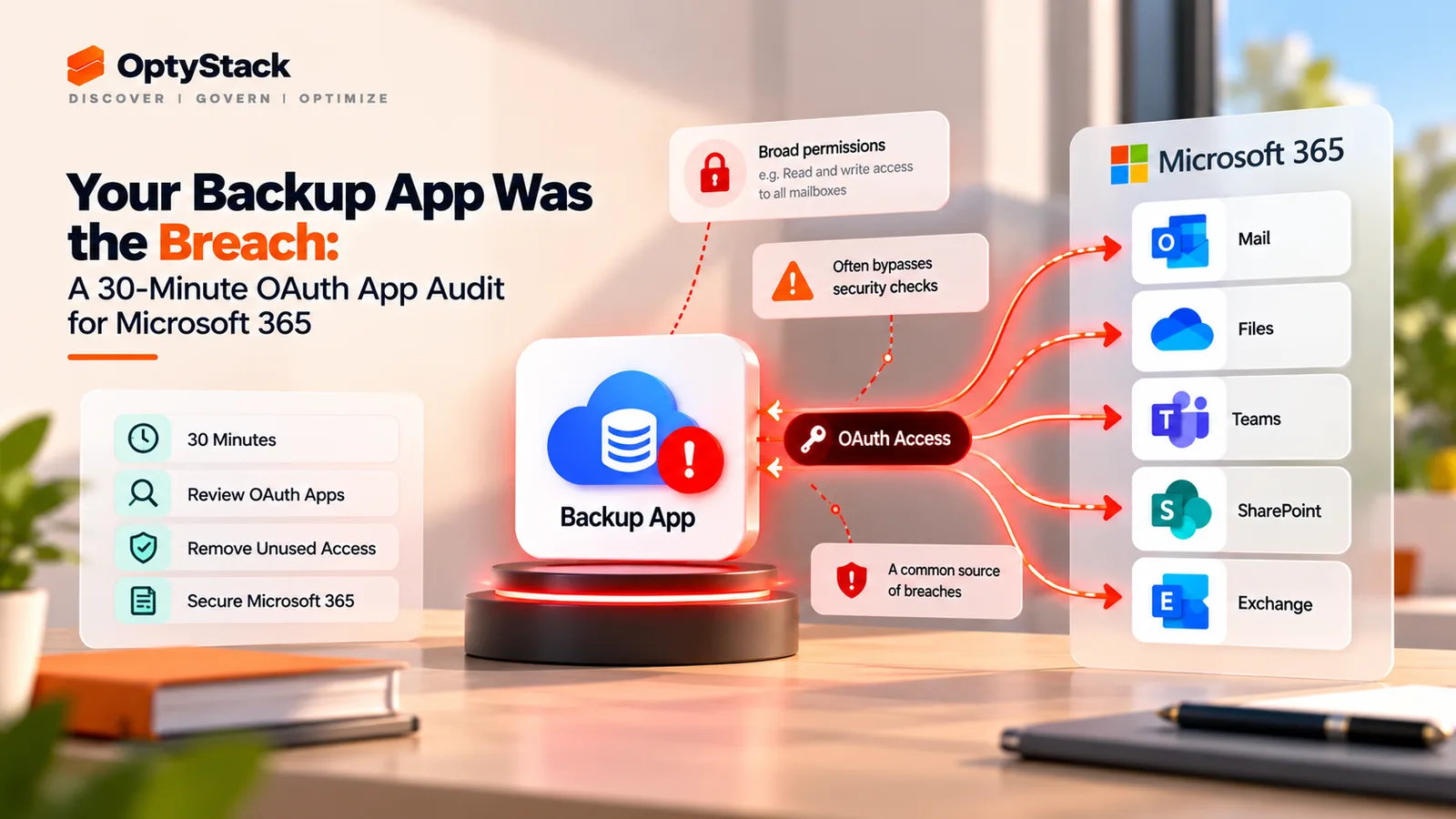
The risk side is real too. When tools enter the company without review, sensitive data can end up in applications that were never vetted for security or compliance. A team uploads customer data to an unapproved analytics tool. Someone connects a third-party app to your core systems with broad permissions. An AI tool ingests confidential documents to "help summarize" them.
None of this is caught by a security review, because there was no security review. For companies under compliance regimes like SOC 2 or GDPR, unmanaged tools handling regulated data are a genuine liability — fines, failed audits, and breach exposure all trace back to tools nobody knew existed.
Common examples of shadow IT (so you know what to look for)
Shadow IT is easier to find once you know the shapes it takes. Here are the most common categories showing up in companies right now:
Productivity and collaboration tools. The classic. A team adopts its own chat tool, note-taking app, or project tracker because the official one doesn't fit how they work. These spread person-to-person and rarely involve IT.
Design and creative tools. Marketing, product, and sales teams frequently buy their own design platforms, stock-asset subscriptions, or video tools — often several overlapping ones across different teams who don't know about each other's purchases.
File sharing and storage. Someone needs to send a large file or collaborate with an outside partner, so they spin up a personal cloud-storage account and start putting company files in it. Convenient, and a genuine data-governance headache.
AI tools and assistants. The fastest-growing category by far — covered in depth below, but worth naming here because it now dominates new shadow IT.
Browser extensions. Often overlooked, these are among the riskiest. Extensions that read page content, manage passwords, or "enhance" a workflow can have deep access to whatever an employee views, including internal systems — and they almost never go through any review.
Point solutions for a single task. A one-off tool bought to solve a specific problem — a PDF converter, a scheduling app, a transcription service — that quietly becomes a recurring subscription long after the original need passed.
The pattern across all of these is the same: a real need, a fast solution, and no visibility for IT. None of them are signs of bad employees. They're signs of a stack growing faster than anyone is tracking it.
Why shadow IT hits some teams harder
Shadow IT isn't evenly distributed. Certain teams generate more of it, simply because of how they work — and knowing which helps you focus discovery.
Fast-moving functions like marketing, sales, and product tend to adopt the most unsanctioned tools, because their work rewards speed and experimentation and there's a tool for every micro-task. Engineering generates a particular flavor — APIs, developer tools, cloud services, and now AI coding assistants — that's often expensed rather than procured. Remote and distributed teams lean on more self-service tools by nature, since they can't lean over to ask IT. And any team that recently went through rapid growth or restructuring tends to accumulate orphaned tools as people and projects shuffle.
None of this means clamping down on these teams — they're often your most productive precisely because they find tools that help. It means pointing your discovery efforts where the shadow IT actually concentrates, and giving those teams a fast, sanctioned path to get tools approved so they don't have to go around you.
Here's what's new and what makes shadow IT a bigger problem in 2026 than ever before: it's no longer just apps. It's AI.
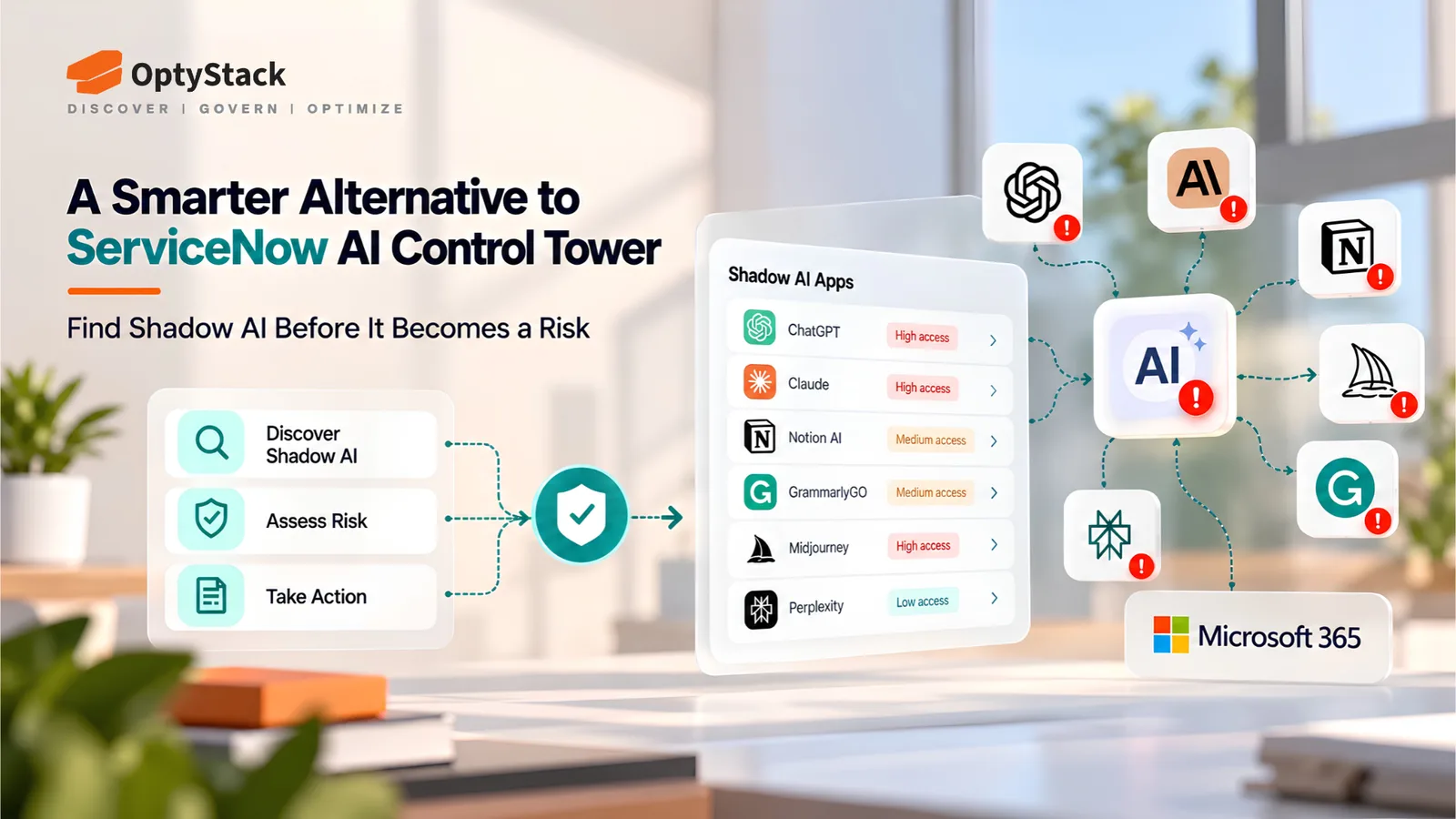
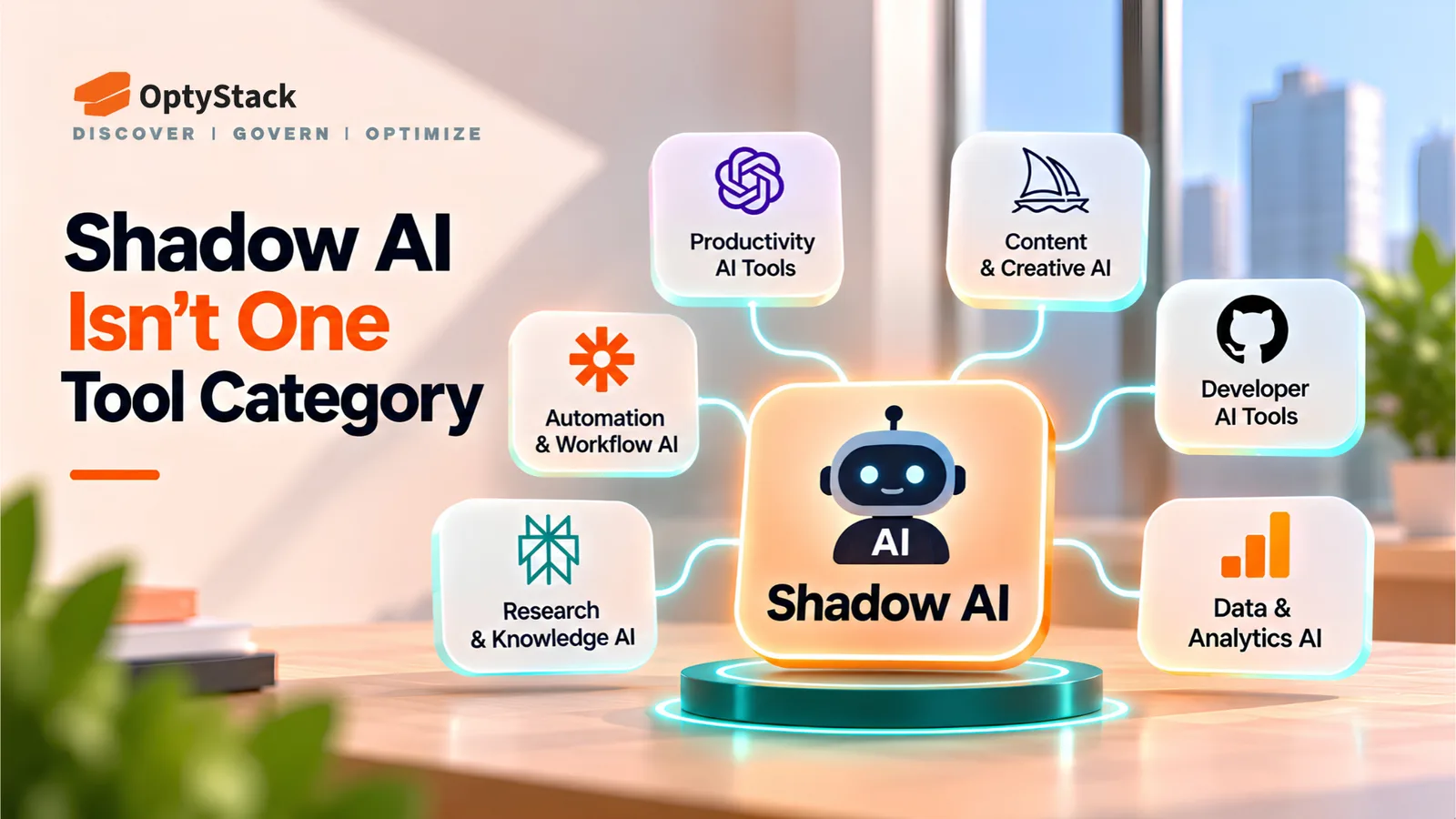
Shadow AI is the explosion of AI tools entering companies with zero oversight — LLM subscriptions, AI coding assistants, AI writing and research tools, and browser plug-ins that read everything on screen. Spending on AI-native software grew roughly 108% year over year, and almost none of it goes through procurement.
Shadow AI is more dangerous than classic shadow IT for two specific reasons:
The cost is volatile. Much of AI pricing is usage-based, which means a tool that cost a little last month can multiply overnight when usage spikes. Traditional shadow IT had predictable subscription costs; shadow AI can produce a surprise five-figure bill.
The data exposure is deeper. AI tools don't just store data — they ingest it, process it, and sometimes train on it. An AI tool touching internal documents or customer data, outside any governance review, is a materially bigger exposure than an unapproved project tracker.
This is why "discover and govern shadow IT" now explicitly includes shadow AI. Treating them as separate problems misses how fast the AI layer is growing.
Why "just block everything" doesn't work
The instinctive response to shadow IT is to lock it down — block unapproved tools, tighten the rules, make the policy stricter. It feels decisive. It mostly backfires.
Blocking pushes shadow IT further into the shadows. People who need a tool to do their job will find a workaround — a personal account, a personal device, a different network. Now the tool is not only ungoverned, it's actively hidden. You've made the problem less visible, not smaller. And you've signaled to your most resourceful employees that IT is an obstacle to route around rather than a partner to work with.
The better posture is visibility first, control second. See what's actually being used. Understand why people adopted it. Then bring the genuinely useful tools into governance and retire the risky or redundant ones. You end up with a stack people actually use, governed in the open, instead of a policy people quietly ignore.
How to get ahead of shadow IT (the practical approach)
Governing shadow IT comes down to a repeatable loop: discover, assess, act.
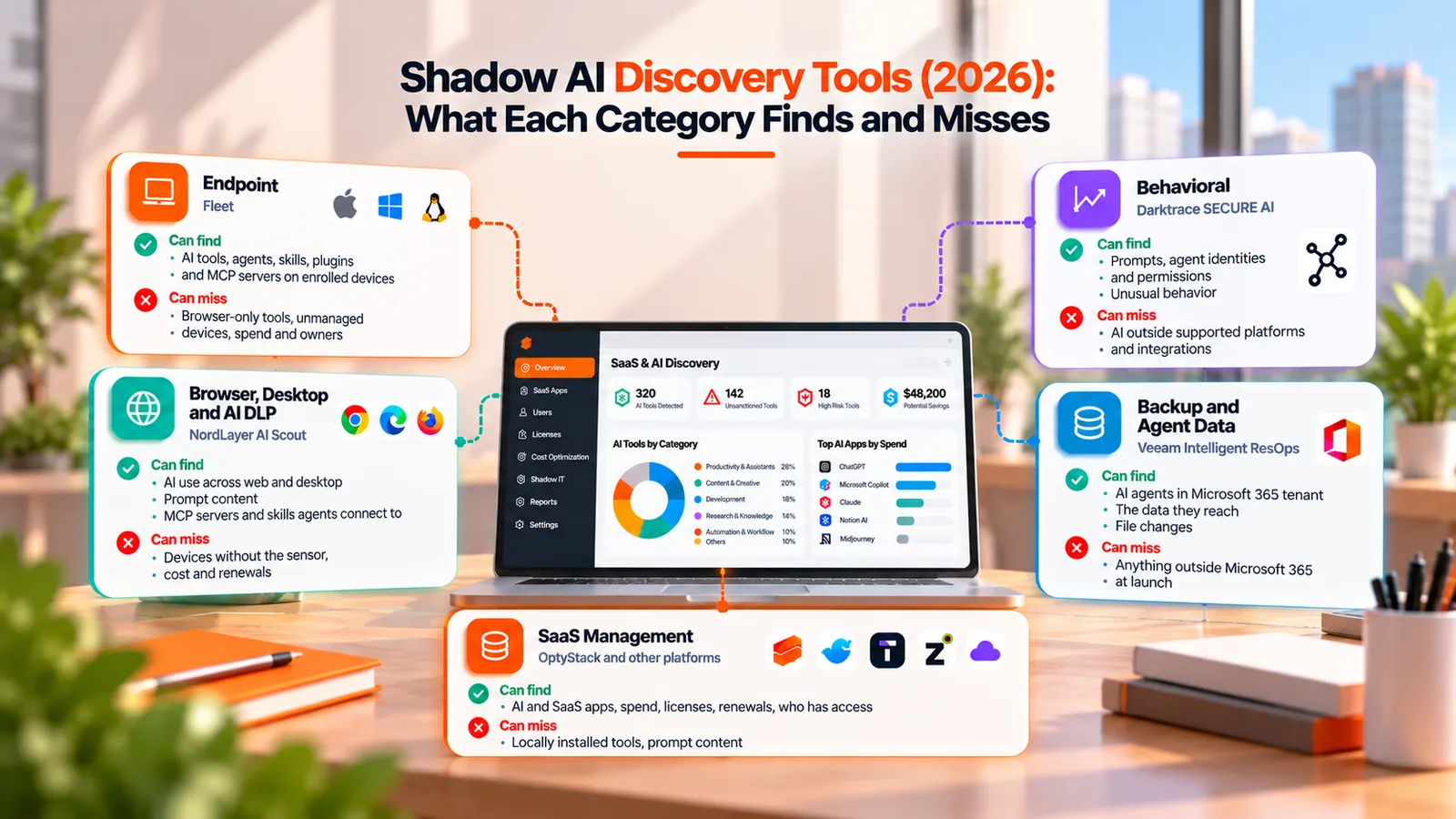
Discover continuously. You can't govern what you can't see, so the first job is making the invisible visible. Effective discovery cross-references multiple signals — finance and expense data (catches tools bought on cards), identity and SSO logs (catches what people log into), and browser or endpoint signals (catches AI plug-ins and tools that never touch a central system). No single source sees everything; the combination does. And it has to be continuous, because new tools appear every week.
Assess the risk. Not every shadow tool is equally concerning. A note-taking app one person uses is very different from an AI tool ingesting customer data. Score each finding by data sensitivity, how widely it's adopted, and how much it costs. This tells you what to act on first instead of drowning in a flat list.
Act deliberately. For each finding, decide: sanction it (bring it into governance), consolidate it (replace with an approved equivalent), or retire it (if it's risky or redundant). The goal isn't a smaller list of tools for its own sake — it's a stack that's fully visible, appropriately governed, and free of the duplicates and zombies that drain budget.
Then repeat, because shadow IT is not a project you finish. It's a condition you manage. The companies that handle it well don't eliminate it once; they keep it continuously visible so it never compounds in the dark again.
Where OptyStack fits
OptyStack is built to make this loop continuous instead of a periodic scramble. It discovers shadow IT and shadow AI as they appear by unifying billing, identity, and usage signals into one live system of record — including the tools bought outside official channels. It scores each finding by data sensitivity, adoption, and spend so your team acts on the highest-value items first. And it turns those discoveries into actions: reclaim licenses, flag risky apps, consolidate overlap, and track the risk you've reduced over time.
The result is the thing every IT, finance, and security leader actually wants — the invisible layer of the stack, made visible and governable, without blocking the speed that made people adopt those tools in the first place.
Frequently asked questions
What is shadow IT in simple terms?
Shadow IT is any software, app, cloud service, or device used for work without IT's knowledge or approval. It usually happens not out of malice but because someone needed a tool quickly and signed up without going through official channels.
Why is shadow IT a problem?
It creates two problems at once: invisible spending that wastes budget (often 30–40% of total software spend in affected organizations) and invisible security risk, because unvetted tools can handle sensitive or regulated company data outside any review.
What is shadow AI?
Shadow AI is the fastest-growing form of shadow IT — AI tools like LLM subscriptions, AI assistants, and browser plug-ins adopted without oversight. It's especially risky because AI pricing is often usage-based (costs can spike fast) and the tools ingest sensitive company data.
How do you discover shadow IT?
By cross-referencing multiple signals: finance and expense data to catch tools bought on cards, identity/SSO logs to see what people log into, and browser or endpoint signals to surface tools that never touch a central system. Continuous discovery beats one-time audits because new tools appear constantly.
Should companies block shadow IT?
Blocking usually backfires by pushing usage further underground onto personal accounts and devices. A visibility-first approach works better: discover what's used, assess the risk, then sanction the useful tools and retire the risky ones.
Want to see the shadow IT and shadow AI hiding in your stack? Start free with OptyStack and get continuous discovery in under 10 minutes.
Related reading: [The Complete Guide to SaaS Spend Management in 2026]· [Shadow AI: The Fastest-Growing Risk in Your SaaS Stack]