GDPR Compliance for SaaS Companies: A Practical Guide
Aryan Malik · September 7, 2026
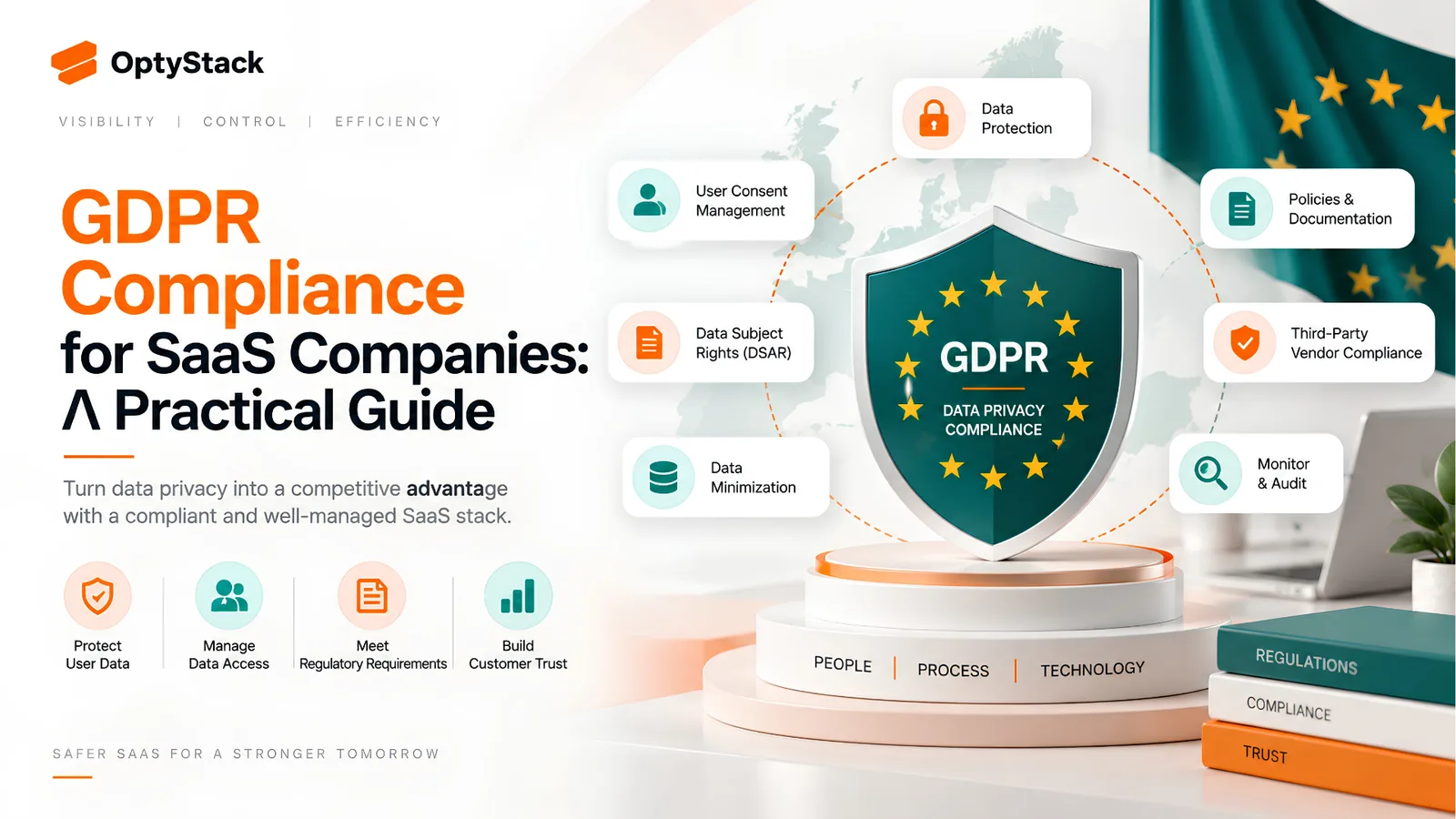
European regulators have imposed more than €6.3 billion in GDPR fines across over 3,200 enforcement actions. Here's a practical guide to GDPR compliance for SaaS companies, including the shadow IT gaps that create the most overlooked risk.
European supervisory authorities have imposed more than €6.3 billion in GDPR fines across more than 3,200 tracked enforcement actions, according to the latest GDPR Enforcement Tracker data. Regulators can also take enforcement action involving data processors, not just the companies that collect the data in the first place, and for a SaaS company, that distinction matters more than it might seem.
GDPR compliance for a SaaS company isn't a single document or a one-time legal review. It's an ongoing set of practices around how personal data moves through your product, your vendors, and your own internal tools, and the SaaS stack itself is often where the actual gaps live.
Controller or processor: why it changes what you owe
A data controller decides why and how personal data is processed. If your product determines what customer data gets collected and what it's used for, you're acting as a controller for that data, and you carry primary responsibility for having a valid legal basis, honoring data subject rights, and implementing adequate safeguards.
A data processor handles personal data on someone else's instructions. Your customers' end users' data, processed on your customer's behalf through your platform, typically puts you in the processor role for that relationship, working under the terms your customer, the controller, sets.
A SaaS company can occupy both roles at the same time, depending on the processing activity and relationship involved: a controller for its own employee and prospect data, a processor for the customer data flowing through its product. Getting this distinction wrong in your data processing agreements is a common, avoidable gap that shows up during customer security reviews long before it ever reaches a regulator.
The core obligations that actually apply to a SaaS company
Establish a documented legal basis for every category of personal data you process. Consent, contractual necessity, and legitimate interest are the most common bases for a SaaS business, and each one carries different documentation and withdrawal requirements. A basis that was never clearly established is difficult to defend after the fact.
Sign data processing agreements with every vendor that touches personal data on your behalf. This includes cloud infrastructure, analytics tools, customer support platforms, and any AI tool that processes customer data as part of its function. A DPA isn't just a formality, enterprise buyers increasingly treat a signed DPA and documented compliance evidence as a procurement requirement, not a negotiating point.
Enable data subject rights inside your actual product, not just in a policy document. Access, deletion, correction, and portability requests need a real operational path, someone responsible for fulfilling them and a defined timeline for doing so, not a promise buried in a privacy policy that nobody's built a process around.
Notify the supervisory authority of qualifying personal data breaches within 72 hours of becoming aware of them, where the breach is likely to result in a risk to individuals' rights and freedoms. This obligation sits with the controller. Where a breach occurs at a processor or other vendor, the controller still needs to understand what happened quickly enough to meet its own notification obligations, which is why vendor incident-reporting procedures matter well before an incident happens.
Determine whether you need an EU representative if your company is established outside the EU and GDPR Article 3(2) applies to your processing. The requirement has specific exceptions, so it isn't triggered simply because a company processes EU residents' data, and it's worth confirming your actual obligation rather than assuming either way.
Why the SaaS stack itself is where the real risk hides
Every connected tool that processes personal data on your company's behalf needs to be assessed for its role in the processing chain. Where a SaaS vendor is processing data on your behalf as a processor, using another vendor to carry out that processing can create a subprocessor relationship that needs to be documented and governed, not assumed to be someone else's problem.
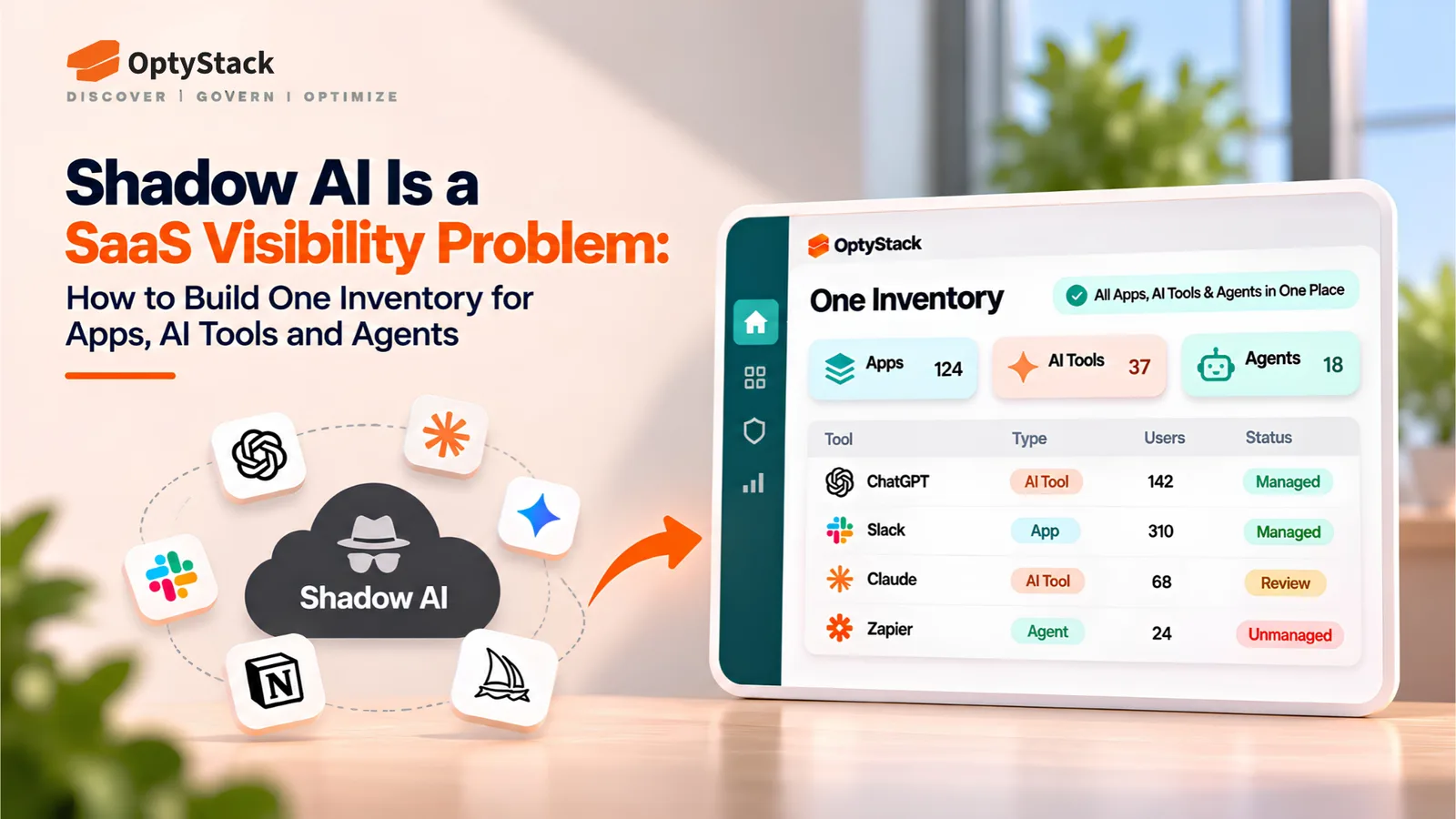
Shadow IT and shadow AI are GDPR blind spots by definition. A tool an employee signed up for individually, with no security or legal review, is a tool that's very likely processing personal data with no DPA in place and no documented assessment of what happens to that data or where it sits in the processing chain. Regulators don't distinguish between data processed through a sanctioned tool and one that slipped through unreviewed.
Vendor sprawl makes your data map stale faster than most companies update it. Every new tool connected to your systems is a new place personal data might flow, and a data inventory built once, then left untouched, drifts out of accuracy the moment the next tool gets adopted.
How to build this into an ongoing practice
Build and maintain a real inventory of every application that touches personal data. This needs to include tools discovered through identity logs and expense records, not just the ones formally provisioned through IT, since the gaps live disproportionately in the tools nobody centrally tracked.
Confirm a signed DPA exists for every vendor in that inventory, and assess whether any subprocessor relationships need to be documented separately. Flag any gap as a priority to close rather than a background task, since an unresolved gap here is one of the more common findings in both regulatory reviews and customer security assessments.
Build data subject rights fulfillment into your actual workflows, with a named owner and a defined turnaround time, so a request doesn't sit unanswered because nobody was specifically responsible for it.
Review your vendor and subprocessor list on a recurring schedule, not once. New tools get connected constantly, and a list that isn't revisited regularly stops reflecting where personal data is actually flowing within months of being built.
Treat shadow IT discovery as a compliance activity, not just a cost-control one. Finding unsanctioned tools before a regulator, an auditor, or an enterprise customer's security team does is a meaningfully better position to be in.
Where OptyStack fits
Maintaining an accurate, current picture of every tool touching personal data, including the ones adopted outside a formal review process, is difficult to do by hand and gets harder every time a new tool gets connected somewhere in the company.
OptyStack surfaces every application across your SaaS estate, including shadow IT and shadow AI tools that were never centrally reviewed, so the vendor inventory GDPR compliance depends on stays current instead of going stale between periodic audits.
It's free to start and doesn't require a credit card.
See every tool touching your data, including the ones nobody reviewed. Start free with OptyStack.