SaaS Cost Optimization Checklist for CFOs
Aryan Malik · September 1, 2026
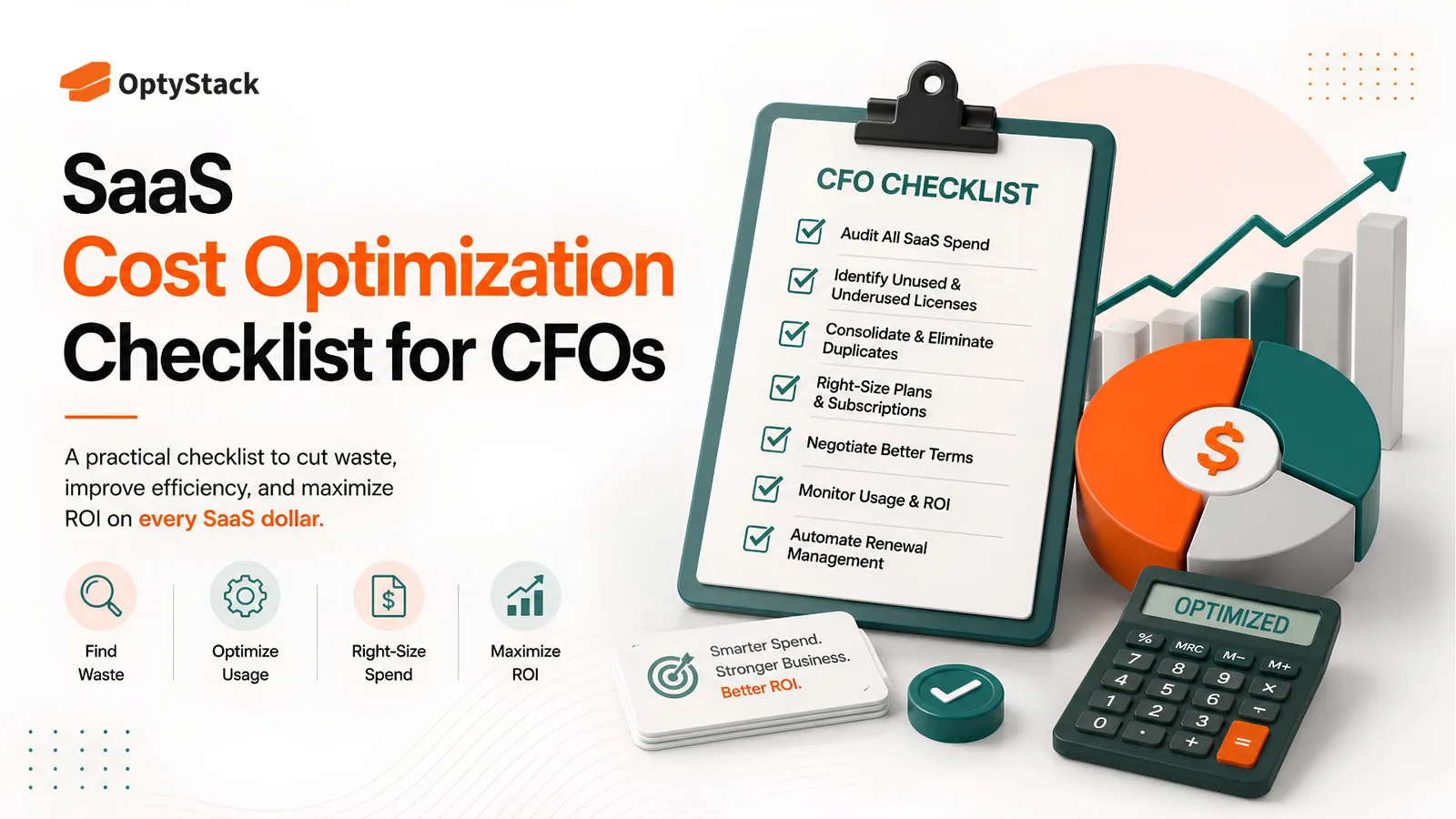
Most CFOs know their total SaaS spend but can't break it down by department, vendor, or wasted license cost. Here's a practical checklist for building real spend visibility, tightening approvals, and managing renewals before they quietly drive up the budget.
Most CFOs can produce a total SaaS spend number when asked. Far fewer can break that number down by department, by vendor, or by how much of it is going to licenses nobody's using. That gap exists because software spend moves through corporate cards, expense reports, and individual department budgets simultaneously, and none of those channels alone gives finance the full picture.
A company may report $2 million in annual SaaS spend, for example, while another $200,000 sits in corporate-card charges and department expenses that never made it into the central software budget. That second number is usually the harder one to find, and it's often where the least oversight and the most waste concentrate.
For many companies, SaaS has become one of the largest operating expenses after headcount. Closing that visibility gap is the first real step toward optimizing it. Here's a working checklist for doing that.
Build the baseline before you optimize anything
Pull every source of spend into one place. Corporate card statements, expense reports, accounts payable records, and procurement data each capture a different slice of software spend. None of them alone shows the full picture, and a budget built on just one is already missing a meaningful share of what the company is actually paying for.
Reconcile spend against contracts. For every active subscription, confirm the invoiced amount actually matches the signed contract terms. Pricing changes, unauthorized upgrades, and billing errors are common enough that this step alone regularly surfaces discoverable savings.
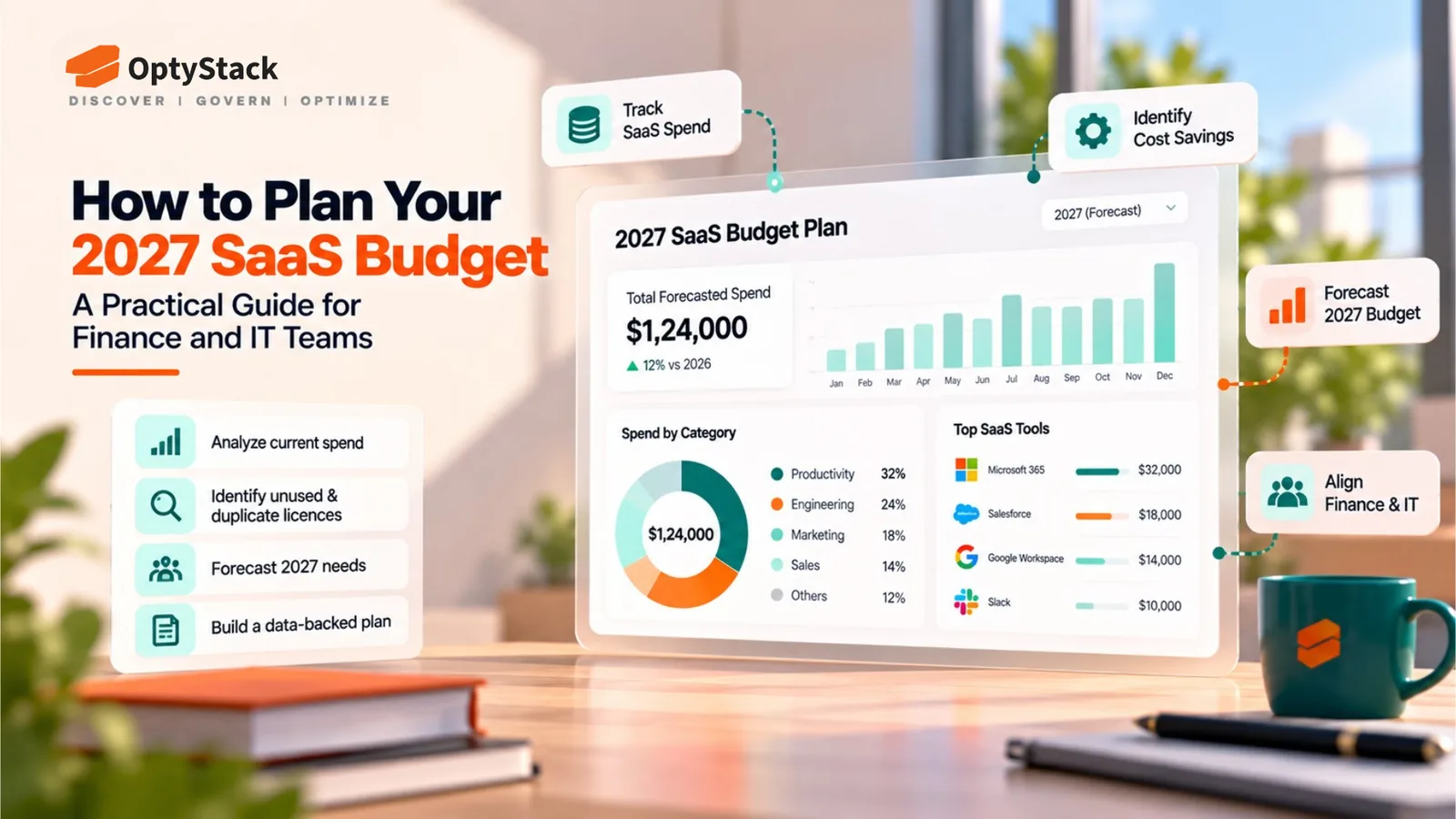
Break the baseline down along seven dimensions, not just one total. A single company-wide figure hides more than it reveals. The baseline is far more useful sliced by department, by vendor, by individual application, by contract, by licensed seat count versus actual usage, and by upcoming renewal exposure. That level of detail is what turns a spend number into something finance can actually act on, rather than a figure to report and move past.
Get a real application count, not an estimated one. SaaS buying is increasingly decentralized, with business teams purchasing software independently of IT. That makes it harder for finance to see the full spend picture through centralized procurement data alone, and it means most companies underestimate their actual SaaS footprint until someone specifically goes looking.
Understand where the spend is actually going
Separate fixed-cost tools from usage-based ones. Some SaaS vendors now use usage-based or consumption-based pricing, making certain software costs harder to forecast than traditional per-seat subscriptions. A budget that treats every line item the same way will consistently underestimate the volatile ones.
Check utilization before assuming a cost is justified. A tool with a high price tag and low usage is a very different problem than a tool with a high price tag and heavy daily use across the company. The dollar amount alone doesn't tell you which one you're looking at.
Track spend by department and by vendor, not just as one company-wide total. A single aggregate number hides which teams are driving growth and which vendors represent the most concentrated risk if pricing or terms change.
Put structure around how new spend gets approved
Require a business case for anything above a set spend threshold. Not every $20-a-month tool needs a formal review, but a five-figure annual contract should require someone to articulate what problem it solves and why an existing tool can't.
Route new purchases through a joint IT and finance check. IT confirms the security posture, finance confirms it fits the budget. A single-step approval, or no approval process at all, is exactly how spend ends up decentralized in the first place.
Set a policy for what happens when a trial converts to paid. Free trials that convert automatically can allow software spend to creep in without an explicit purchase decision. A simple rule, someone has to actively approve the conversion, closes that gap without adding real friction.
Manage the renewal calendar like it's part of the budget, not separate from it
Start reviewing contracts 90 days or more before renewal, and earlier for large or strategically important agreements. That window gives finance time to actually evaluate usage, seat count, and pricing before the notice deadline forces a decision by default rather than by choice.
Track notice deadlines, not just renewal dates. Most enterprise agreements require advance notice to cancel or renegotiate, and missing that window usually means auto-renewing at whatever rate the vendor sets. The deadline that matters is the notice date, not the date the contract technically ends.
Quantify renewal exposure ahead of time. For every contract renewing in the next two quarters, know the current cost, the likely price change, the seat count against actual usage, and the notice deadline. That combination is the difference between a renewal you negotiate and one that just happens to you.
Use overlapping renewals as leverage. When two vendors serving a similar function are both up for renewal in the same quarter, that timing is worth using deliberately, even for the tool you plan to keep.
Make optimization a repeating process, not an annual event
Reconcile actual spend against the budget monthly or quarterly. A budget set once a year and never checked against reality drifts further from accurate with every month that passes.
Track the dollar value of unused seats separately from total SaaS spend, so finance can see exactly how much potentially recoverable spend is sitting idle, rather than that figure disappearing inside a larger aggregate number.
Estimate potential savings as a simple sum finance can actually track: unused-license savings, plus contract reductions from right-sizing, plus savings from consolidating duplicate tools, plus savings from optimizing plan tiers to match actual usage. A company carrying $50,000 in unused licenses, $30,000 in over-provisioned contracts, and $20,000 in duplicate tools is looking at roughly $100,000 in identifiable, recoverable spend before any negotiation even happens. Tracking these categories separately makes the total easier to defend and easier to act on than a single vague cost-cutting target.
Report cost savings achieved, not just planned. A savings target on a slide is different from a savings number finance can actually point to at year-end. Tracking realized savings against the plan is what makes the optimization process credible over time.
Give every major tool a named business owner. A cost line with no one accountable for it rarely gets questioned when it grows. One with a clear owner does, because someone actually has to explain the number.
Where OptyStack fits
Pulling spend, contract terms, and usage data out of separate systems and reconciling them by hand is realistic for a handful of tools. It stops being realistic somewhere past a few dozen, which is well below where most companies' SaaS estates actually sit.
OptyStack brings spend, contracts, and usage data together in one place, giving finance teams a clearer view of where SaaS money is going and where action is needed, so the gaps this checklist is designed to catch surface on their own instead of requiring a manual review every quarter.
It's free to start and doesn't require a credit card.
Get full visibility into your SaaS spend. Start free with OptyStack.