SaaS Spend Benchmarks: How Much Should Companies Spend in 2026?
Aryan Malik · September 2, 2026
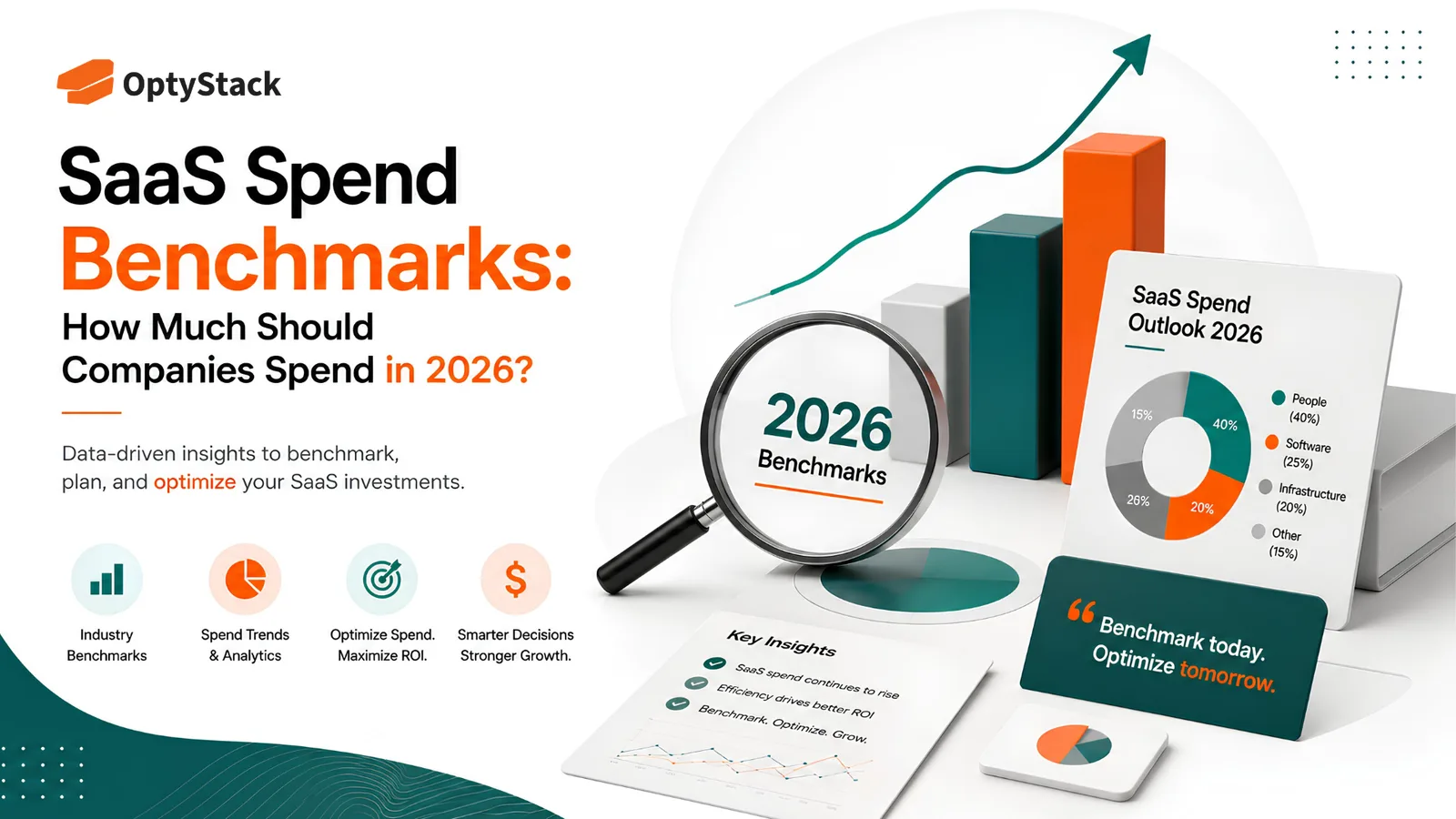
There's no single right number for how much a company should spend on SaaS. Different 2026 studies put per-employee figures anywhere from roughly $4,500 to $15,000, depending on size and industry. Here's what actually drives that range, and how to use a benchmark as a real diagnostic instead of a target to hit.
There isn't a single right answer to how much a company should spend on SaaS, and any article that gives you one number is oversimplifying a genuinely wide range. Different 2026 benchmarking studies, using different methodologies and different definitions of what counts as SaaS spend, put per-employee figures anywhere from roughly $4,500 at the low end to $15,000 or more at the high end. That's not one industry-wide benchmark. It's a combined range across several separate studies, each measuring slightly different things across different company sizes and industries, and the spread itself is worth understanding before comparing your own number against it.
Why the range is so wide
Company size changes the number dramatically. Smaller companies tend to spend more per employee, not less, because certain baseline tools, a CRM, a collaboration suite, security software, cost roughly the same whether you have 20 employees or 2,000. That fixed cost gets divided across a much smaller headcount at a smaller company, pushing the per-employee figure up. Large enterprises benefit from volume pricing and typically land in a lower per-employee range as a result.
Industry matters as much as size. A software or technology company, where the product itself often runs on SaaS infrastructure, routinely spends a meaningfully higher share of revenue on software than a company in manufacturing or a traditional services industry. Comparing your spend against a generic cross-industry average, rather than your actual peer group, is one of the more common ways benchmarking goes wrong.
AI adoption is actively changing spend patterns. AI-related software purchases have grown quickly as a share of total SaaS spend over the past year, and that shift is part of why benchmarks from even a year ago can already look dated. Exactly how much AI adds to per-employee spend varies too much across companies and studies to state as a single reliable figure, but the direction is consistent: it's a growing, meaningful line item that older benchmarks didn't have to account for.
Region plays a role too. Some 2026 benchmarking studies report higher SaaS spend per employee among US companies than among companies in the UK and Europe, which likely reflects differences in software pricing, adoption rates, and typical company structure across those markets, though the size of that gap varies by which study you're looking at.
What the ranges actually look like
As a defined metric, SaaS spend per employee per year is the more useful number to benchmark against, since total spend alone depends almost entirely on headcount and tells you very little on its own.
Smaller organizations, roughly under 250 employees, tend to cluster higher, commonly in the $8,000 to $15,000 per-employee range, since baseline tools cost roughly the same regardless of company size and get divided across a much smaller headcount. Larger enterprises typically land lower, more often in the $4,500 to $9,000 range, benefiting from volume pricing and negotiating leverage that smaller companies don't have.
These ranges still vary meaningfully by source and by industry, and a software or technology company will often sit above even the high end of this range given how software-dependent the business itself is. Treat this as a reference point to calculate against, not a number to match exactly.
Why benchmarks are a starting point, not a target
The temptation with any benchmark is to treat it as a number to hit. That's the wrong way to use one. A company spending well above the typical range for its size and industry isn't automatically wasteful, it might be genuinely leaning into software-driven growth in a way that's working. A company spending well below the range isn't automatically efficient either, it might be underinvesting in tooling that would actually make the business faster.
The more useful question a benchmark answers isn't "are we spending the right amount." It's "does our spend match how our company actually works, and can we explain the gap if it doesn't match the range." A number with a clear explanation behind it is a healthy one. A number nobody can account for is worth investigating, regardless of whether it sits above or below the typical range.
How to use a benchmark properly
Calculate your own number first, honestly. Total up every SaaS subscription, including the ones bought outside a central procurement process, and divide by headcount. Most companies are surprised by how much higher this number is than what shows up in the officially tracked software budget, simply because so much spend happens outside centralized tracking.
Compare against your actual peer group, not a generic average. A benchmark broken out by industry and company size is far more useful than a single cross-industry number, since the variance between, say, a software company and a manufacturer is large enough to make a generic average nearly meaningless for either one.
Separate the AI-driven portion of your spend from the rest. Since this category is growing so quickly, tracking it as its own line item, rather than folding it into general software spend, makes it much easier to see whether your overall number is rising because of genuine growth in usage or because a handful of AI tools have quietly become a bigger cost center than anyone realized.
Revisit the comparison periodically, not once. Given how quickly benchmarks are shifting right now, largely driven by AI adoption, a comparison done a year ago is already dated. Treat this as a metric worth checking every few quarters, not an annual exercise.
Where OptyStack fits
Calculating your true per-employee SaaS spend, and separating it out by category, department, and AI-related tools specifically, requires pulling data from finance records, individual vendor admin panels, and expense systems all at once, which is exactly the kind of exercise that's easy to start and hard to keep current.
OptyStack brings spend and usage data together in one place, so you can see your actual per-employee and per-category numbers clearly, and track how they're shifting over time, instead of reconstructing the calculation by hand every time you want an updated answer.
It's free to start and doesn't require a credit card.
See exactly how your SaaS spend compares. Start free with OptyStack.