SaaS Access Review: How Often to Review User Access
Aryan Malik · September 4, 2026
Access reviews are one of the most common SOC 2 audit findings, largely because most companies run them once a year instead of on a real schedule. Here's how often reviews should actually happen based on risk, and what makes a review catch real problems instead of becoming a formality.
SaaS Access Reviews: How Often and How
Access reviews are one of the most commonly cited gaps in SOC 2 audits, showing up as a finding in roughly a quarter to a third of audits according to compliance benchmarking data. That's not because companies don't know access reviews matter. It's because most are still running them as an annual scramble instead of an ongoing practice, and by the time the audit surfaces the gap, months of stale access have already accumulated.
An access review is the process of confirming that every person with access to a system or application still needs that access, at the level they currently have it. Done well, it catches the kind of quiet accumulation that happens between offboarding events: role changes nobody revisited, permissions granted for a one-off project that were never removed, and accounts still active long after the reason for their access disappeared.
Why access drifts even when offboarding works
Offboarding, even done well, only catches people who've left the company entirely. Everyone still employed keeps accumulating access, and almost nothing naturally removes it.
Role changes add access without removing the old kind. Someone moves from support into engineering and picks up the tools their new role needs, but nobody circles back to strip the support-specific tools they no longer touch. Access only grows in one direction unless someone deliberately reviews it.
Project-based access outlives the project. A contractor or team member gets added to a system for a specific initiative, the initiative wraps, and the access stays active because removing it was never anyone's defined responsibility.
Managers approve access requests without a clear basis to evaluate them. A manager reviewing a long list of access requests for their team, often without a clear picture of what each tool actually does, tends to default to approving rather than pushing back, especially under time pressure.
Nobody owns the review as an ongoing job. Without a named owner and a set cadence, access review becomes something that happens right before an audit and nowhere else in between, which means the gap it's supposed to catch has months to grow before anyone looks.
How often reviews should actually happen
There's no single universal cadence that fits every system, and treating every application with the same review frequency wastes effort on low-risk tools while under-reviewing the ones that actually carry risk. A workable approach ties frequency to what the system actually touches.
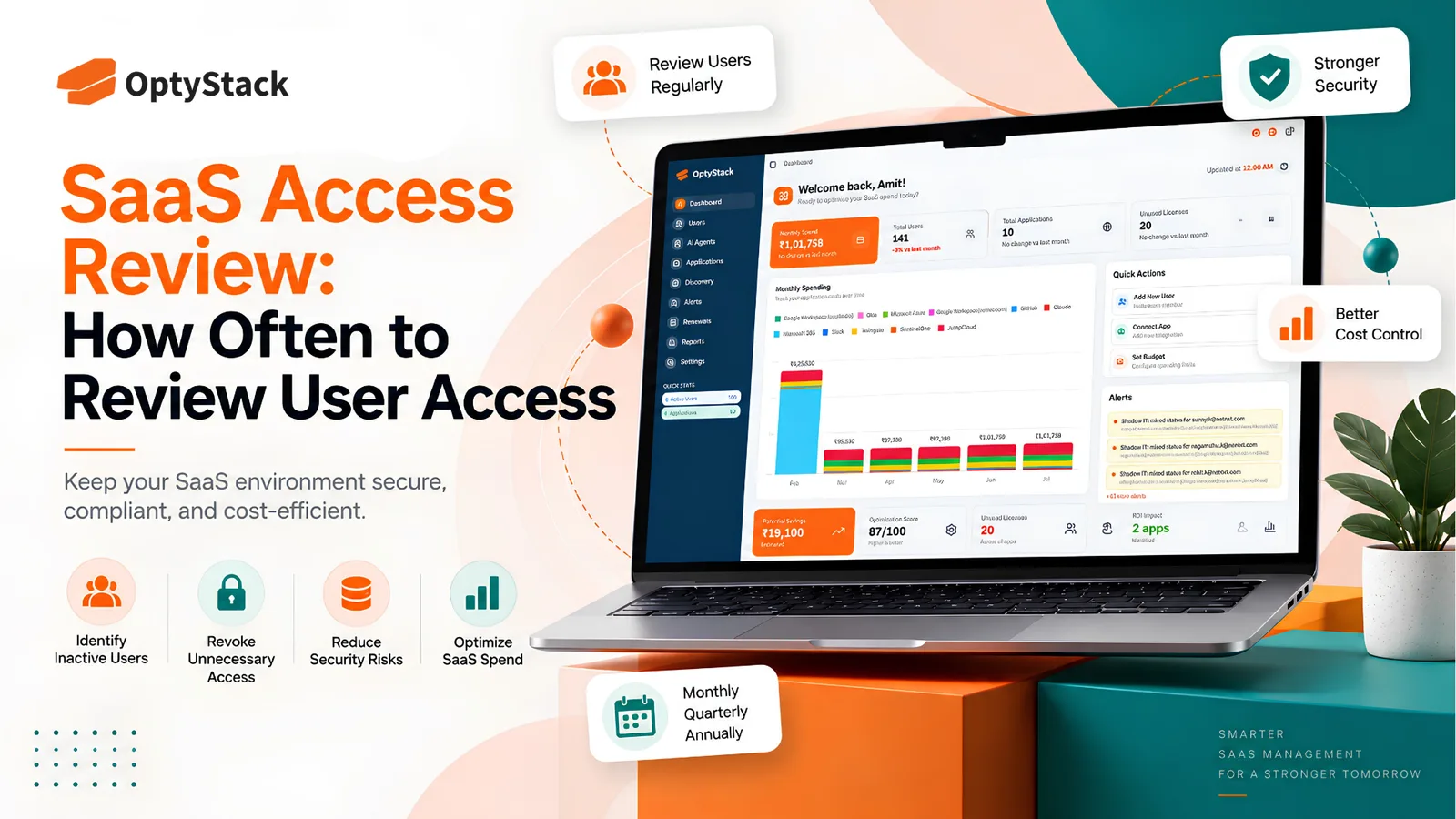
High-risk systems deserve a quarterly review at minimum. Financial platforms, systems holding customer data, HR and payroll tools, and your identity provider itself fall into this category. These are the systems where over-permissioned access carries the most real consequence if it's exploited or simply forgotten.
Medium-risk systems can typically go semiannually. Internal collaboration tools, project management platforms, and systems with limited sensitive data exposure don't need the same frequency as the systems above, but still deserve a real look twice a year rather than being reviewed only when someone happens to notice a problem.
Every role change should trigger an immediate review, independent of the regular schedule. Waiting for the next quarterly cycle to catch access that should have been removed the day someone changed teams defeats much of the purpose.
Every departure should trigger an immediate review, though this overlaps with standard offboarding rather than being a separate process. The two should be tightly connected, not run on separate tracks that can drift out of sync with each other.
How to run a review that actually works
Assign a named owner for each system, not a review team in the abstract. The person who actually understands what a tool does and who should have access to it is in a far better position to evaluate a list of names than someone reviewing it purely as a compliance checkbox.
Give reviewers real context, not just a list of names. A reviewer asked to approve or revoke access for twenty people, with no information beyond a username, will default to approving almost everything. Include role, department, and last login activity alongside each name so the decision has something real to be based on.
Cross-reference access against actual usage before the review even starts. Someone with access they haven't touched in months is a very different case than someone actively using a tool every day. Surfacing that distinction ahead of time turns a vague approval exercise into a much faster, more targeted decision.
Set a hard deadline and escalation path for incomplete reviews. A review with no deadline tends to sit half-finished indefinitely. A clear cutoff, with an escalation to a manager's manager if it's not completed, keeps the process from quietly stalling.
Document every decision and the reasoning behind it. Beyond the audit value, a record of who reviewed what, when, and why is what turns a review from a one-time event into something the company can actually improve over time.
Revoke access immediately once a review flags it, rather than batching removals for a later date. A flagged account that stays active for weeks after being identified defeats much of the purpose of running the review in the first place.
Where OptyStack fits
Pulling together who has access to what, cross-referencing it against actual usage, and giving reviewers real context instead of a blank list of names is difficult to do manually across more than a handful of tools, which is exactly why most access reviews happen once a year instead of on the cadence that would actually catch problems early.
OptyStack surfaces access and usage data together across your SaaS estate, so reviewers can see not just who has access to a tool, but whether they're actually using it, without reconstructing that context by hand for every review cycle.
It's free to start and doesn't require a credit card.
See who actually has access to what across your SaaS stack. Start free with OptyStack.