SaaS Vendor Management Best Practices
Aryan Malik · September 20, 2026
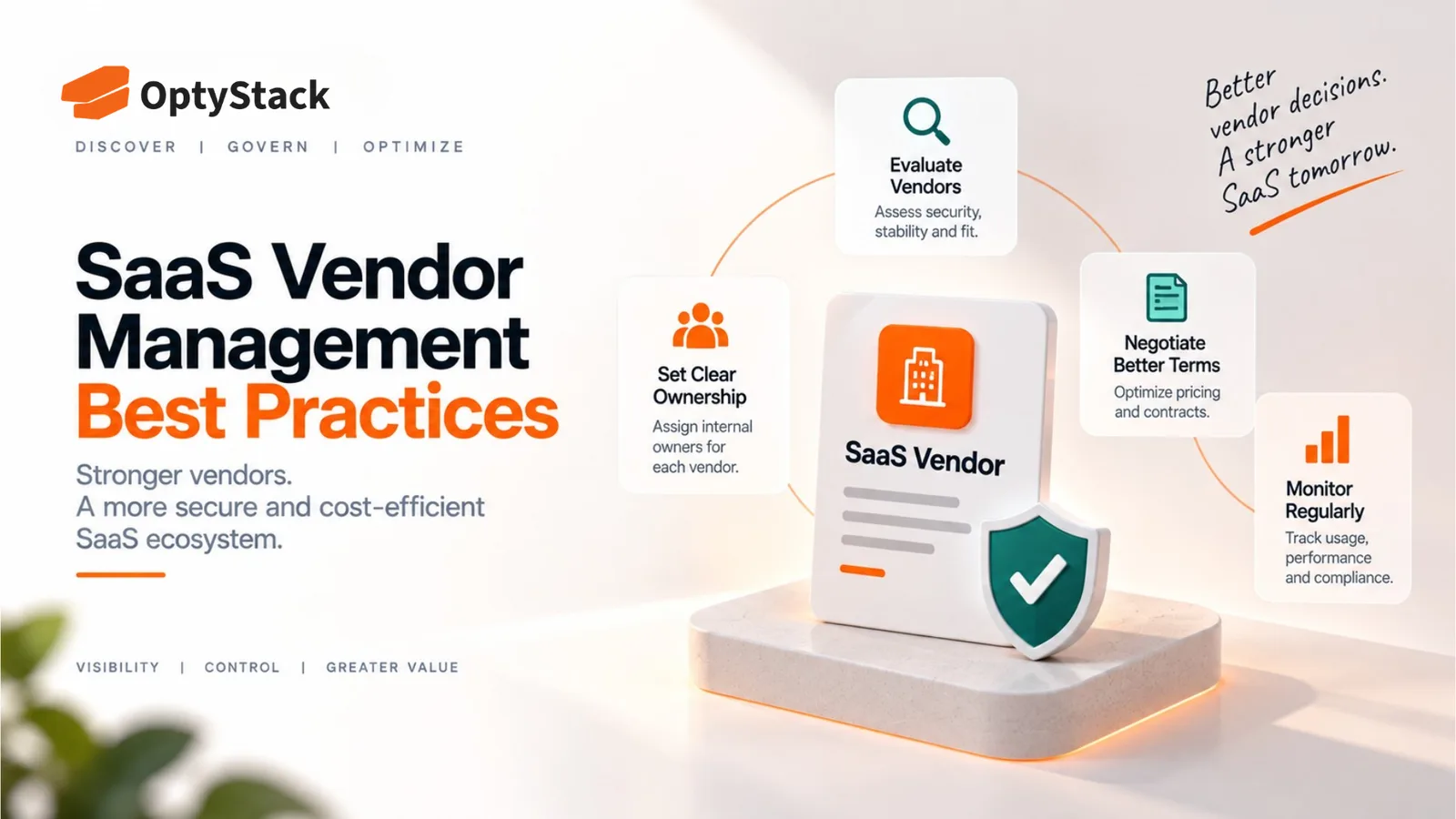
Uptime Institute found that 10% of major outages originate with a vendor, and over half cost more than $100,000. Here's how to manage SaaS vendor relationships across the full lifecycle, not just at the point of purchase.
Vendor outages aren't rare, and they aren't cheap. Uptime Institute's 2024 analysis found that roughly 10% of major outages originate with a vendor rather than the company's own systems, and more than half of those incidents cost over $100,000. Most companies discover this the hard way, during an outage, rather than through a vendor management process built to catch the risk beforehand.
SaaS vendor management is the ongoing practice of selecting, monitoring, and eventually exiting the software vendors a company depends on, treated as a continuous responsibility rather than a task that ends once a contract is signed.
Why vendor management needs a defined lifecycle
Most vendor problems don't originate at the point of purchase. They show up months or years later: a security posture that quietly weakened, a support team that stopped being responsive, a pricing model that changed without much notice. A vendor evaluated once, at signing, and never revisited is a vendor whose risk profile the company has effectively stopped tracking.
Selection: setting the relationship up correctly from the start
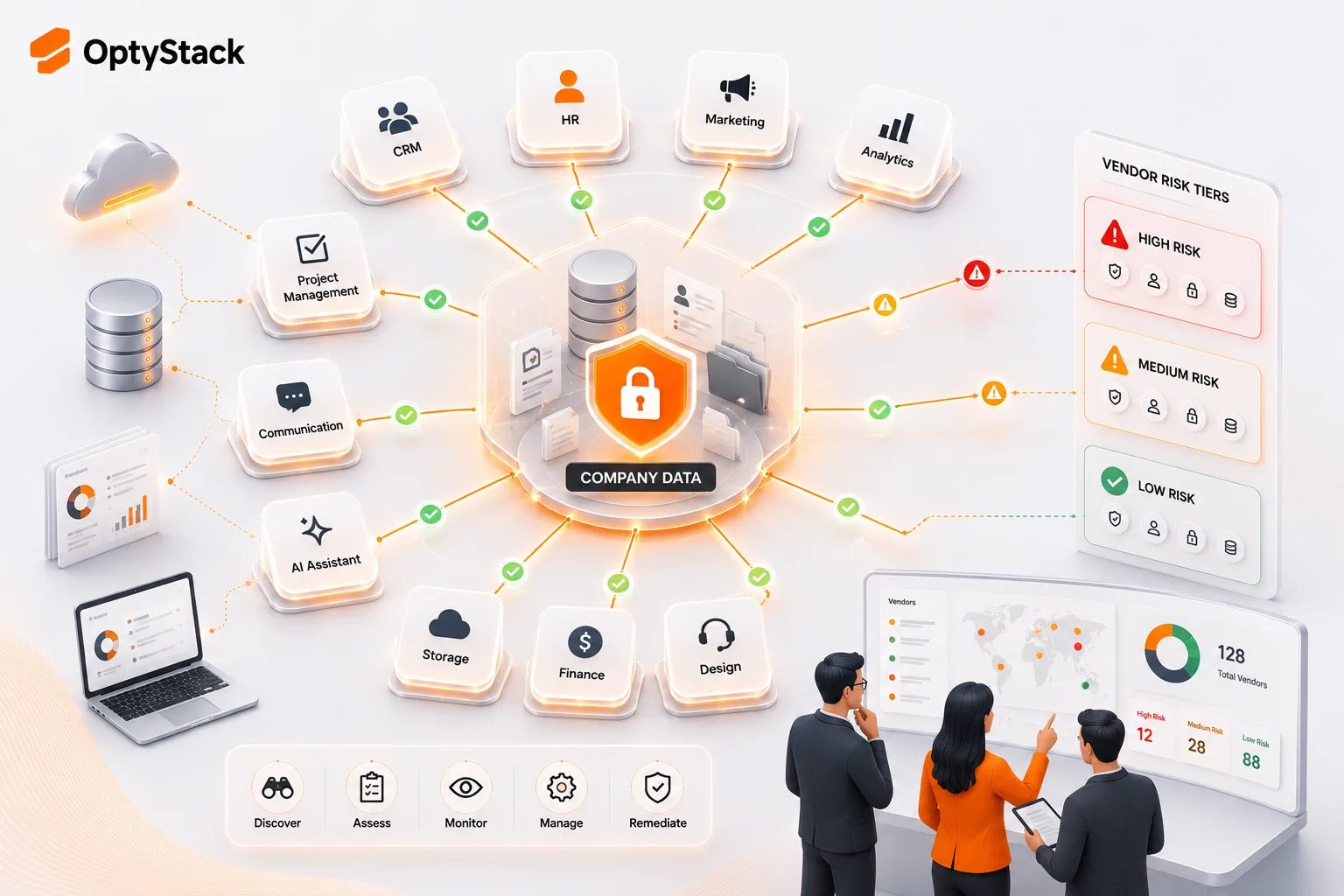
Match due diligence depth to actual risk, not to a single company-wide checklist. A tool with no access to sensitive data and limited business criticality doesn't need the same review as a payment processor or a platform touching customer records. Applying a uniform process to every vendor either slows down low-risk purchases unnecessarily or under-scrutinizes the ones that actually matter.
Confirm exit terms before signing, not after a problem forces the question. How you get your data back, what happens if the vendor is acquired or shuts down, and what the actual notice period looks like for cancellation are all details worth pinning down while you still have negotiating leverage, since that leverage disappears once you're already dependent on the tool.
Assign a single point of contact on both sides of the relationship. A vendor relationship with no clear owner on your side tends to drift, since nobody's specifically responsible for the check-ins, the renewal timeline, or the escalation path if something goes wrong.
Onboarding: building the relationship on solid footing
Document the specific business purpose the vendor was brought in to solve. Without a recorded reason, it becomes difficult months later to evaluate whether the tool is still delivering the value it was purchased for, or whether the original need even still exists.
Set expectations early on performance and communication. Establishing how often you'll check in, what metrics matter, and how support requests get escalated at the start of the relationship avoids ambiguity that tends to surface later, usually at an inconvenient moment.
Ongoing monitoring: the stage most companies skip
Reassess vendor risk periodically, not only at renewal. A vendor's security posture, financial stability, and product direction can all shift meaningfully between signing and the next contract cycle, and a company that only checks in at renewal time is operating on stale information for most of the relationship.
Track usage against the reason the tool was purchased. A vendor relationship that made sense at signing can quietly stop making sense if usage drops or the team's needs change, and that shift is easy to miss without someone actively watching for it.
Loop security into ongoing vendor oversight, not just the initial review. Security posture isn't fixed at the point of purchase. Coordinating periodic checks with whoever owns security internally catches drift that a one-time assessment would never surface.
Renewal: the point where most leverage exists
Start the renewal conversation with real lead time, not the week before the notice deadline closes. Reviewing usage, benchmarking pricing, and preparing a negotiating position all take time that evaporates once you're up against the deadline.
Treat every renewal as a checkpoint to reconfirm the relationship still makes sense, not an automatic continuation of the prior term. Seat counts, pricing tiers, and even whether the tool is still the right fit can all warrant a fresh look rather than a rubber stamp.
Exit: planning for the relationship you hope you won't need
Have a documented contingency plan for your most critical vendors specifically. Knowing in advance how you'd migrate off a business-critical tool, and having your own data backed up independently rather than trusting the vendor as the only copy, is what makes an unexpected vendor failure a manageable disruption instead of a genuine crisis.
Run through the exit scenario occasionally, even for vendors you have no plans to leave. A brief check on whether your data export actually works, and whether your team knows the exit process, is far cheaper to do proactively than to discover gaps in the middle of an actual emergency.
Where this breaks down in practice
Vendor management gets treated as a procurement task rather than an ongoing one. Once a contract is signed, oversight often stops entirely until the renewal notice arrives, which means most of the relationship goes unmonitored.
Ownership is assigned to a team instead of a specific person. A vendor marked as owned by "IT" or "Marketing" has no one individually accountable for noticing when something changes, which is exactly the condition under which problems go unnoticed.
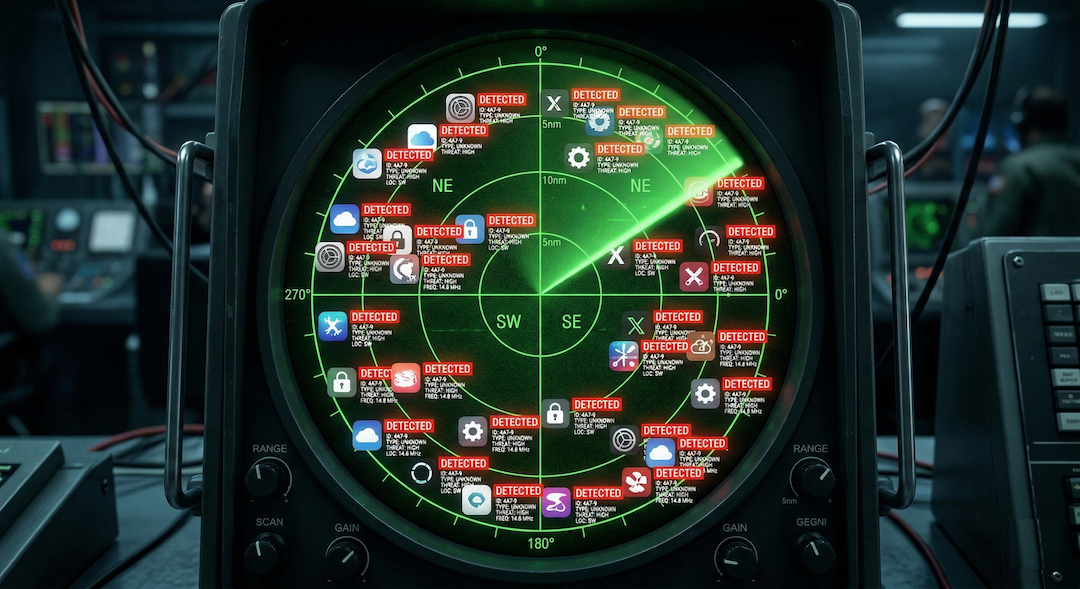
Vendors adopted outside a formal process never enter the system at all. A tool signed up for informally by an individual team, without going through procurement, typically isn't tracked, reviewed, or included in any renewal calendar, which means the vendors most likely to carry unmanaged risk are often the ones nobody's actually managing.
Where OptyStack fits
Reviewing every vendor relationship on a regular cadence, tracking usage against original intent, and keeping renewal dates current across a growing list of tools takes real, ongoing effort, and it's exactly the kind of work that gets deprioritized once the initial purchase is behind you.
OptyStack keeps vendor spend, usage, and renewal information connected across your SaaS estate, including tools that entered outside a formal procurement process, so vendor oversight doesn't depend on someone remembering to check in manually.
It's free to start and doesn't require a credit card.
Bring every vendor relationship into one view. Start free with OptyStack.