SaaS Governance: How to Get Executive Buy-In
Aryan Malik · September 15, 2026
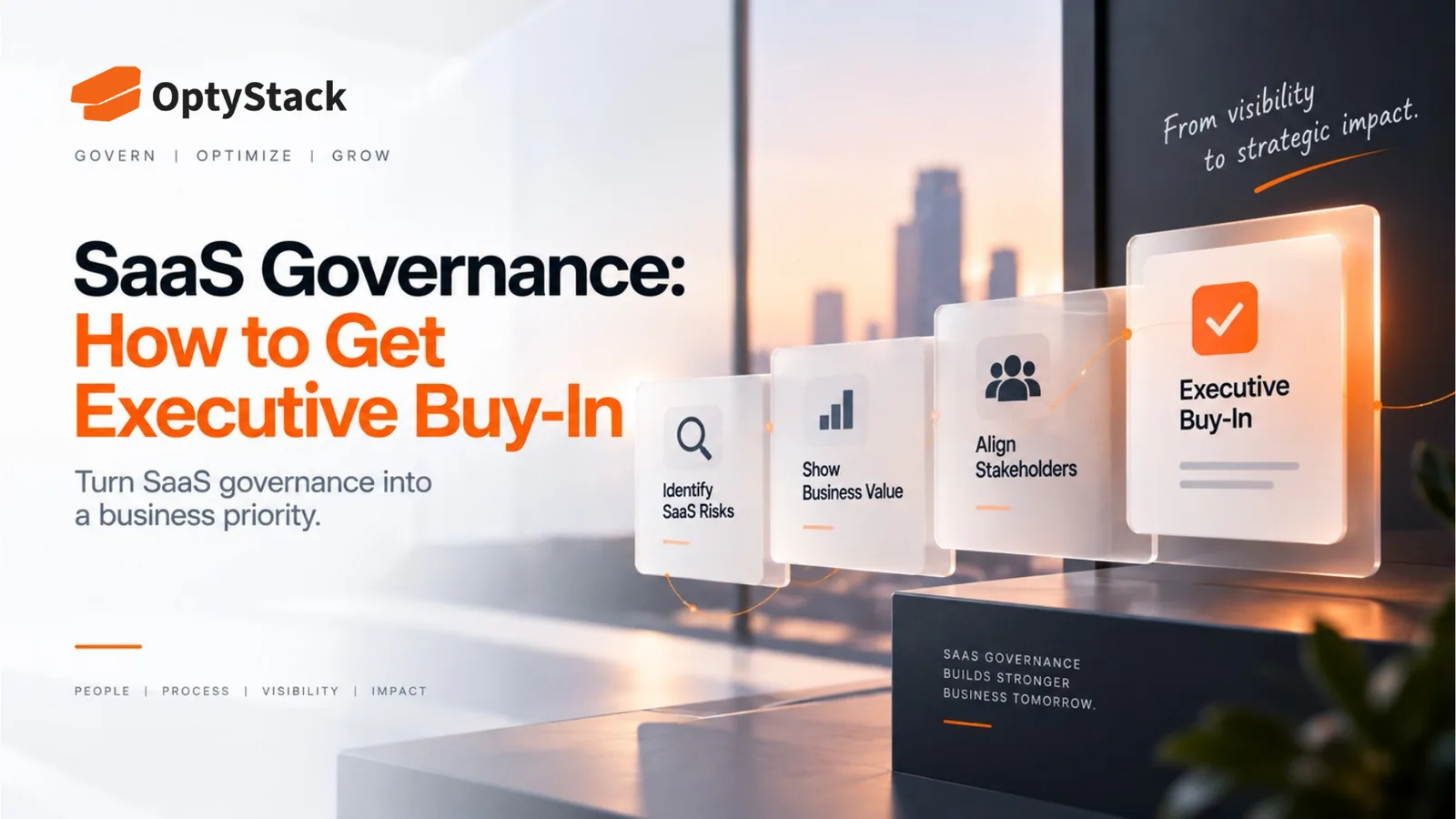
Most governance initiatives stall because nothing makes the risk feel urgent to leadership. Here's how to build a SaaS governance proposal around real numbers from your own environment, framed in terms executives already prioritize.
Most SaaS governance initiatives don't fail because the plan was wrong. They fail because nothing forces the organization to prioritize them. The risk is real, but without something concrete making that risk visible to the people who control budget and headcount, it stays permanently below the priority line.
Getting executive buy-in for SaaS governance isn't about writing a more convincing policy document. It's about making an abstract, ongoing risk feel as concrete and urgent as the problems that already have executive attention.
Why governance proposals struggle to land
The cost of inaction is invisible until something breaks. Unlike a missed sales target or a production outage, the cost of ungoverned SaaS sprawl accumulates quietly: a little wasted spend here, an unreviewed access grant there. Nothing about it produces the kind of visible, dated event that naturally forces executive attention.
Governance sounds like a cost center, not a value driver. A pitch framed around "we need better controls" competes poorly against initiatives framed around revenue or growth. The same underlying problem framed around recoverable dollars or reduced breach exposure tends to land differently, because it speaks the language budget conversations already use.
Ownership is unclear before the conversation even starts. If governance sounds like it belongs to IT, security, and finance all at once, it's easy for an executive to assume someone else is already handling it. A proposal that doesn't name a clear owner up front invites exactly that assumption.
The ask is too large and too abstract. A request to "implement comprehensive SaaS governance" is hard to say yes to, because it's unclear what it actually costs, what it actually changes, and how anyone would know if it worked. A narrower, more specific ask is easier to evaluate and easier to approve.
What actually earns executive attention
A concrete number tied to your own environment, not an industry average. A generic statistic about SaaS waste is easy to dismiss as not applicable here. A number pulled from your own spend and usage data, even a partial or preliminary one, is much harder to wave away.
A framing that connects to what leadership already worries about. Security incidents, audit findings, and unexpected renewal costs are things executives are already primed to take seriously. Framing SaaS governance as the thing that prevents those specific, already-recognized problems is more persuasive than framing it as a new initiative competing for attention on its own.
Evidence that the risk is current, not hypothetical. A recent, real example, even an internal one, like a departed employee whose access wasn't revoked on time, or a duplicate tool discovered during a routine check, does more work than a well-argued but abstract case for why governance matters in general.
A phased ask with a fast, visible first result. Asking for a full governance program upfront is a bigger commitment than most executives will approve without evidence it'll work. A smaller first phase, focused on visibility rather than full process overhaul, that produces a concrete finding within weeks builds the credibility a larger ask will need later.
Building the actual case
Start with a discovery pass before you ask for anything. Pull together whatever data is available on current SaaS spend, license utilization, and known shadow IT, even if it's incomplete. Walking into a conversation with real, specific findings from your own environment is a fundamentally different pitch than walking in with a hypothesis.
Translate the findings into numbers a non-technical executive will immediately understand. "We found $40,000 a year in licenses tied to employees who left the company" lands differently than "we have gaps in our offboarding process." Dollar figures and specific counts travel further in a leadership conversation than process language does.
Connect the ask to a deadline or event that already has attention. An upcoming audit, a renewal cycle, or a recent industry incident can give the initiative a natural reason to be discussed now. Governance proposals that ride alongside something already on the calendar get more traction than ones introduced as a standalone initiative competing for a fresh slot in an already full agenda.
Name a single owner for the initiative before you ask for approval. A governance program without an accountable person attached is easy to defer indefinitely. Proposing yourself, or a specific role, as the owner removes the "who's actually going to do this" objection before it gets raised.
Ask for a scoped pilot, not a full program. A 90-day initiative focused on a specific, measurable outcome—for example, a complete inventory of the 20 highest-cost applications with usage and ownership data attached—is a request most executives can evaluate and approve quickly. Use that result to make the case for the next phase.
Common mistakes that stall the pitch
Leading with compliance language instead of business impact. Compliance framing can trigger a "get legal to handle it" response rather than genuine investment. Leading with cost and risk in business terms, with compliance as supporting evidence, generally gets a more engaged response.
Asking for a budget before showing any evidence. A request for headcount or tooling spend before demonstrating the size of the problem is a harder sell than a request to spend a limited amount of existing time producing evidence first.
Treating one rejected pitch as the final answer. A proposal that doesn't land on the first attempt often needs sharper evidence or better timing, not abandonment. Revisiting the ask after a relevant event—a renewal surprise, an access-related finding, or a budget review—can succeed where the original timing didn't.
Where OptyStack fits
Building the initial evidence base—spend by application, license utilization, and tools discovered outside a formal procurement process—is often the hardest part of putting a governance proposal together, since it usually means pulling data from several disconnected systems by hand.
OptyStack surfaces application, spend, and usage data across your SaaS estate in one place, so building the concrete, specific case a governance proposal needs doesn't require weeks of manual data gathering before the conversation can even start.
It's free to start and doesn't require a credit card.
Build your case with real data from your own stack. Start free with OptyStack.