Quarterly SaaS Review: A Practical Template
Aryan Malik · September 14, 2026
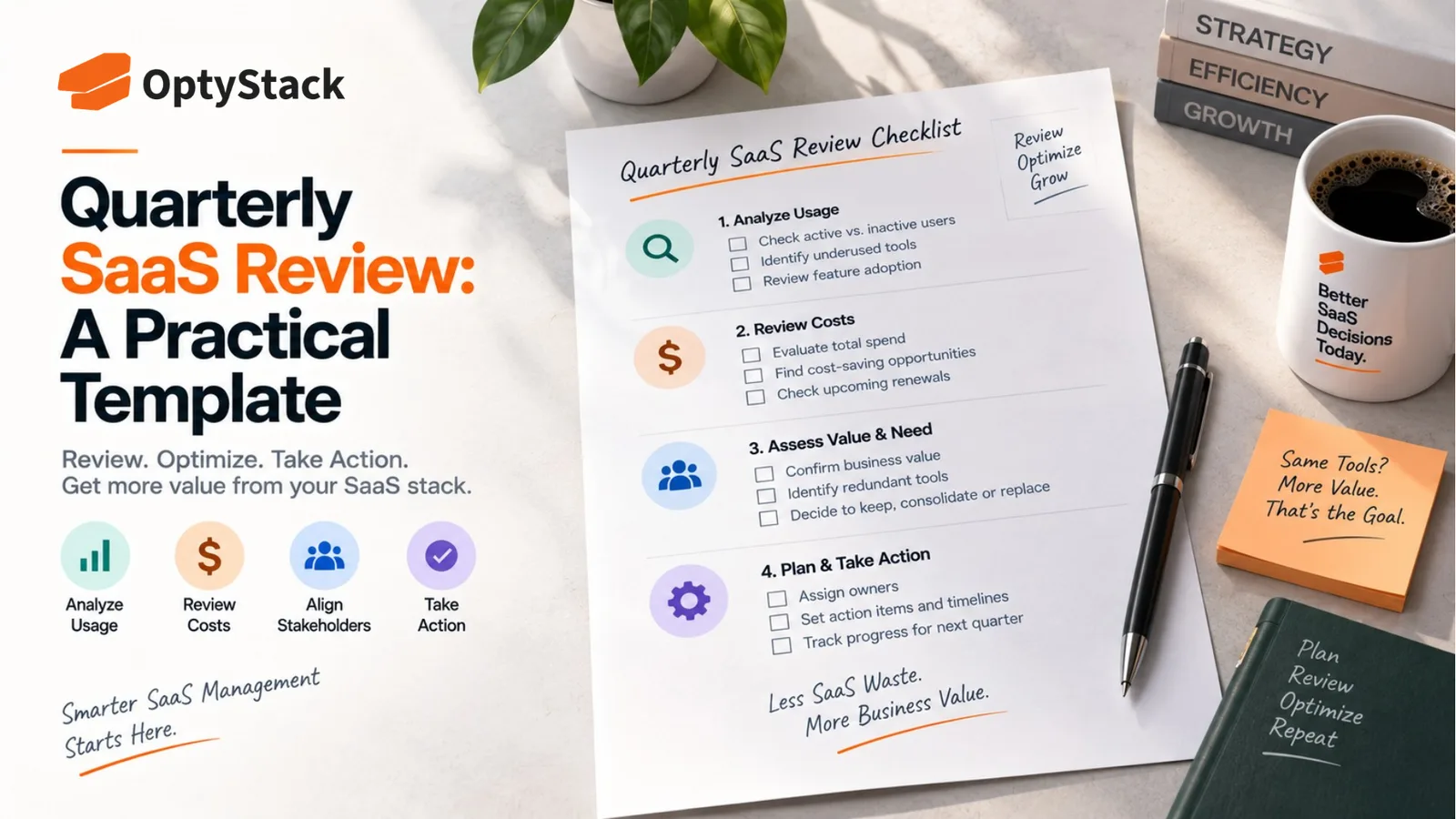
An annual SaaS audit catches problems after months of buildup. A quarterly review catches them early. Here's a practical, repeatable template covering spend, usage, renewals, and access, plus who should be in the room and where the cadence tends to break down.
An annual SaaS audit catches problems that have already been building for months. A quarterly review catches them while they're still small enough to fix without much friction. The two aren't competing processes, they operate at different depths, but most companies only run the deep one and skip the lighter, more frequent check that would have caught the same issues earlier.
A quarterly SaaS review is a recurring, structured look at spend, usage, renewals, and access across your software stack, run every three months rather than once a year. It's meant to be lighter than a full audit, focused on what's changed since the last review rather than reconstructing the entire estate from scratch each time.
Why quarterly, specifically
Software changes faster than an annual cycle can track. New tools get adopted, usage shifts as teams change how they work, and pricing terms evolve, sometimes mid-contract as vendors move toward consumption-based models. A review cadence built around a single annual check is already several months out of date by the time most of the year has passed.
Renewals don't wait for your audit schedule. With most SaaS contracts requiring 30 to 90 days' notice before they auto-renew, a review that only happens once a year will frequently either miss an upcoming deadline entirely or catch it too late to actually negotiate.
Small problems are cheaper to fix than accumulated ones. A handful of unused licenses caught after three months is a quick cleanup. The same waste left to compound for a full year, across every application in the stack, becomes a much larger and more disruptive fix.
What belongs in the review
A quarterly review works best built around four consistent sections, each with a specific, repeatable set of questions rather than an open-ended discussion.
Spend since the last review. Total SaaS spend for the quarter, how it compares to the prior quarter and to budget, and which categories or departments drove any meaningful change. The goal here isn't a full financial audit, it's catching a spend trend early enough to ask why before it becomes a surprise at year-end.
Usage and license utilization. Which applications show meaningfully low utilization since the last review, which licenses are tied to employees who've since left or changed roles, and whether any tool's usage pattern suggests it's a candidate for a tier downgrade or removal. This section is where most of the quarter's actual savings tend to surface.
Upcoming renewals. Every contract with a notice deadline falling in the next two quarters, not just the current one, since renewal preparation needs real lead time. For each one, note the current cost, whether usage supports renewing at the same size, and who owns starting that conversation.
Access and security posture. New applications discovered since the last review, particularly anything found outside the sanctioned procurement process, plus any high-risk access findings from the period, like licenses tied to departed employees that weren't caught during offboarding.
A working template structure
Section 1: Quarter-over-quarter spend summary. Total spend, variance versus budget, and the two or three biggest drivers of any change, in a few lines rather than a lengthy breakdown.
Section 2: Utilization flags. A short list of applications below a defined utilization threshold, say under 50% of licensed seats actively used, each with a proposed action: reassign, downgrade, or cancel.
Section 3: Renewal calendar for the next two quarters. Vendor, contract value, notice deadline, current utilization, and a status: not yet started, in review, or decision made.
Section 4: New and unsanctioned applications found this quarter. What was discovered, how it was found, whether it's being kept, replaced, or removed, and whether it's now been through a security review if it's staying.
Section 5: Action items from the previous review. A short check on what was committed to last quarter and whether it actually happened. This section is what turns the review from a reporting exercise into something with real accountability behind it.
Who should be in the room
A named owner for the review itself, not a rotating responsibility. Someone needs to own pulling the data together and running the meeting, or the cadence tends to slip the first time something more urgent comes up.
Finance, for the spend and renewal sections. Someone who can speak to budget variance and has the authority to weigh in on renewal negotiation priorities.
IT or a security-adjacent role, for the access and discovery sections. Someone positioned to flag new tools, unresolved access findings, and anything that needs a security review before it's approved to stay.
Department representatives, on a rotating basis rather than every quarter. Bringing in the team that owns a specific tool when it's up for review gives useful context that spend and usage data alone won't show.
Where this tends to break down
The review happens once, then quietly stops. A quarterly cadence that isn't protected on the calendar competes with everything else that feels more urgent in the moment, and it's an easy meeting to deprioritize precisely because nothing usually feels on fire.
Data takes too long to assemble each time. If pulling spend, usage, and renewal data together requires manually reconstructing it from scratch every quarter, the review becomes a burden that eventually gets skipped when time is tight.
Action items get discussed but never tracked. A review that surfaces the same finding for three quarters in a row without anything actually changing isn't a review, it's a recurring status update with no consequence attached.
Where OptyStack fits
Pulling spend, usage, renewal, and discovery data together fresh every quarter is exactly the kind of recurring manual work that tends to get shorter and shorter over time until the review stops happening altogether.
OptyStack keeps this data connected continuously across your SaaS estate, so a quarterly review starts from an already-current picture instead of a data-gathering exercise, leaving the actual review time for decisions rather than reconstruction.
It's free to start and doesn't require a credit card.
Keep your SaaS data current between every review. Start free with OptyStack.