How Much SaaS Spend Is Wasted? The Real Numbers for 2026
Hemant Wadhwani · July 5, 2026
Between a third and half of every SaaS license bought goes unused. This is the data-backed breakdown of how much SaaS spend is actually wasted in 2026, where it hides, and how to calculate your own number.
How Much SaaS Spend Is Wasted? The Real Numbers for 2026
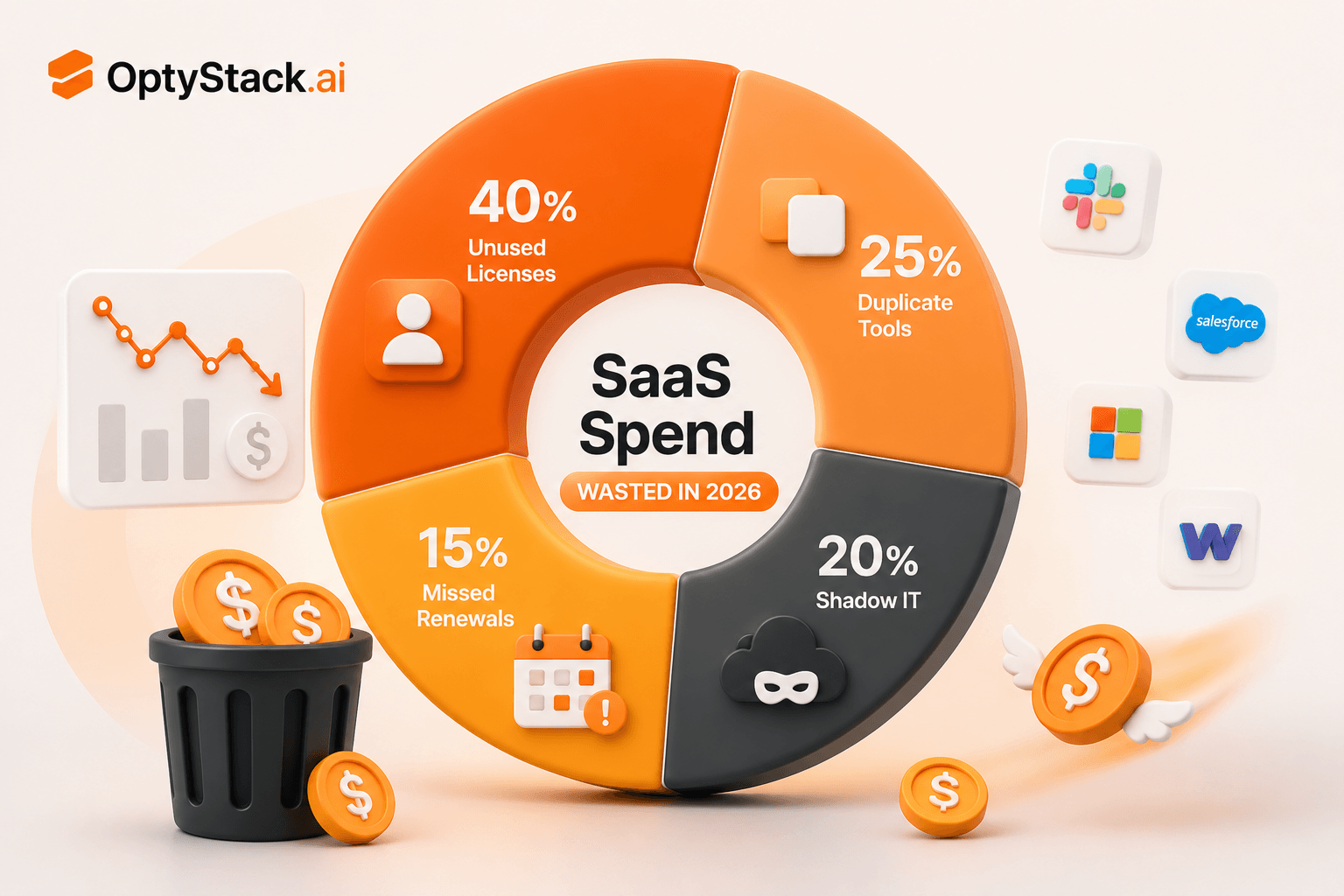
Quick answer: The average organization wastes roughly 25–30% of its SaaS budget, and between a third and half of all licenses purchased go completely unused. For a mid-to-large enterprise, that commonly translates to millions of dollars a year flowing to software nobody touches. The waste hides in four main places: unused licenses, duplicate tools, shadow IT, and missed renewals.
If you've ever suspected your company is overpaying for software but couldn't put a number on it, this is the article that gives you the numbers. We've pulled together the most current and consistent 2026 data on SaaS waste, broken it down by where it actually hides, and added a simple method to estimate your own figure. Fair warning: most people are surprised by what they find.
The headline number
Let's start with the big picture, because it sets the stage for everything else.
Multiple independent research sources across 2025 and 2026 converge on the same uncomfortable conclusion. A frequently-cited Gartner finding pegs average enterprise SaaS waste at around 30% of budget. Industry analyses put the share of unused licenses anywhere from a third to over half — with some 2026 reports recording a license waste rate as high as 51%, described as the highest ever measured. By multiple estimates, the average enterprise loses somewhere in the range of $18 million a year on licenses nobody uses.
To put a finer point on it: the typical company now spends a meaningful share of its total budget on software, SaaS makes up the majority of that, and a coin-flip's worth of every license bought is doing nothing. That's not a rounding error. That's a structural leak.
And it's getting harder to manage, not easier, because the cost drivers have shifted. Application growth has actually slowed as companies consolidate — but pricing mechanics, usage-based billing, and AI monetization have picked up the slack. Spending on AI-native software grew roughly 108% year over year. The number of tools may be stabilizing, but the financial volatility is rising.
Where the waste actually hides
"30% wasted" is a useful headline, but to fix it you need to know where it lives. SaaS waste accumulates in four main places.
1. Unused and idle licenses
This is the single biggest category. Seats you pay for that nobody logs into — either idle (a current employee who's stopped using the tool) or zombie accounts (seats tied to people who've left). Research consistently shows a large share of licenses go unused within the first 30 days, and the gap only widens over a contract term. For most companies, this is where the largest single chunk of waste sits, and also the easiest to reclaim.
2. Duplicate and overlapping tools
Companies routinely run several tools that do roughly the same job — multiple project trackers, two or three video tools, overlapping note-taking or design apps. Each was bought by a different team at a different time for a slightly different reason. Individually rational, collectively redundant. Beyond the direct cost of paying twice, duplication fragments your data and dilutes the volume discounts you'd get by consolidating onto one vendor.
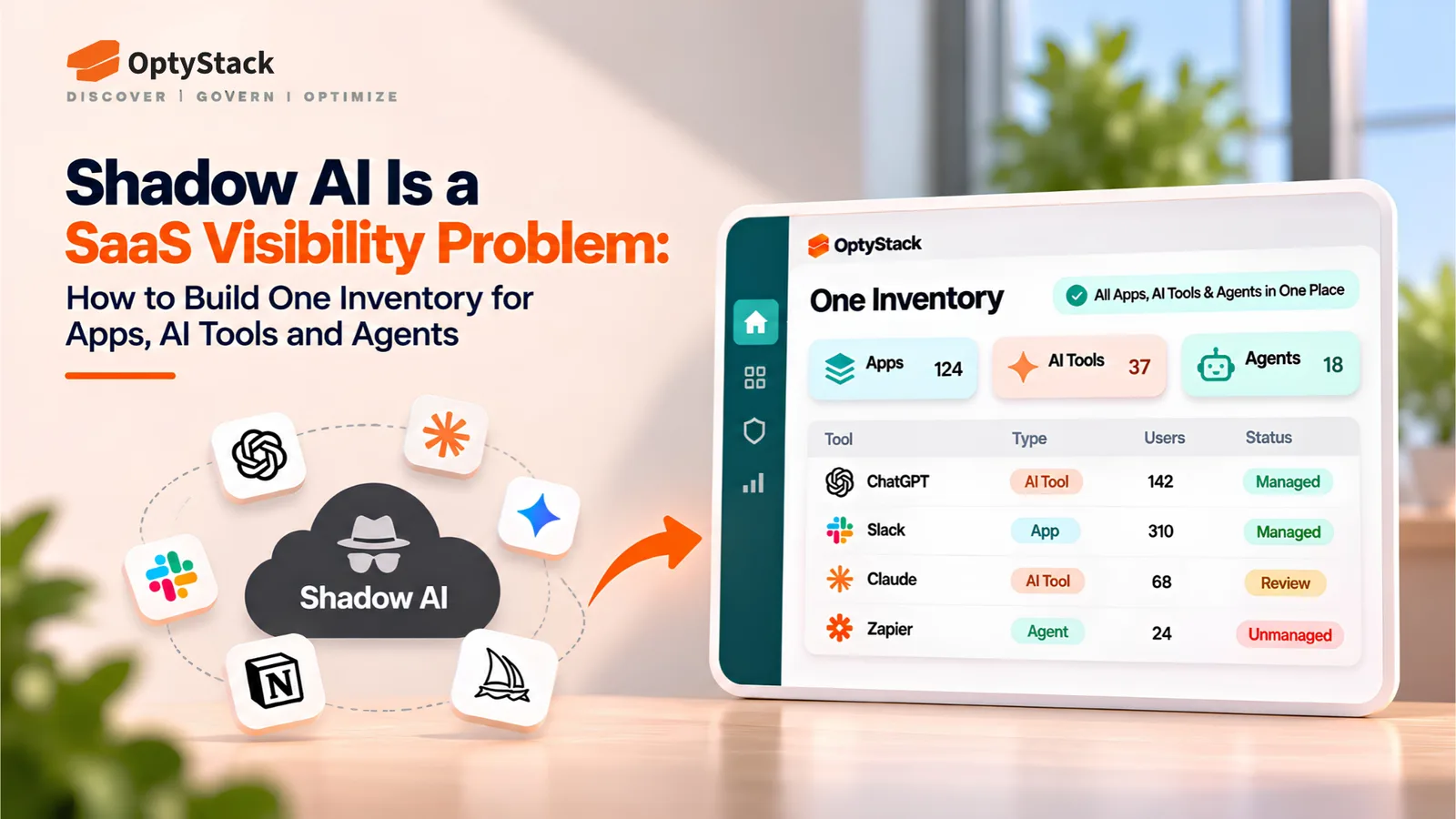
3. Shadow IT (and now shadow AI)
Tools bought outside official channels — invisible to finance, ungoverned by IT. In some organizations, shadow IT accounts for 30–40% of total software spend. Because it's invisible, it's never reviewed, right-sized, or cancelled, so it's almost pure waste by default. And the fastest-growing slice of it is shadow AI: usage-based AI tools that can spike in cost overnight and that touch sensitive data with no oversight.
4. Missed renewals and over-provisioning
The waste that gets locked in. When a contract auto-renews before anyone reviews it, every bit of known waste — idle seats, the wrong tier, an over-sized seat count — commits for another full year. Over-provisioning (buying 50 seats, using 32) and premium tiers bought for features nobody uses both fall here. This is waste you could have prevented, made permanent by a missed deadline.
Why the waste persists
If the numbers are this well-documented, why doesn't it just get fixed? Because the causes are structural, not a matter of effort.
Buying is decentralized — anyone can purchase software in minutes, so spend spreads across the whole company faster than anyone can track it. Provisioning is easy but deprovisioning is forgotten, so idle seats and zombie accounts pile up. Nobody owns the full picture, so unmanaged spend has no accountable owner. And the data is siloed — spend in finance systems, usage in app consoles, contracts in legal — so no one can see the whole stack at once. Spreadsheets and manual tracking simply can't keep pace with the sprawl. By the time a manual audit catches waste, you've usually already paid for another term.
The persistence isn't a people problem. It's a visibility problem.
The hidden costs beyond the subscription
The waste numbers above count the obvious thing: money paid for licenses nobody uses. But the true cost of SaaS waste runs deeper than the subscription line, and these hidden costs rarely make it into the headline figures.
Fragmented data. When three teams use three overlapping tools, your data splits across all three. Now reporting is harder, insights are partial, and nobody has the complete picture. The cost isn't just the duplicate subscriptions — it's the analysis you can't do because the data is scattered.
Lost volume leverage. Paying for the same category across multiple vendors means you forfeit the volume discounts you'd get by consolidating onto one. You're not just paying twice — you're paying full retail twice instead of a negotiated rate once.
Security and compliance exposure. Unused and unmanaged accounts — especially zombie accounts of departed employees — are open doors. Every active license tied to someone who's gone is a potential access point. Waste and risk are often the same accounts viewed two ways.
Productivity drag. When employees juggle too many overlapping tools, they spend time switching between them, deciding which to use, and re-finding information scattered across platforms. Research suggests a meaningful share of workers switch between apps over a hundred times a day. Tool sprawl has a real, if hard-to-invoice, productivity cost.
Management overhead. Every tool, used or not, carries administrative weight — someone has to track it, secure it, renew it, field questions about it. A bloated stack quietly taxes the time of IT and finance even before you count the wasted licenses.
Add these together and the real cost of SaaS waste is meaningfully higher than the "30% of budget" figure suggests. The subscription waste is just the part that's easy to measure.
What the trend tells us about 2026 and beyond
The SaaS waste story is shifting in an important way, and understanding the direction helps you prepare rather than react.
For years, the waste narrative was about sprawl — more and more tools, each adding cost. That's changing. Companies have started consolidating; the average number of apps per company has actually dipped as organizations cut redundant tools and demand ROI justification for every subscription. You might think that means the waste problem is solving itself. It isn't.
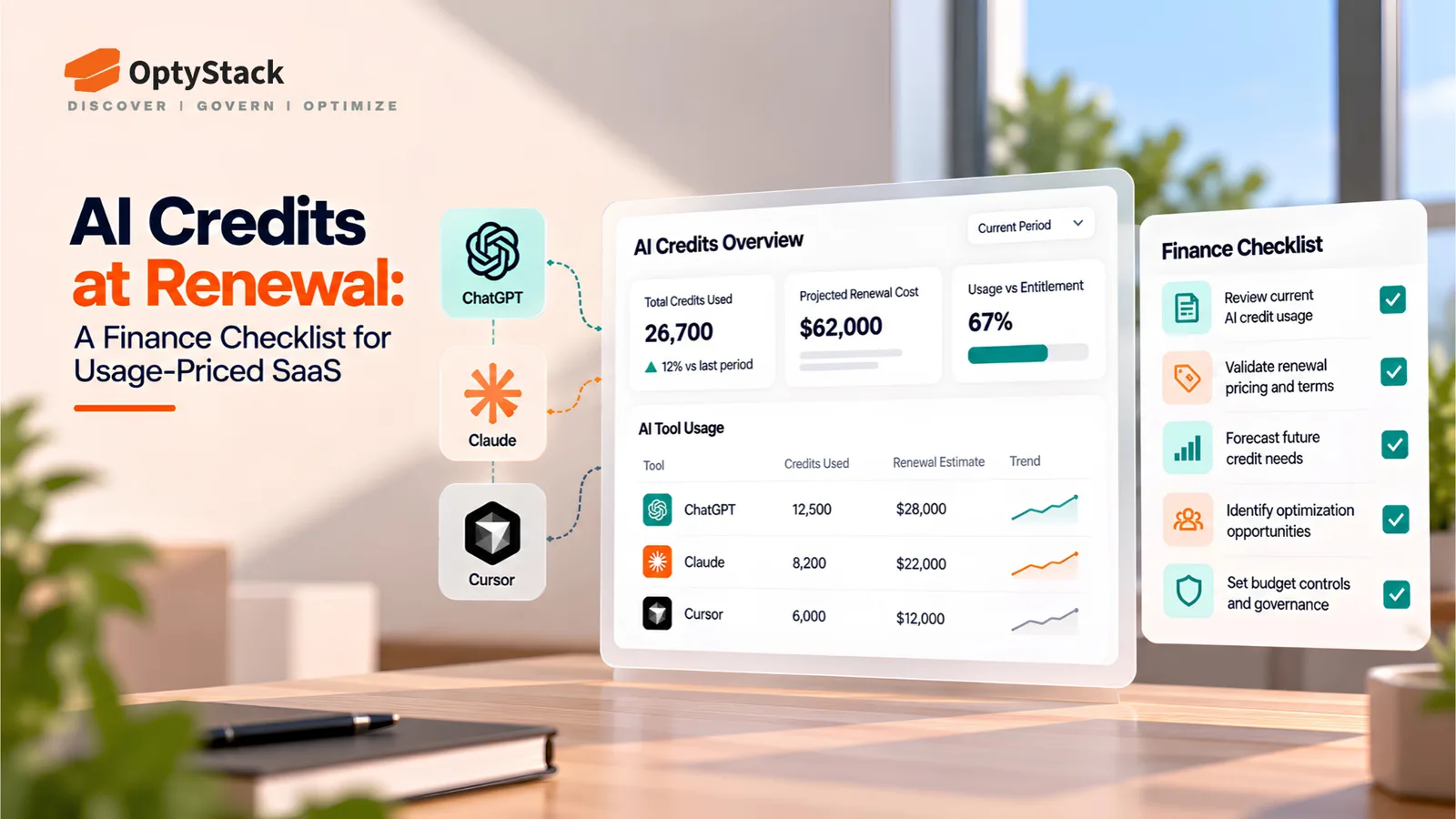
The driver of waste has simply moved. As tool counts stabilize, the pressure has shifted to pricing mechanics — usage-based billing, AI monetization, and tiers that change without warning. Spending on AI-native software grew roughly 108% year over year. So even as companies run fewer tools, financial volatility is rising, because the tools they keep are getting harder to predict the cost of.
The takeaway for 2026: the old playbook of "count your tools and cut the extras" is necessary but no longer sufficient. The new frontier of waste is the unpredictable, consumption-based, AI-inflated spend that doesn't show up as a tidy per-seat line. Controlling it requires continuous visibility into not just what you pay for, but how the cost behaves over time. The companies that adapt to this shift will keep their waste in check; the ones still just counting subscriptions will be blindsided by the bills that scale on their own.
Industry averages are useful for context, but your number is the one that matters. Here's a simple way to estimate it without any tools.
Quick single-tool method: Pick one of your larger SaaS tools. Find how many seats you pay for, and how many have logged in this month. Multiply the gap by the per-seat monthly cost, then by twelve. That's your annual waste on that one tool. It's usually eye-opening on its own.
Rougher whole-stack estimate: Take your total annual SaaS spend and apply the industry benchmark — multiply by 0.25 to 0.30 for a conservative-to-typical waste estimate. If you spend, say, ₹2 crore (or $250K) a year on SaaS, that's ₹50–60 lakh (or $60–75K) likely leaking annually. It's a ballpark, but it's a defensible one, because it's grounded in consistent cross-industry research.
The accurate method: The only way to know your real number — not an estimate — is to measure actual usage against actual spend across your whole stack: every tool, every seat, every last-login date, cross-referenced against your current employees and upcoming renewals. That's exactly what continuous SaaS spend management does, and it's the difference between "we're probably wasting around 30%" and "we're wasting ₹47 lakh, here's where, and here's the action list."
The bigger picture: waste is capital, not just cost
It's worth reframing what this waste actually represents, because "cost savings" undersells it. Money reclaimed from SaaS waste isn't just a smaller bill — it's capital freed up for things that matter. Every rupee or dollar recovered from a tool nobody uses is one that can fund a tool people need, a hire, a project, or a margin improvement. As one analysis put it, you have to be good at the basics of cost management to afford the things that actually drive the business forward. SaaS waste is, quite literally, innovation budget sitting idle.
Where OptyStack fits
The hardest part of SaaS waste isn't believing it exists — the data above makes that clear. The hard part is finding your specific number and the actions behind it, because that requires seeing usage and spend together across your entire stack, continuously.
OptyStack does exactly that. It connects your stack to build a complete picture of spend by tool and team, identifies unused and duplicate licenses with the usage data to prove it, surfaces shadow IT and shadow AI, and tracks renewals before they lock waste in. Instead of applying an industry average, you get your real waste figure and a prioritized list of what to reclaim first.
You can see your own number — not an estimate — in under ten minutes, free, with no credit card.
Frequently asked questions
How much SaaS spend is wasted on average?
Research across 2025–2026 consistently finds the average organization wastes around 25–30% of its SaaS budget, with the share of unused licenses ranging from a third to over half. For mid-to-large enterprises, this often means millions of dollars annually.
What percentage of SaaS licenses go unused?
Estimates range from roughly 30% to over 50%, depending on the study and company size. Several 2026 reports cite figures around 50%, with one recording 51% as the highest waste rate ever measured. A large share of licenses show no usage within the first 30 days of purchase.
Where does SaaS waste come from?
Four main places: unused and idle licenses (the biggest category), duplicate and overlapping tools, shadow IT and shadow AI (tools bought outside official channels), and missed renewals or over-provisioning that lock waste in for another term.
How do I calculate my company's SaaS waste?
For a quick estimate, take one large tool, find the gap between seats paid for and seats actively used, and multiply by per-seat cost and twelve. For a whole-stack ballpark, multiply total SaaS spend by 0.25–0.30. For your real number, measure actual usage against spend across every tool — which is what continuous SaaS spend management provides.
Why is SaaS waste so hard to eliminate?
Because the causes are structural: decentralized buying, forgotten deprovisioning, no single owner of total spend, and siloed data spread across finance, IT, and app consoles. Manual tracking can't keep pace with the sprawl, so waste accumulates faster than periodic audits can catch it.
Find your real SaaS waste number. Start free with OptyStack — see it in under 10 minutes, no credit card required.
Related reading: [The Complete Guide to SaaS Spend Management in 2026](https://optystack.ai/blogs/complete-guide-saas-spend-management-2026) · [How to Find & Eliminate Unused SaaS Licenses](https://optystack.ai/blogs/find-eliminate-unused-saas-licenses)