Building a SaaS Budget That Actually Holds
Aryan Malik · August 31, 2026
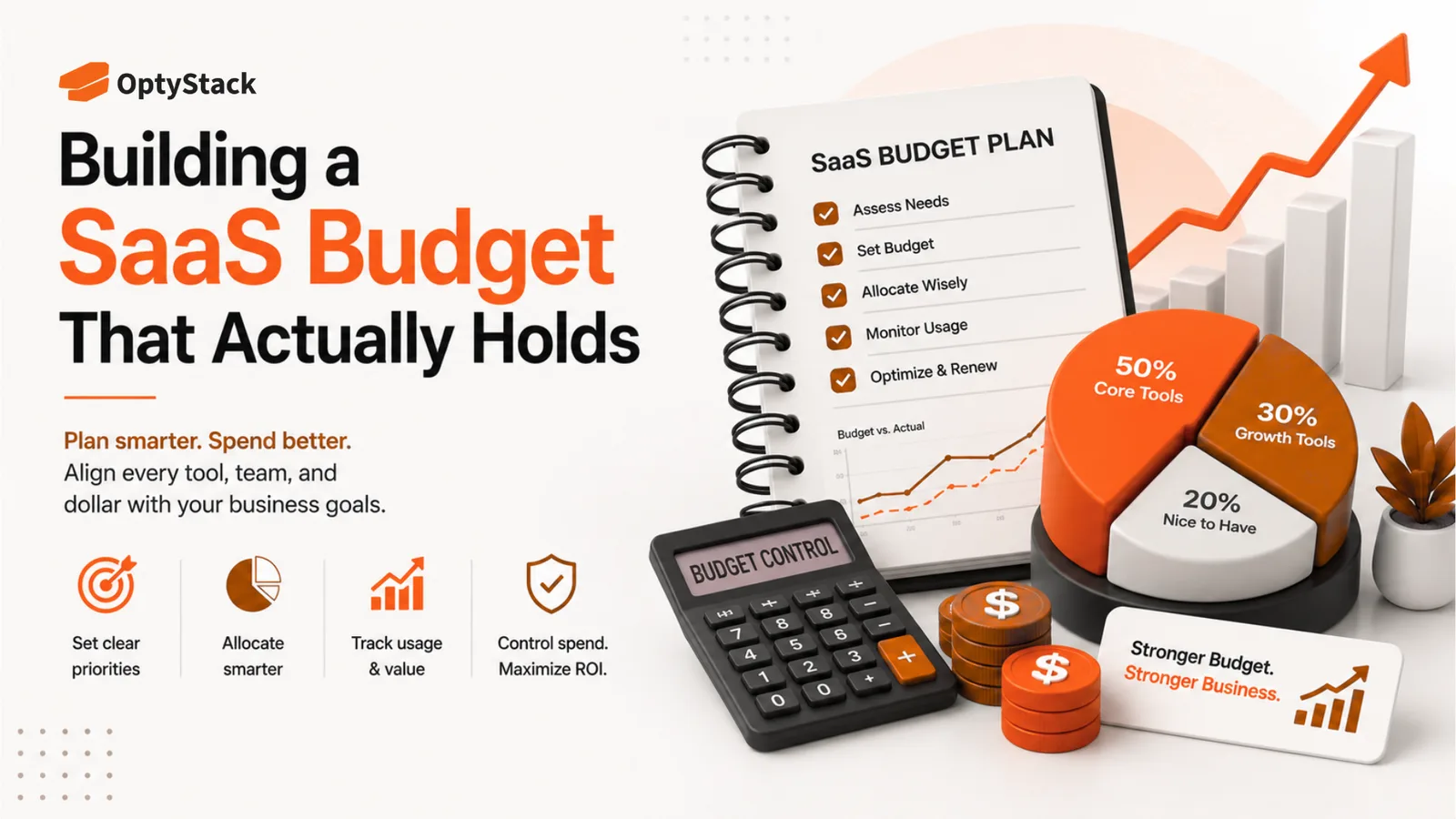
Most SaaS budgets are outdated the moment they're approved because they're built on last year's number instead of real contract, spend, and usage data. Here's how to build a forecast that actually survives the year instead of falling apart by the second quarter.
Most SaaS budgets are wrong by the time the ink dries. The problem usually isn't the forecasting model. It's the information going into it. When contract commitments, actual payments, usage, and upcoming renewals aren't connected, the budget starts drifting almost as soon as the year begins.
A budget built without knowing what you're actually paying for, who's using it, and when contracts renew isn't really a forecast. It's a guess with a dollar sign in front of it.
Why SaaS budgets break so often
The data lives in three different places. Contract terms sit with procurement or legal. Actual payments show up in the ERP or on corporate card statements. Real usage data, if anyone's tracking it at all, lives inside each individual tool's own admin panel. A budget built without connecting all three is built on incomplete information from the start.
Software buying is increasingly decentralized. Business teams can purchase SaaS independently of IT, which means a budget owned by one team can miss spending happening across the rest of the organization. A budget that only accounts for centrally-approved purchases is modeling a fraction of what the company is actually paying for.
Pricing itself has gotten harder to predict. More vendors are shifting to consumption-based and usage-tied pricing instead of flat per-seat fees, which means the same contract can cost meaningfully different amounts month to month depending on how heavily it's used. A budget built on last year's flat number doesn't hold up against a bill that now moves with usage.
Last year's number plus a flat increase isn't a forecast. It's a habit. It doesn't account for new tools that will get added mid-year, tools that will get cut, or contracts renewing at a materially different price than they did twelve months ago.
What an actual SaaS budget needs
A SaaS budget and a SaaS spend forecast aren't quite the same thing, and treating them as identical is part of why budgets drift. The budget is the plan for the year. The forecast is the running estimate of where spending is actually heading as renewals, new purchases, cancellations, and price changes happen.
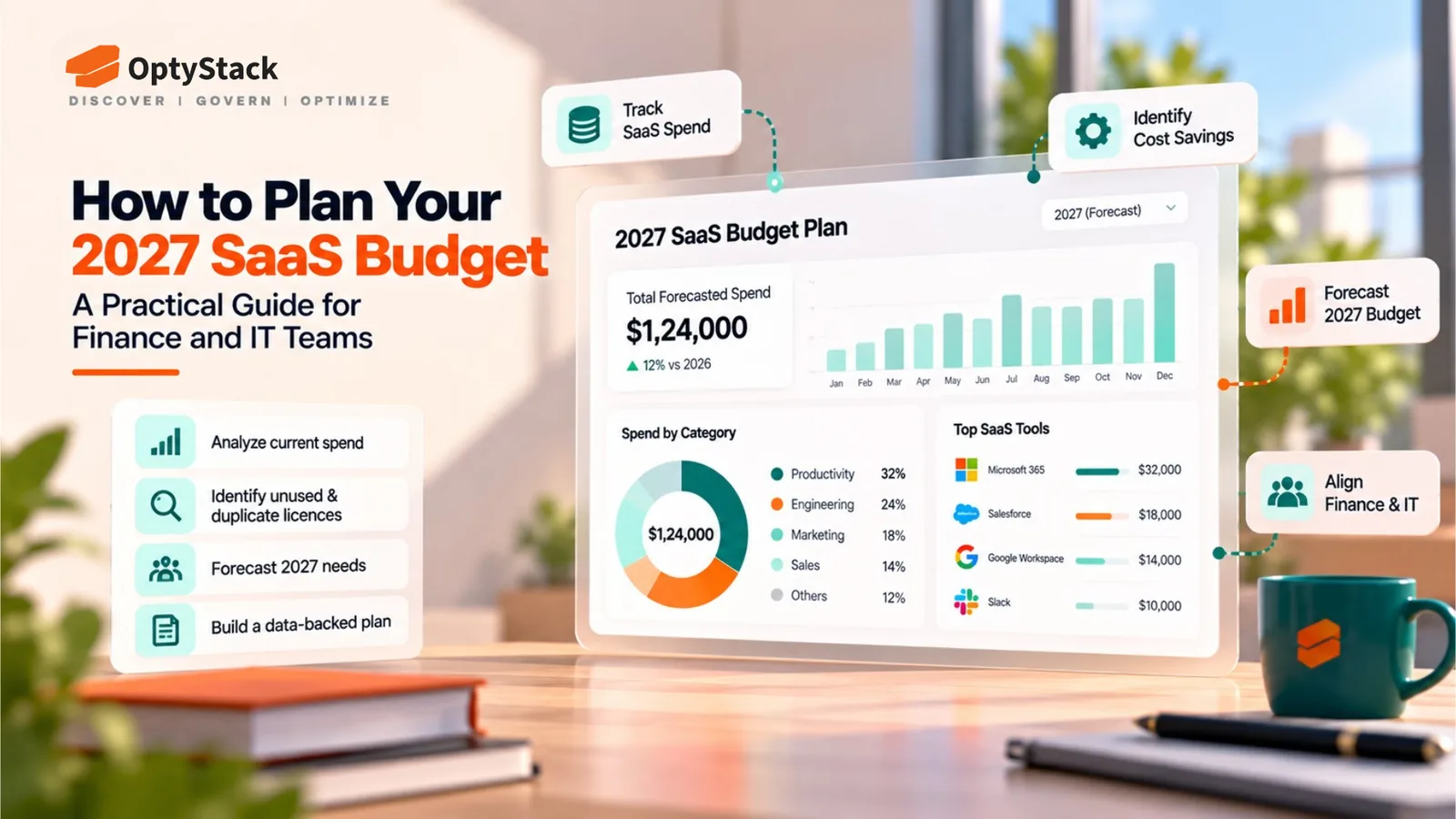
Before you build next year's budget, establish a reliable baseline of current SaaS spend. That baseline should include committed contracts, actual payments, usage-based charges, and known software purchases outside procurement. A forecast that actually holds needs three inputs connected in one place going forward: signed contract commitments, actual spend pulled from finance systems, and real usage data. Most companies have all three. Almost none have them connected, which is exactly why renewals and price increases keep arriving as surprises instead of line items anyone saw coming.
How to build a budget that survives contact with reality
Start from the renewal calendar, not from last year's total. Every contract has a known renewal date and, usually, a known contract value. Track the notice deadline alongside each renewal date too, not just the date the contract technically ends, so the budget accounts for when a decision actually needs to happen rather than when the term simply expires. Building the budget around that calendar, rather than a flat percentage increase on last year's number, immediately makes the forecast more accurate, because it's grounded in commitments that already exist rather than an assumption.
Reconcile against actual spend regularly, not once a year. Reconcile actual spend monthly where possible, and at minimum review it quarterly. A budget set in January and never revisited against real invoices will be wrong by June.
Use utilization as an input to the renewal decision, not an automatic trigger to cut. If a tool is running at 60% utilization, that's a reason to look closely at the upcoming renewal, not an automatic instruction to cancel it. Some underused seats are genuinely still needed for the role they're assigned to; others aren't. Usage data should inform that renewal conversation rather than replace it.
Separate fixed costs from usage-based ones. A flat per-seat contract and a consumption-based one need different forecasting approaches entirely. Treating a variable-cost tool like a fixed line item is one of the more common ways budgets get blindsided mid-year.
Set not-to-exceed terms during negotiation, not after the bill arrives. Volume caps and spend ceilings, negotiated into the contract itself, put a hard limit on cost surprises for usage-based tools, rather than discovering the overage after the invoice lands.
Give every tool a named owner accountable for its line item. A budget line with no owner doesn't get questioned when it grows. One with an owner does, because someone's actually responsible for explaining why the number moved.
Reforecast the plan when something changes, not just at year-end. A new tool added in March, a renewal that came in higher than expected, a team that canceled a contract, each of those should update the forecast immediately rather than waiting for the annual budget cycle to catch up.
Where OptyStack fits
Pulling contract terms, actual spend, and usage data out of three or four disconnected systems and reconciling them by hand is exactly the kind of ongoing work that gets skipped once the initial budget is set, which is why so many forecasts go stale within a few months.
OptyStack keeps contract commitments, real spend, and usage data connected in one place, so a budget can be checked against reality continuously instead of once a year during planning season. You see where actual spend is diverging from plan while there's still time to act on it, rather than discovering the gap at renewal.
It's free to start and doesn't require a credit card.
Build a SaaS budget that holds up all year. Start free with OptyStack.