12 Signs Your SaaS Stack Is Out of Control
Aryan Malik · August 28, 2026
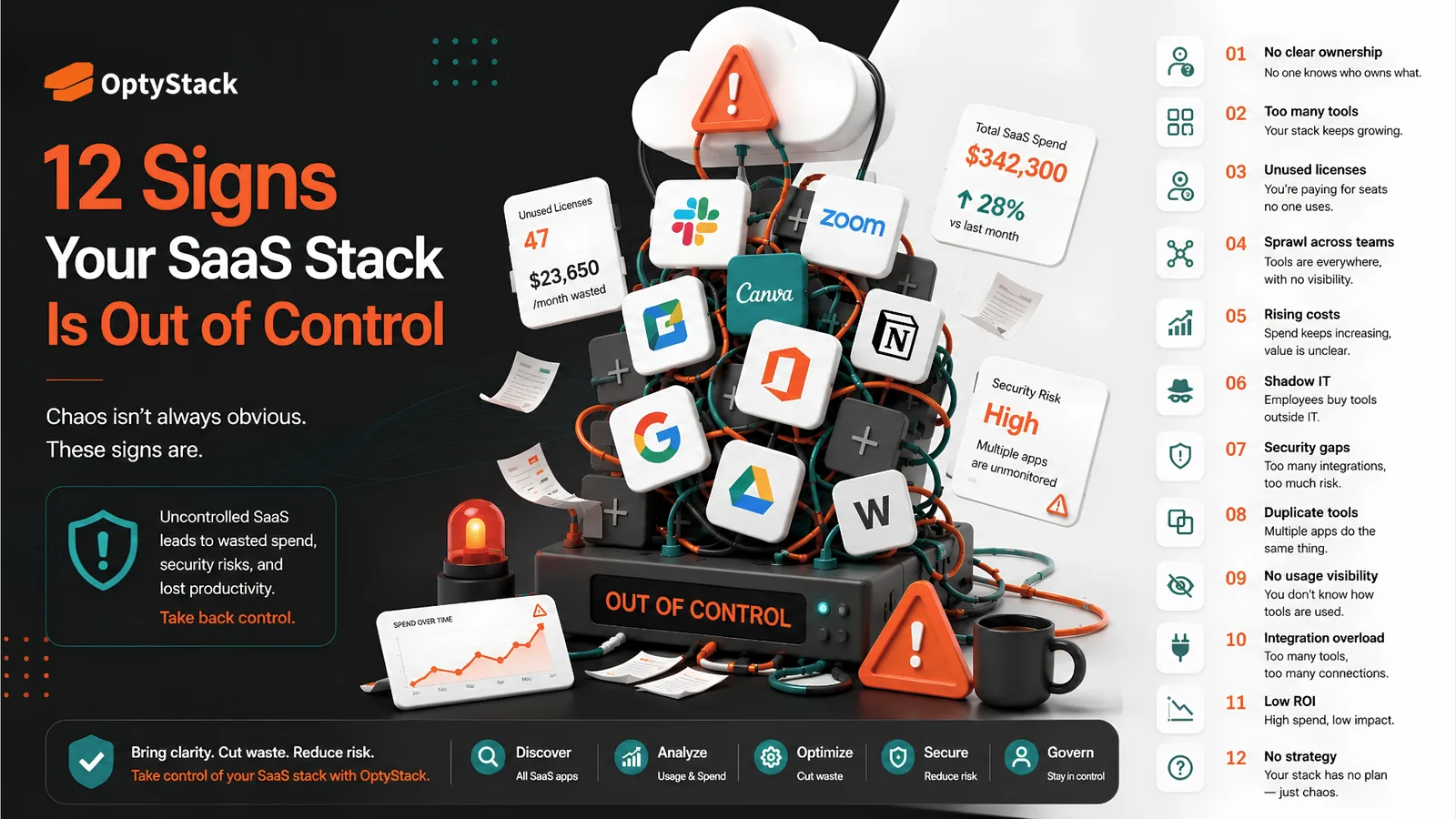
Your SaaS stack can get out of control long before anyone notices. Learn the 12 warning signs, from duplicate applications and unused licenses to missed renewals, Shadow IT, and unclear ownership—and what to do about them.
A SaaS stack rarely becomes a problem overnight. It happens one subscription at a time.
A team needs a project management tool. Someone signs up for an AI assistant. A new employee gets every application their predecessor had. Another department buys software that does almost the same thing as an existing platform. Nobody notices because each decision makes sense when it happens.
Then the company tries to answer a simple question: What SaaS are we actually paying for?
That's when the cracks usually show.
A SaaS stack is probably out of control when the company no longer has a reliable answer to what it owns, who uses it, why it was purchased, what it costs, or when it renews. The problem isn't the number of applications by itself. It's the loss of visibility and control around them.
Here are 12 signs that it's happening.
1. Finance and IT have different SaaS numbers
Ask Finance how many SaaS applications the company pays for. Then ask IT how many applications it manages.
If the answers are different, don't assume one team simply has an outdated spreadsheet.
Different numbers usually mean different parts of the SaaS estate are visible to different teams. Procurement sees approved purchases. Finance sees charges. IT sees applications connected to systems it manages. Departments know about tools they purchased themselves.
Zylo's 2026 research reflects how decentralized SaaS purchasing has become: business units now control 81% of SaaS spend, while IT directly manages only 15%.
2. You keep discovering software during expense reviews
A corporate card statement shouldn't be the first place IT learns that another SaaS application exists.
Yet small subscriptions are easy to acquire and easy to overlook. Employees can pay through expenses, teams can use free trials that become paid accounts, and applications can sit outside the normal procurement process.
Those purchases may be legitimate. The problem is that nobody has a complete picture of them.
3. Nobody can explain why a tool was purchased
Every application should have a reason for being there.
If the answer to “Why do we have this?” is “Someone in Marketing bought it a while ago,” that's a warning sign.
A missing business purpose makes almost every later decision harder. Should the subscription be renewed? Can another department use it? Can the company move to a cheaper plan? Is the tool still solving the problem it was originally bought for?
Without that context, software tends to survive by default.
4. The same function exists in several different applications
This is one of the clearest signs of SaaS sprawl.
Marketing has one project management platform. Operations has another. Engineering uses a third. All three may have different features, but if nobody can explain why the company needs all three, the overlap deserves a closer look.
OptyStack's current platform specifically surfaces duplicate tools and unmanaged subscriptions so teams can identify overlap before it turns into another renewal.
The goal isn't to force every team onto one application. It's to make sure duplication is deliberate rather than accidental.
5. Employees keep asking for tools the company already owns
This is a quieter version of the same problem.
Someone requests a new meeting tool. Someone else asks for another design platform. An engineer wants a new collaboration application.
Then someone in IT realizes the company already pays for something that does the same job.
When employees don't know what is already available, the problem isn't just employee behavior. The software catalog itself isn't doing its job.
6. You are still tracking SaaS in a spreadsheet nobody fully trusts
Spreadsheets aren't inherently bad. They're often useful for getting started.
The problem appears when the spreadsheet becomes the company's permanent source of truth even though the SaaS environment changes every day.
New applications are added. Employees leave. Seats change. Contracts renew. Usage drops. Vendors change pricing.
By the time someone updates the spreadsheet, parts of it may already be wrong.
OptyStack's approach is built around continuous discovery and a live SaaS inventory rather than relying on a static list.
7. Renewals keep surprising everyone
A renewal shouldn't feel like an emergency.
If Finance discovers a contract renewal two weeks before the deadline, there may not be enough time to review usage, reduce seats, compare alternatives, or negotiate pricing.
The problem isn't necessarily the contract. It's the lack of visibility around the contract.
A healthy SaaS stack has renewal dates, notice periods, owners, costs, and usage information available before someone needs to make a decision.
8. Licenses remain assigned to people who left
Offboarding one employee can create more than an identity problem.
If application access isn't removed across the SaaS environment, licenses can remain assigned to former employees long after they leave. OptyStack's license-management guidance specifically identifies dormant seats after offboarding as a common source of wasted spend and unmanaged access.
The same issue can happen when someone changes roles. They stay with the company, but the software they needed in their previous position remains attached to them.
9. Nobody knows which applications employees actually use
Knowing how many licenses were purchased isn't the same as knowing how many people use the software.
An application might have 100 assigned seats and only 60 active users. Another might have very little login activity but still be important for a specific quarterly process.
Without usage data, teams are forced to make renewal and license decisions based on assumptions.
OptyStack's current platform uses login and usage signals to flag inactive users and support license reclamation and right-sizing.
10. Shadow IT keeps showing up after every cleanup
You run an audit, remove a few unnecessary subscriptions, and feel like the stack is finally under control.
Three months later, new applications start appearing again.
That's a sign the problem isn't just the existing software. It's the way new software enters the company.
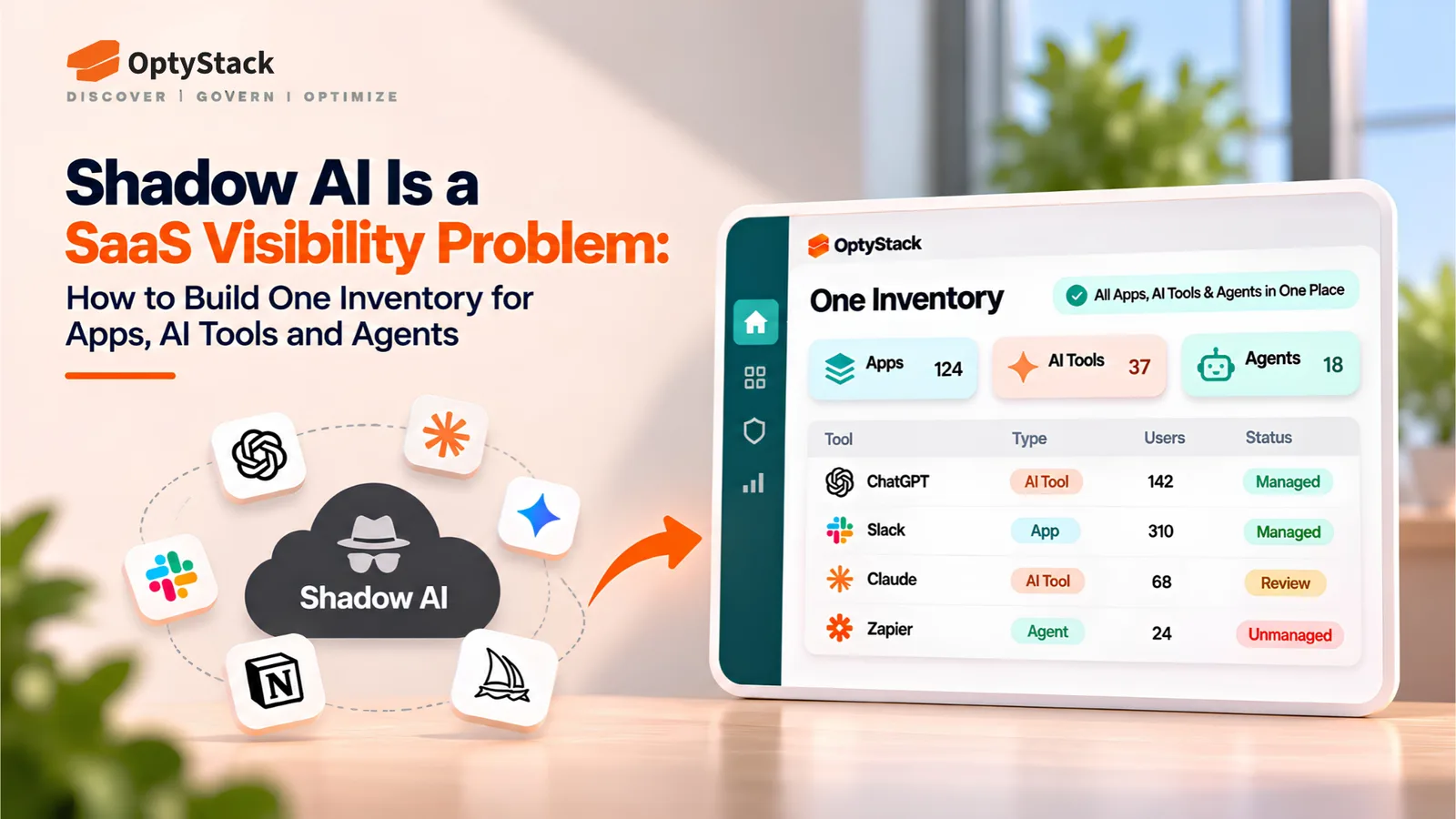
If employees can easily adopt applications outside procurement, a one-time cleanup will only reset the clock. OptyStack describes continuous discovery as a way to keep new unsanctioned SaaS and Shadow AI visible instead of waiting for the next annual audit.
11. AI tools are appearing faster than you can review them
AI has made SaaS sprawl harder to spot because an employee can start using a tool without a traditional software purchase.
A browser-based AI assistant, coding tool, or browser extension may never appear in the normal software request process. Some may also connect to company data through OAuth or other integrations.
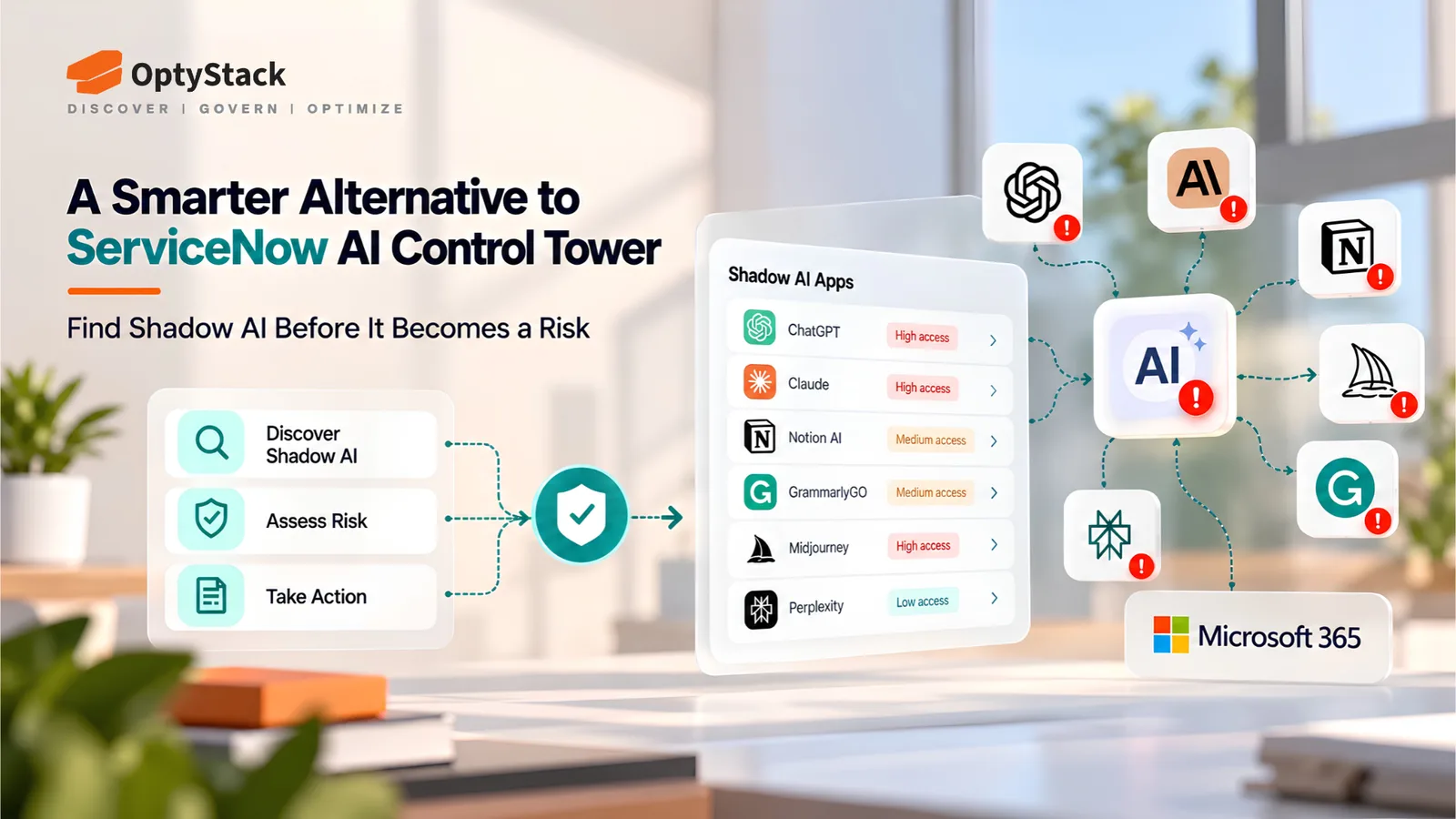
OptyStack's current discovery platform specifically includes Shadow AI visibility alongside broader SaaS discovery, helping teams identify AI tools that are operating outside normal governance.
If new AI tools keep appearing before anyone knows they're there, your existing procurement and discovery process probably isn't keeping up.
12. Nobody owns the stack as a whole
This may be the biggest warning sign.
Finance owns the budget. IT owns some applications. Security owns access policies. Procurement owns contracts. Departments own their own tools.
But who owns the overall SaaS environment?
Without someone responsible for the bigger picture, each team can make reasonable decisions while the overall stack becomes increasingly expensive and complicated.
Someone needs to be able to answer:
What do we have? What does it cost? Who uses it? Who owns it? What overlaps? What is risky? What is renewing next?
If nobody can answer those questions without pulling together several spreadsheets, systems, and people, the stack needs attention.
What to Do If You Recognize Several of These Signs
You don't need to cancel half your software overnight.
Start with visibility.
Build a complete inventory from spend, identity, usage, and application data. Identify duplicate tools, unused seats, unmanaged applications, upcoming renewals, and subscriptions without clear owners.
Then prioritize.
A $5,000 unused contract approaching renewal deserves attention before a $20 monthly tool nobody uses. A SaaS application with access to sensitive data deserves a different level of scrutiny than a low-risk productivity app.
The goal is to get the stack back to a point where every significant application has a clear purpose, owner, cost, usage profile, and next decision.
Where OptyStack Fits
The difficult part of fixing a SaaS stack is rarely identifying one problem. It's seeing all of them together.
OptyStack brings spend, identity, usage, and application signals into one SaaS management environment. It can surface duplicate applications, unmanaged subscriptions, unused licenses, Shadow IT, Shadow AI, and renewal opportunities so teams can focus on the issues with the biggest financial or security impact.
That changes the conversation from “We think our SaaS stack is getting messy” to something much more useful: here are the applications, here is who uses them, here is what they cost, and here is what needs attention first.
OptyStack is free to start and doesn't require a credit card.
Think your SaaS stack is out of control? Find out what's actually there. Start free with OptyStack.
Frequently Asked Questions
What is SaaS stack sprawl?
SaaS stack sprawl is the uncontrolled growth of software applications across an organization. It becomes a problem when applications, licenses, spending, and access are no longer easy to track or govern.
How do I know if my SaaS stack is out of control?
Different SaaS numbers across teams, duplicate applications, unexplained subscriptions, missed renewals, inactive licenses, recurring Shadow IT discoveries, and unclear ownership are all strong warning signs.
What causes SaaS stack sprawl?
Decentralized purchasing, rapid employee adoption of SaaS, duplicate tools, automatic renewals, weak offboarding, and limited visibility into usage and spend can all contribute.
How can I bring a SaaS stack back under control?
Start with complete discovery. Build a reliable inventory, identify waste and duplication, assign ownership, review access and usage, and establish an ongoing process for renewals and new software purchases.
Can SaaS management prevent future sprawl?
It can help by continuously monitoring applications, users, spend, usage, and renewals. The objective isn't to stop employees from adopting useful software. It's to make sure new applications become visible and governed before they create another blind spot.
A SaaS Stack Shouldn't Require Detective Work
A growing software estate isn't automatically a bad thing. Companies need new tools as teams expand, processes change, and new technology becomes available.
The warning sign is when nobody can explain what's there anymore.
If Finance, IT, Security, and department leaders all have different pieces of the picture, the stack is already harder to manage than it should be.
Get the visibility first. Then decide what to keep, consolidate, optimize, or remove.
Start free with OptyStack and see what's really happening across your SaaS stack.