What the AU Small Finance Bank Leak Teaches Indian Companies About Third-Party SaaS Risk
Mohit Prakash · November 3, 2026
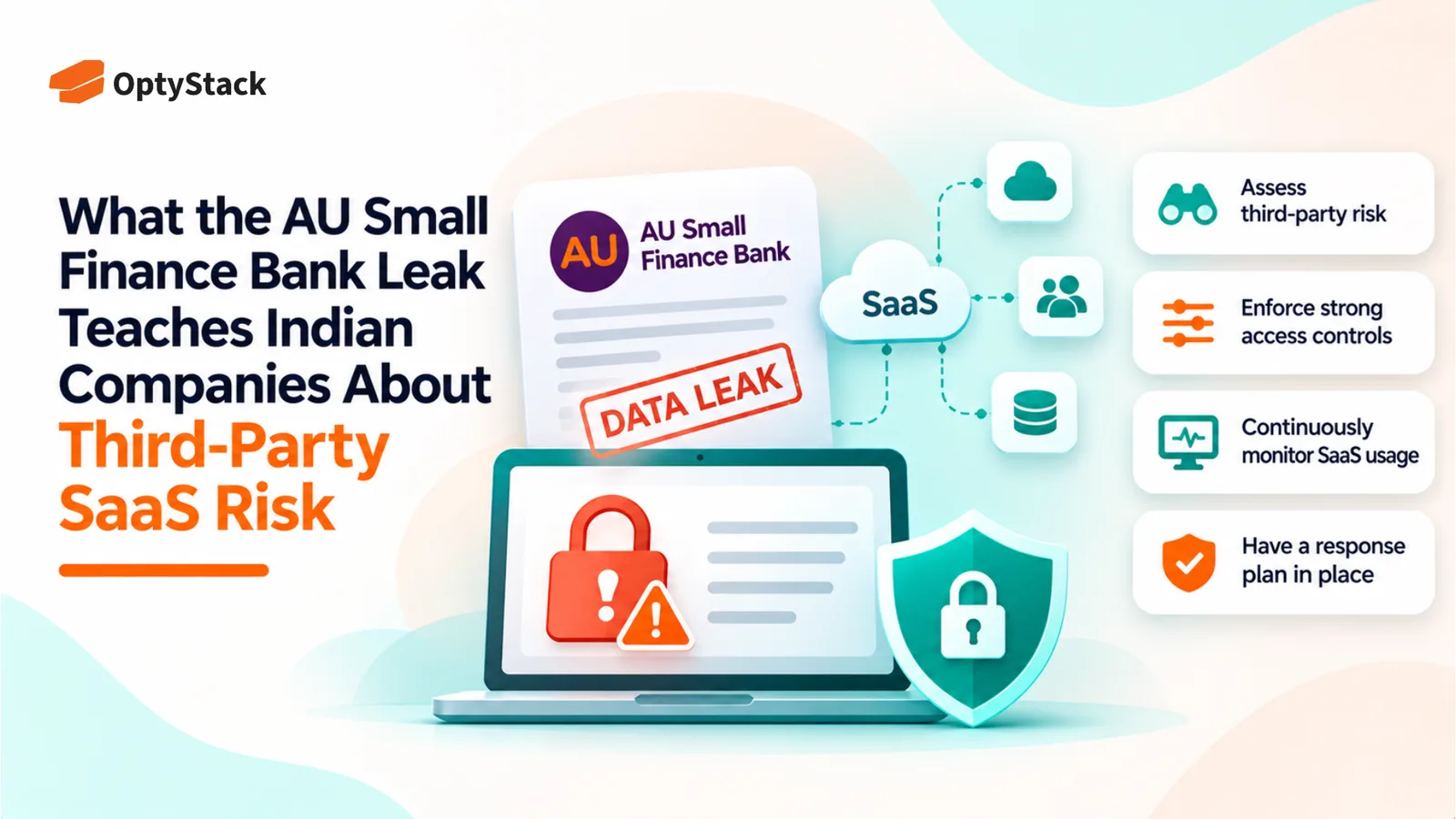
The AU Small Finance Bank data leak investigation highlights the risks of relying on third-party SaaS platforms. Explore the November 2 disclosure, five essential security checks, and a practical 30-day plan to strengthen SaaS visibility, access controls and vendor risk management.
The potential data leak under investigation at AU Small Finance Bank is a reminder that an organisation’s security boundary does not end with its own network. Customer information processed through third-party SaaS platforms can create exposure even when a company’s core systems remain unaffected.
The incident is still under investigation, and the distinction matters: a potential data leak should not be presented as a confirmed breach of the bank’s systems. But the disclosures offer important lessons for businesses that rely on external platforms to handle customer and operational data.
What AU Small Finance Bank Has Disclosed
On October 30, 2026, AU Small Finance Bank said it was investigating a potential data leak involving a software-as-a-service (SaaS) platform managed and hosted by Salesforce. The platform holds information relating to vehicle-loan customers. The bank stated that its other systems remained unaffected and banking services were operating normally. (ThePrint’s report covered the initial disclosure.)
In its November 2, 2026 exchange filing, reference AUSFB/SEC/2026-27/287, the bank provided further details. It said it became aware of the potential incident on October 29 and that preliminary findings indicated possible data leakage involving some vehicle-loan customers. Approximately 28.5 lakh customers had been onboarded through the platform. This is the platform’s customer population, not a confirmed count of affected individuals.
The bank said it was conducting internal and external forensic investigations with cybersecurity firms. It also confirmed that the matter had been reported to regulatory authorities, including the Reserve Bank of India and CERT-In. The bank reiterated that its other systems and business operations remained unaffected. (Read the November 2 exchange filing.)
A hacking group has separately claimed access to KYC records, PAN and Aadhaar details, bank statements and other information. These claims have not been independently verified, and the bank has not confirmed that these specific records were exposed. (ThePrint notes that it could not independently verify the claims.)
The key takeaway is not that a particular vendor or platform has been proven responsible. It is that businesses need visibility and control over the third-party applications that process their data.
Why Third-Party SaaS Creates Security Gaps
SaaS platforms often connect to identity providers, CRM systems, employee accounts, APIs and other business applications. These integrations make operations easier, but they also create dependencies that security teams must manage.
Common gaps include:
Excessive access: Employees, contractors or vendor accounts retain permissions beyond their actual responsibilities.
Unreviewed connected applications: OAuth grants and integrations may continue to access business data after their original purpose has ended.
Incomplete offboarding: Disabling an employee’s primary account does not always remove every connected application or active session.
Limited visibility: IT teams may not know which SaaS tools are being used, who owns them or what information they can access.
Weak renewal oversight: Contracts can renew without a fresh review of business need, access requirements or vendor risk.
A vendor’s security controls matter, but customers must also manage their own configurations, identities, integrations and access policies.
Five Questions Every IT and Security Team Should Ask
A practical third-party SaaS review should begin with five questions:
Who has administrative and export permissions? Review privileged users, bulk-download access and permissions that allow sensitive data to be exported.
Which connected applications have access? Inventory OAuth grants, integrations and service accounts. Confirm that each has a business owner and a current purpose.
Are identity controls consistently enforced? Check SSO, multi-factor authentication, conditional access and exceptions for employees, contractors and vendors.
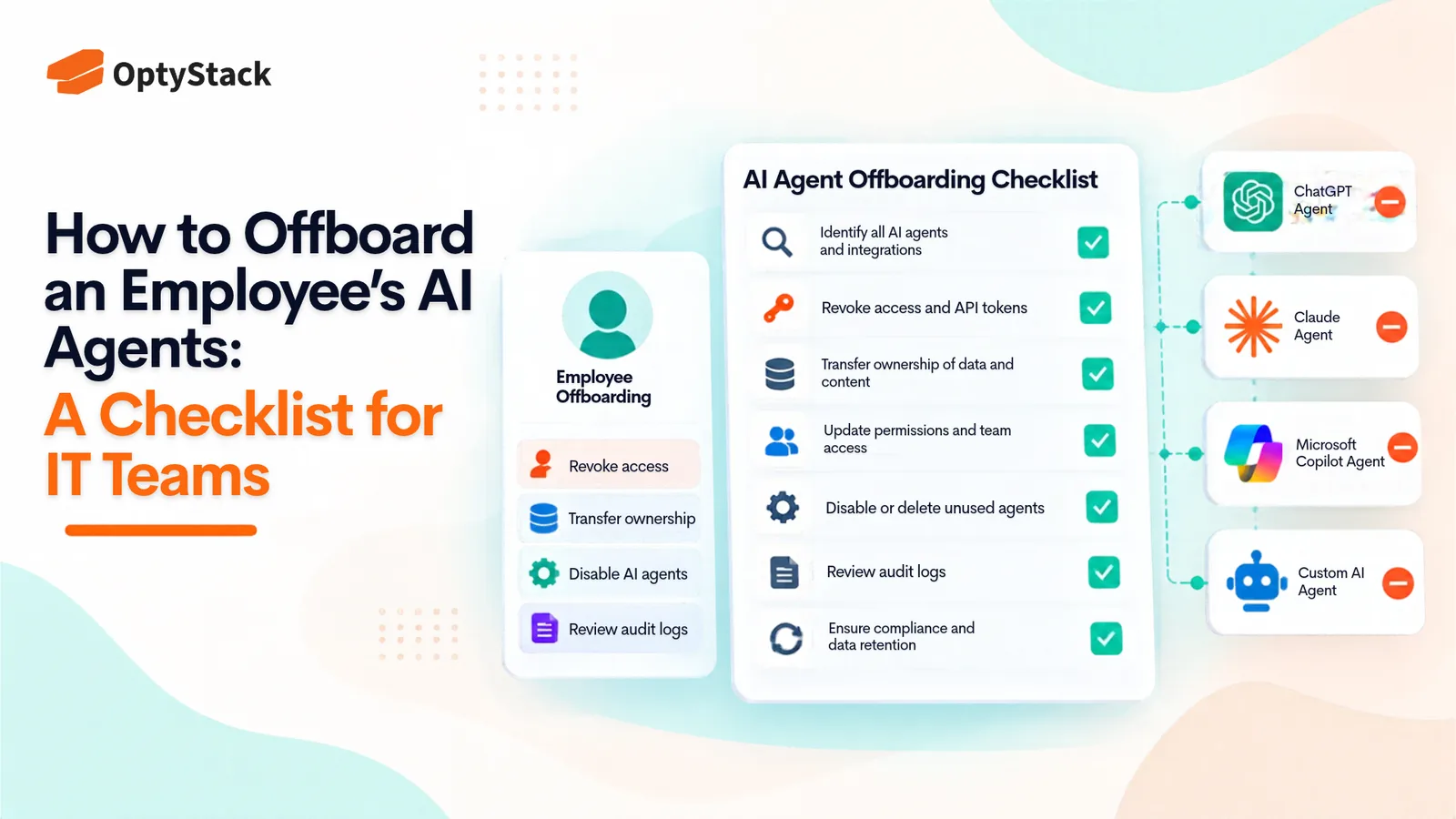
Does offboarding remove all access? Test whether employee departures trigger removal of application accounts, sessions, tokens and delegated permissions.
Can unusual data activity be investigated? Confirm that relevant audit logs and alerts are available for unusual exports, permission changes and suspicious account activity.
These checks help teams identify weaknesses across the SaaS environment rather than focusing only on the security of individual vendors.
A Practical 30-Day Third-Party SaaS Review
Organisations do not need to overhaul their entire technology environment to start improving control. A focused 30-day review can establish a useful baseline.
Week 1: Build an application inventory
Collect application information from SSO, identity providers, browser activity and software-spend records. Identify application owners, business purposes, data sensitivity and vendor dependencies.
Week 2: Review users and permissions
Check privileged access, inactive accounts, departed employees and unnecessary permissions. Apply least-privilege access and document exceptions with an owner and expiry date.
Week 3: Review integrations and credentials
Inventory OAuth grants, connected applications, API credentials and service accounts. Validate their owners, purpose, dependencies and last-known use. Revoke integrations confirmed to be unnecessary. Rotate credentials when exposure is suspected, ownership changes, a vendor incident occurs or policy requires it—not simply because a credential has not been used for an arbitrary period.
Week 4: Test and document
Run an offboarding test, verify that access is removed across connected applications and document the response process. Assign owners for recurring access reviews and vendor-risk checks.
How SaaS Visibility Supports Better Governance
A reliable SaaS inventory makes third-party risk easier to manage. Security and IT teams need to know which applications are in use, which employees have access, where spending is going and when vendor agreements are due for review.
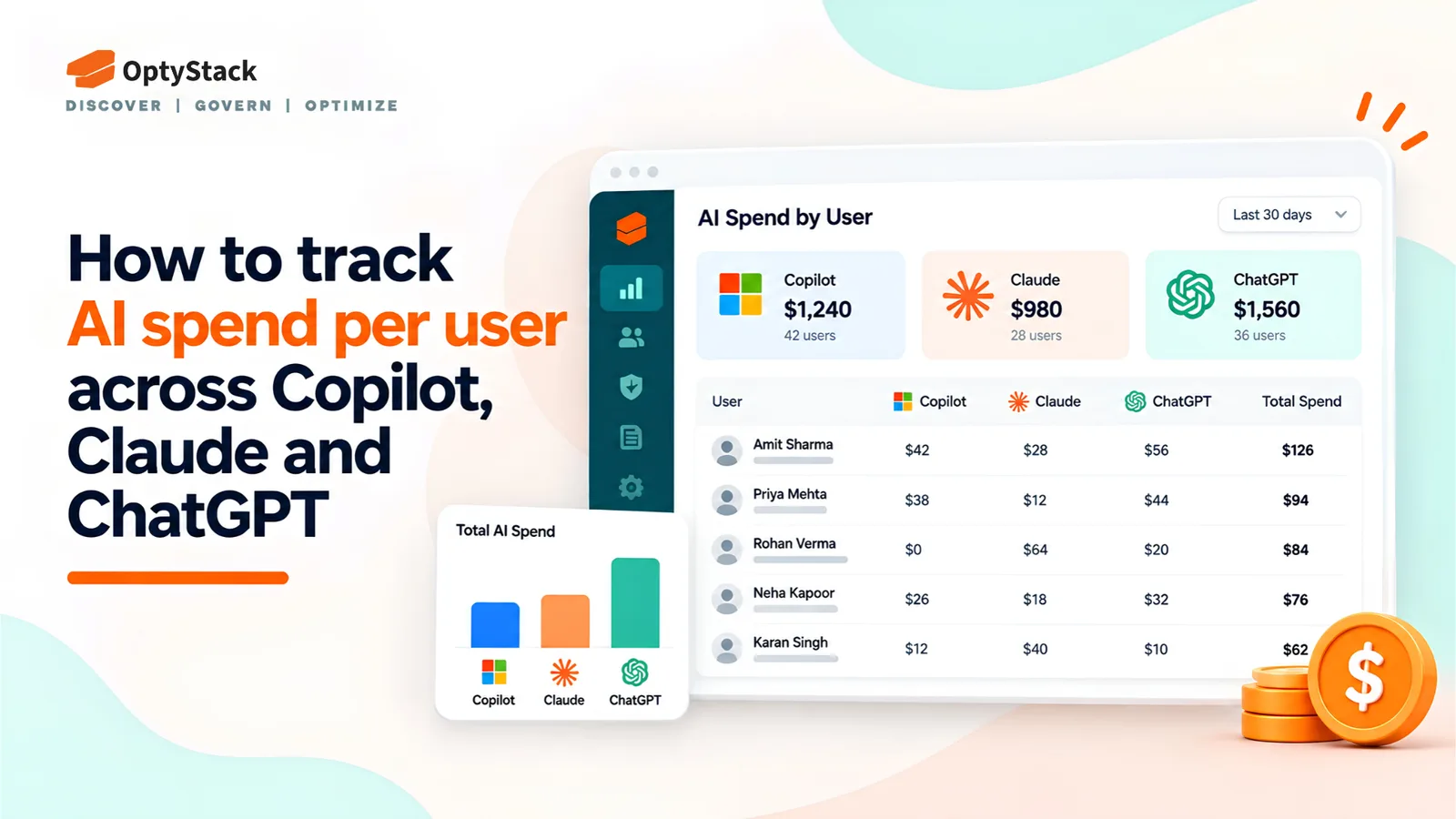
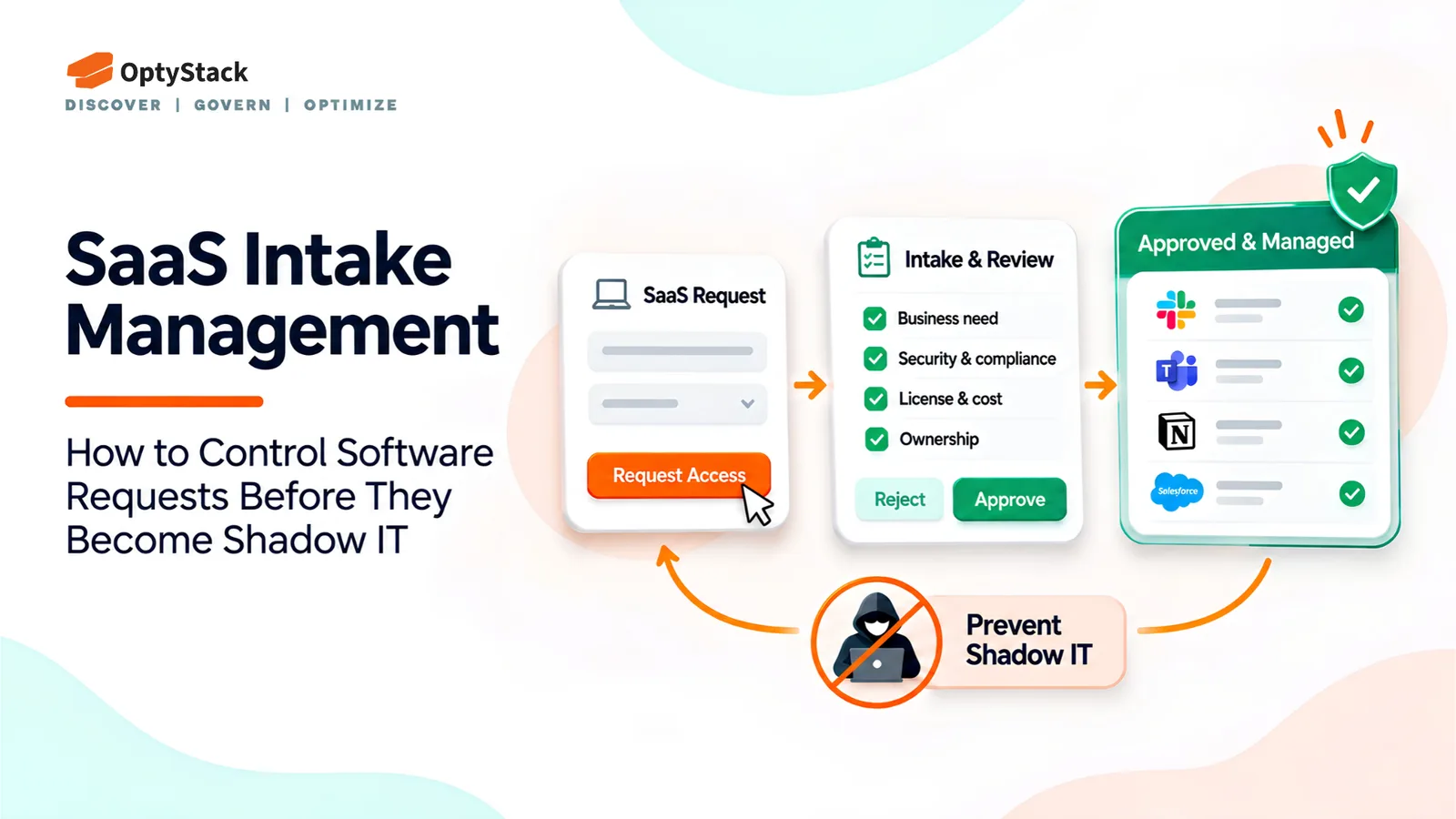
This is where OptyStack can support SaaS governance. Its discovery capabilities use signals such as spend, SSO and browser activity to help teams identify applications and map them to users. It also supports Shadow IT and Shadow AI visibility, license optimisation, user lifecycle management and contract renewal tracking, including advance renewal alerts.
Explore OptyStack Shadow IT Discovery and SaaS Contract Renewal Tracking, or get started with OptyStack.
The Bigger Lesson: SaaS Risk Is a Shared Responsibility
The AU Small Finance Bank investigation highlights why third-party SaaS risk deserves continuous attention. Even when core systems remain operational, organisations must understand what information external platforms process, who can access it and how connected access is governed.
A current application inventory, controlled permissions, reviewed integrations, reliable offboarding and clear vendor ownership give businesses a stronger foundation for managing that risk.
The objective is not simply to know which vendors an organisation uses. It is to know which applications can access business data, who is responsible for them and whether that access is still justified.