OptyStack LogoOptyStack Logo
Product
Features
Cost OptimizationCut SaaS waste with discovery, usage-backed rightsizing, and renewal leverage—often up to ~30% savings.Shadow IT DiscoveryDiscover unsanctioned SaaS, shadow AI, and unmanaged subscriptions in one place.License ManagementFind unused seats, eliminate zombie accounts, and automate renewals with usage-backed data.Contract Renewal TrackingOne renewal calendar with notice windows, usage context, and negotiation-ready briefs.Seamless App IntegrationsConnect Microsoft 365, Google Workspace, SSO, and 100+ SaaS brands into one live inventory.Identity Management with Zero Trust SecuritySingle sign-on and conditional access by IP, device, and region for your SaaS apps.
ROI Calculator
Resources

Support

  • Support
  • Knowledge Base
  • SaaS Directory
  • Partners

Content

  • SaaS Inflation Index
  • 2026 SaaS Audit Toolkit
  • Blogs
  • Success Stories
  • Events
PricingAboutContact
Start Free Trial
Book Demo
← All postsCost Management

The Data Checklist That Strengthens Every SaaS Renewal Negotiation

Sahil Singh · April 8, 2026

The Data Checklist That Strengthens Every SaaS Renewal Negotiation
Share
LinkedInX

Vendors expect you to negotiate blind. Walk in with usage curves, competitive benchmarks, and commitment flexibility. This checklist covers the evidence that moves pricing and terms.

Renewal conversations go poorly when buyers argue from principle—“we need a better price”—while sellers respond with anecdotes. The best negotiations are boring: spreadsheets that show exactly how many seats are active, how usage grew or shrank, and what alternatives exist at what price. Preparation is leverage.

Usage and entitlement evidence

Export monthly active users for the trailing twelve months. Compare to purchased seats or consumption tiers. If adoption plateaued below purchased capacity, your opening position is right-sizing, not a percentage discount on an inflated base. If usage spiked, understand whether the vendor’s overage model is fair—or a negotiating chip for an enterprise bundle.

Related reading

Explore related guides and continue your SaaS optimization research:

  • How to Track AI Spend Per User Across GitHub Copilot, Claude, and ChatGPT
  • Per-Employee AI Budgets: Control ChatGPT, Claude and Cursor Costs Without Blocking Adoption
  • How to Cut SaaS Spend Before Year-End: A Practical Cost Reduction Checklist
  • FinOps for SaaS: Bringing Finance and IT Together

Commercial history

Pull prior order forms: effective price per seat, indexation clauses, true-up mechanics, and auto-renewal notice dates. Vendors count on customers forgetting last year’s concessions. Document everything in a timeline the account team cannot dismiss as anecdotal.

Alternatives and BATNA

Even if you do not intend to switch, credible alternatives set reservation prices. Summarize migration cost and timeline realistically—enough to signal you could move if terms are abusive. Procurement and IT should align on the story before the first call.

Non-price terms

Data residency, SLAs, liability caps, and audit rights matter as much as ARR. Security and legal should review redlines early so you do not trade discount for unacceptable risk. OptyStack helps teams assemble usage and stack context quickly—so renewal prep is a repeatable playbook, not a fire drill.

Executive storytelling

When you present to leadership, lead with cash impact and risk reduction—not feature lists. Show how data discipline shortened negotiation cycles or avoided auto-renewal traps. Capture wins in a playbook others can reuse. Negotiation excellence compounds when every renewal builds on the last dataset rather than starting from zero.
Unlock visibility. Slash SaaS waste.

Get real-time SaaS spend insights, discovery, and optimization in OptyStack Hub—start free, no credit card required.

Sign up for OptyStack Hub
PreviousHow MDM and UEM Signals Complement Application DiscoveryNextFourth-Party Risk: What SaaS Subprocessors Mean for Your Security Reviews

Related articles

  • How to Track AI Spend Per User Across GitHub Copilot, Claude, and ChatGPT
    Cost Management

    How to Track AI Spend Per User Across GitHub Copilot, Claude, and ChatGPT

    Seat counts no longer explain every AI bill. GitHub Copilot, Claude, and ChatGPT offer different usage reports and spending controls. Learn how to combine vendor billing data, identity logs, and expense records into one per-user view.

    Oct 29, 2026

  • Per-Employee AI Budgets: Control ChatGPT, Claude and Cursor Costs Without Blocking Adoption
    Cost Management

    Per-Employee AI Budgets: Control ChatGPT, Claude and Cursor Costs Without Blocking Adoption

    AI bills can be difficult to forecast, but blanket bans can slow productive teams down. Learn how to build per-employee AI budgets with baseline allocations, shared usage pools, spending alerts and provider-level controls.

    Oct 20, 2026

  • How to Cut SaaS Spend Before Year-End: A Practical Cost Reduction Checklist
    Cost Management

    How to Cut SaaS Spend Before Year-End: A Practical Cost Reduction Checklist

    Reduce SaaS spending before year-end with a practical checklist for identifying unused licenses, consolidating overlapping tools, reviewing renewals, and auditing AI costs. Discover how OptyStack helps teams improve SaaS visibility, optimize licenses, and manage renewals—all in one platform. Start free with OptyStack.

    Oct 13, 2026

  • FinOps for SaaS: Bringing Finance and IT Together
    Cost Management

    FinOps for SaaS: Bringing Finance and IT Together

    FinOps has expanded beyond cloud, with SaaS now firmly within its scope. Here's why managing SaaS requires closer Finance-IT collaboration and how organizations can build a practical process without a formal FinOps team.

    Oct 7, 2026

  • SaaS Total Cost of Ownership Explained
    Cost Management

    SaaS Total Cost of Ownership Explained

    The subscription price on a SaaS vendor's pricing page is rarely the full cost. Here's what actually makes up total cost of ownership, why comparing tools on price alone leads to worse decisions, and how to build a realistic TCO estimate.

    Sep 16, 2026

Keep reading

More guides on SaaS visibility, spend, and governance—jump between topics without leaving the blog.

View all posts →
  • How to Offboard an Employee's AI Agents: A Checklist for IT Teams
    Best Practices

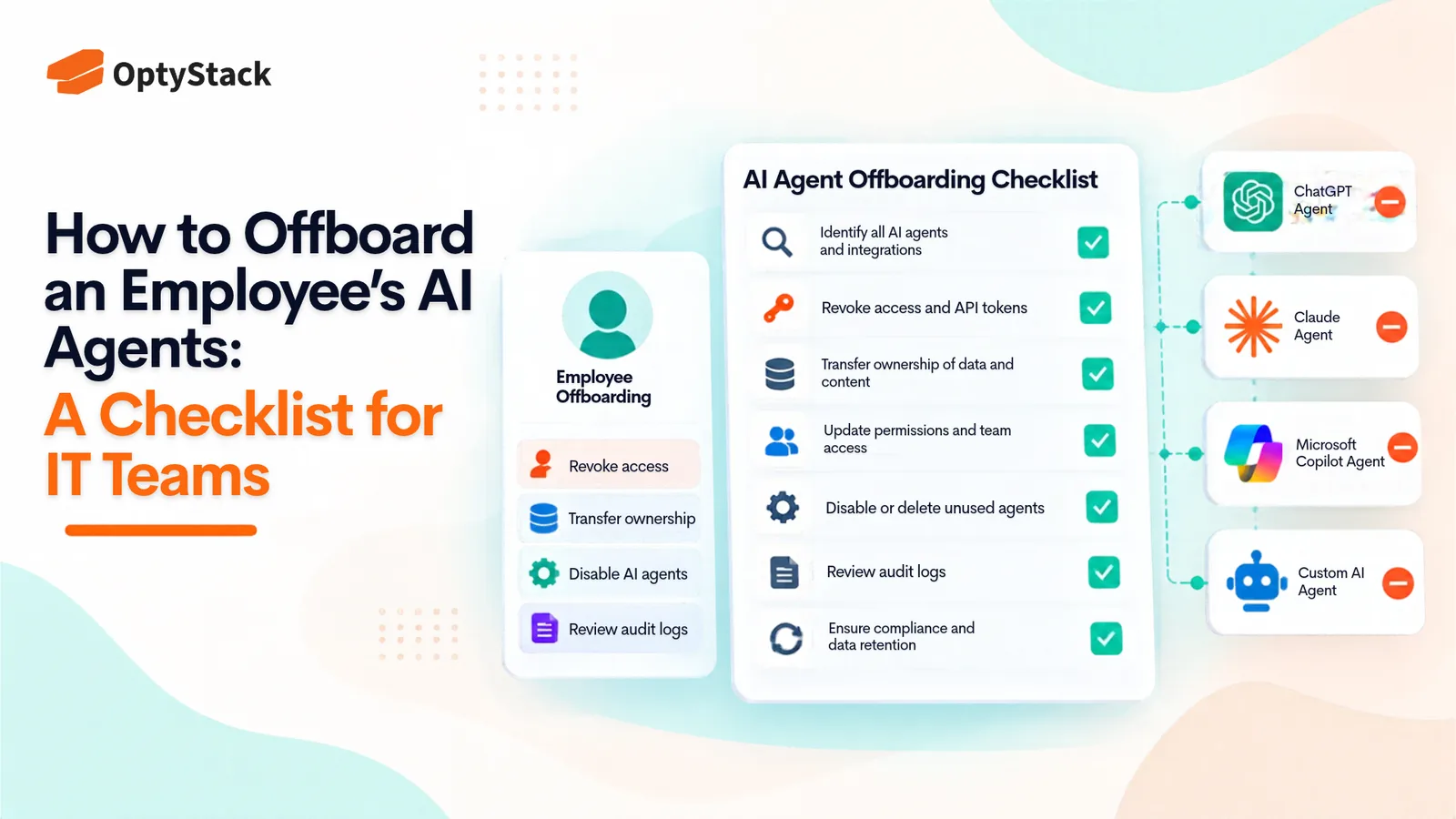
    How to Offboard an Employee's AI Agents: A Checklist for IT Teams

    Employees leave, but the AI agents they created and connected can keep running with active credentials. This checklist helps IT teams find every agent, OAuth grant, and API key tied to a departing employee, reassign or retire it, revoke access, and reclaim unused licenses.

  • AI Security Checklist for Businesses: How to Assess AI Features in SaaS Tools
    Vendor Management

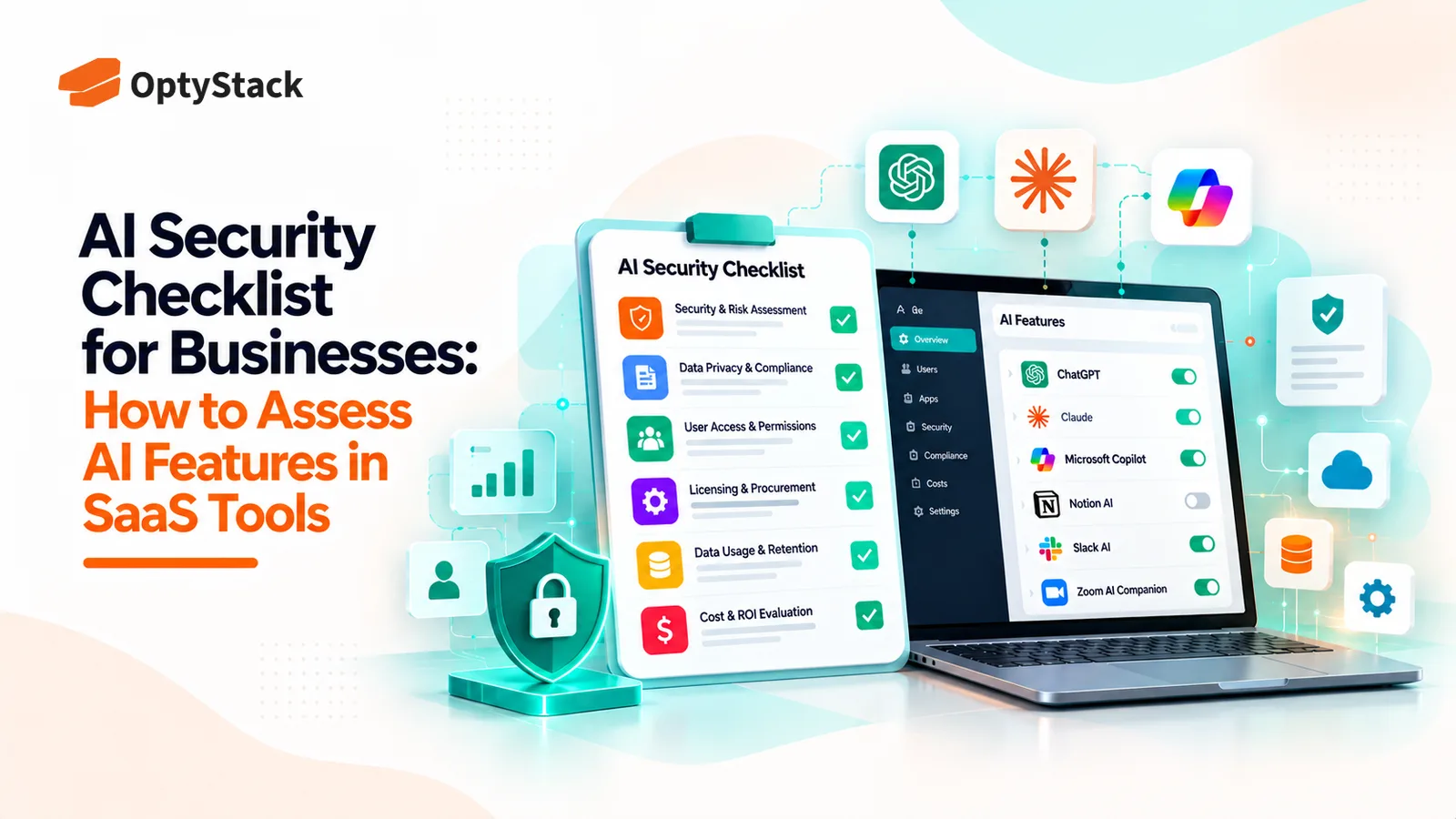
    AI Security Checklist for Businesses: How to Assess AI Features in SaaS Tools

    AI features are appearing inside the SaaS tools businesses already use. Before enabling them, review what data they can access, how vendors process information, which controls are available, and whether the feature introduces new costs or risks.

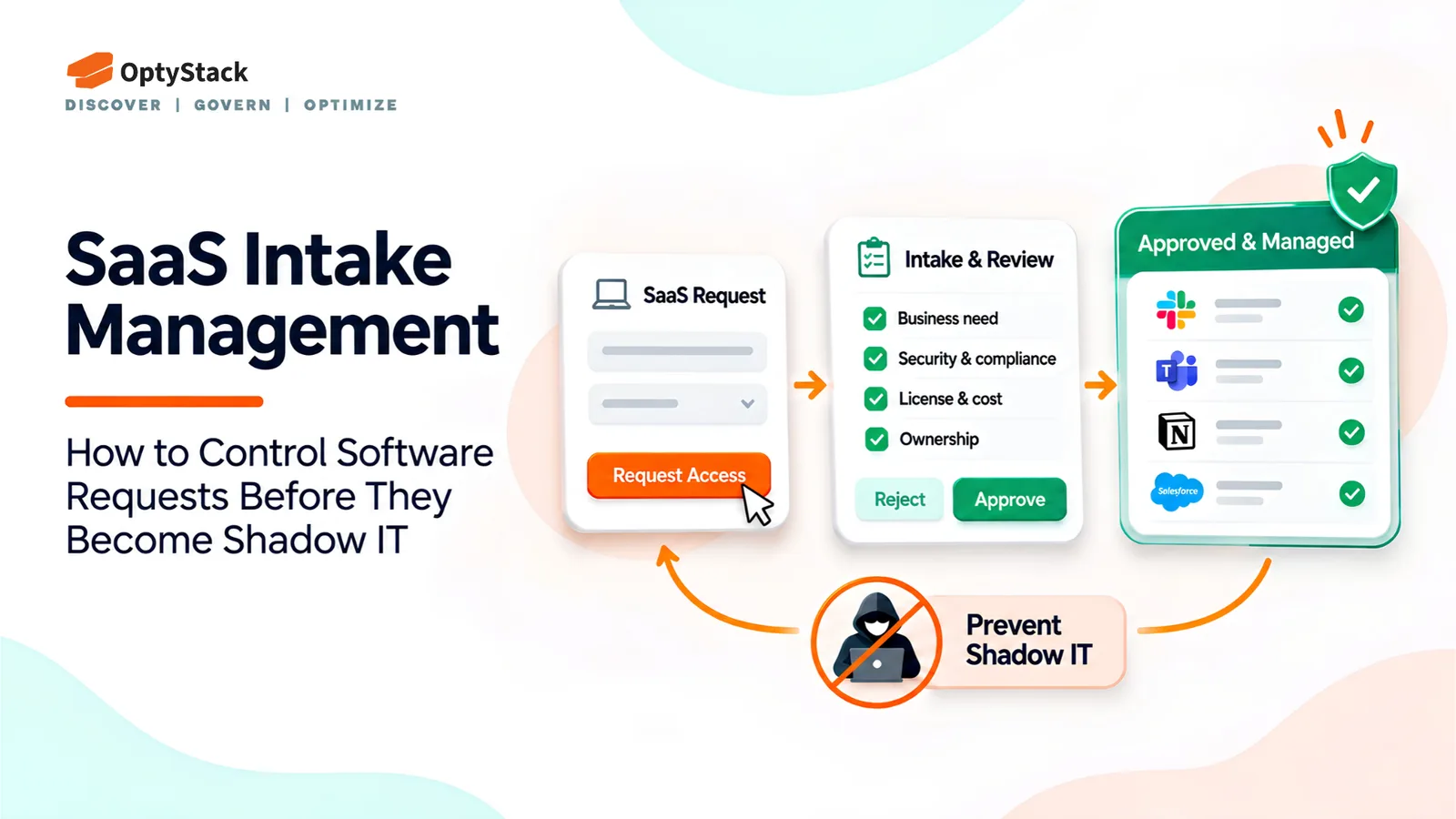
  • SaaS Intake Management in : How to Control Software Requests Before They Become Shadow IT
    SaaS Governance

    SaaS Intake Management in : How to Control Software Requests Before They Become Shadow IT

    New software requests can introduce security risks, duplicate tools, and unexpected costs. Learn how a structured SaaS intake management process helps IT teams evaluate requests, control software adoption, and improve visibility.

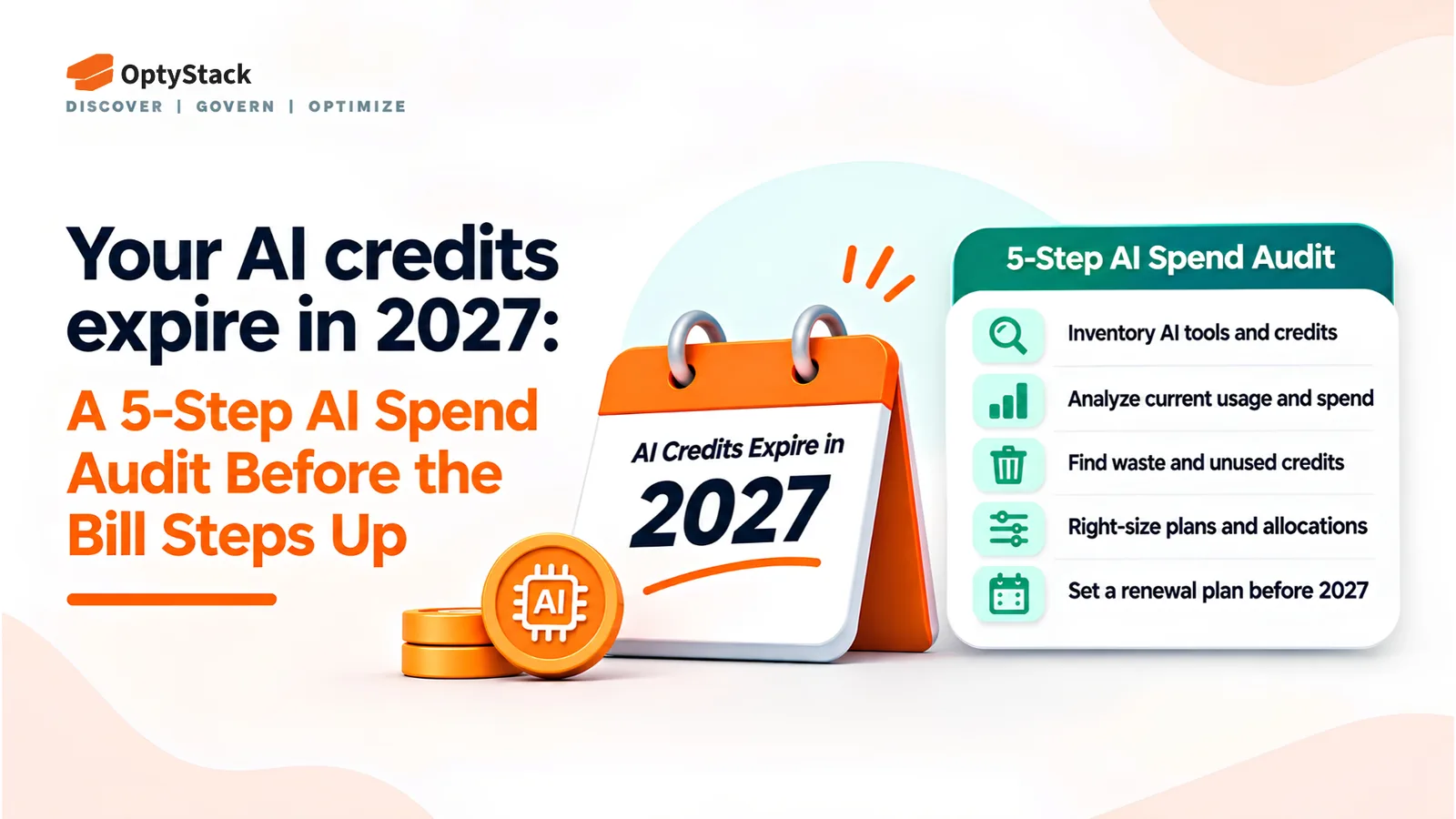
  • Your AI Credits Expire in 2027: A 5-Step AI Spend Audit Before the Bill Steps Up

    Your AI Credits Expire in 2027: A 5-Step AI Spend Audit Before the Bill Steps Up

    AI spend is growing faster than many finance teams can track. This five-step audit helps you discover hidden AI tools, map credit balances and expiry dates, attribute usage, benchmark renewals, and assign clear ownership for AI costs.

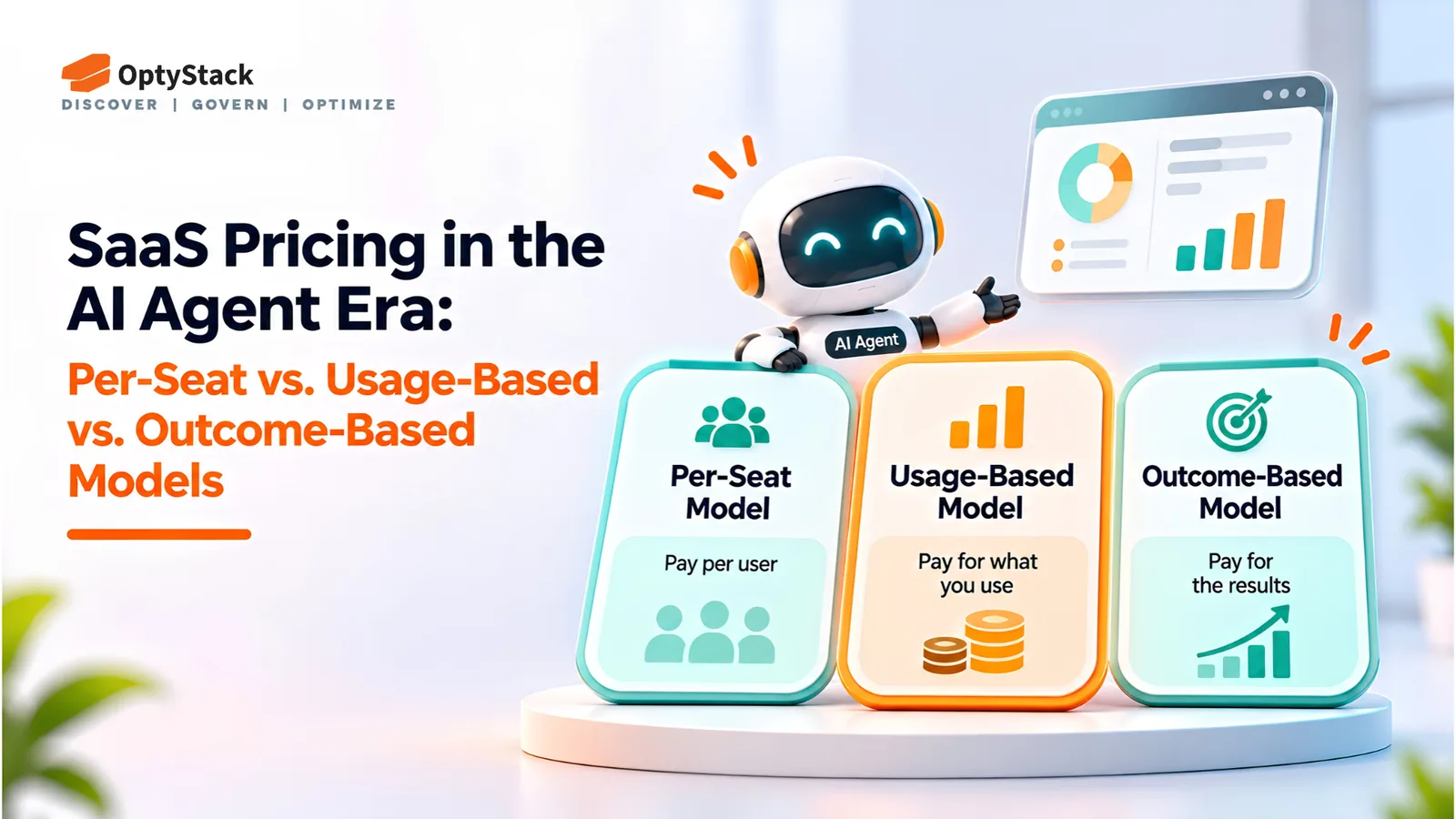
  • SaaS Pricing in the AI Agent Era: Per-Seat vs. Usage-Based vs. Outcome-Based Models
    SaaS Contracts

    SaaS Pricing in the AI Agent Era: Per-Seat vs. Usage-Based vs. Outcome-Based Models

    AI agents are changing how software vendors charge customers. Compare per-seat, usage-based, and outcome-based pricing models, and learn how IT and finance teams can evaluate contracts, forecast costs, and avoid unexpected charges.

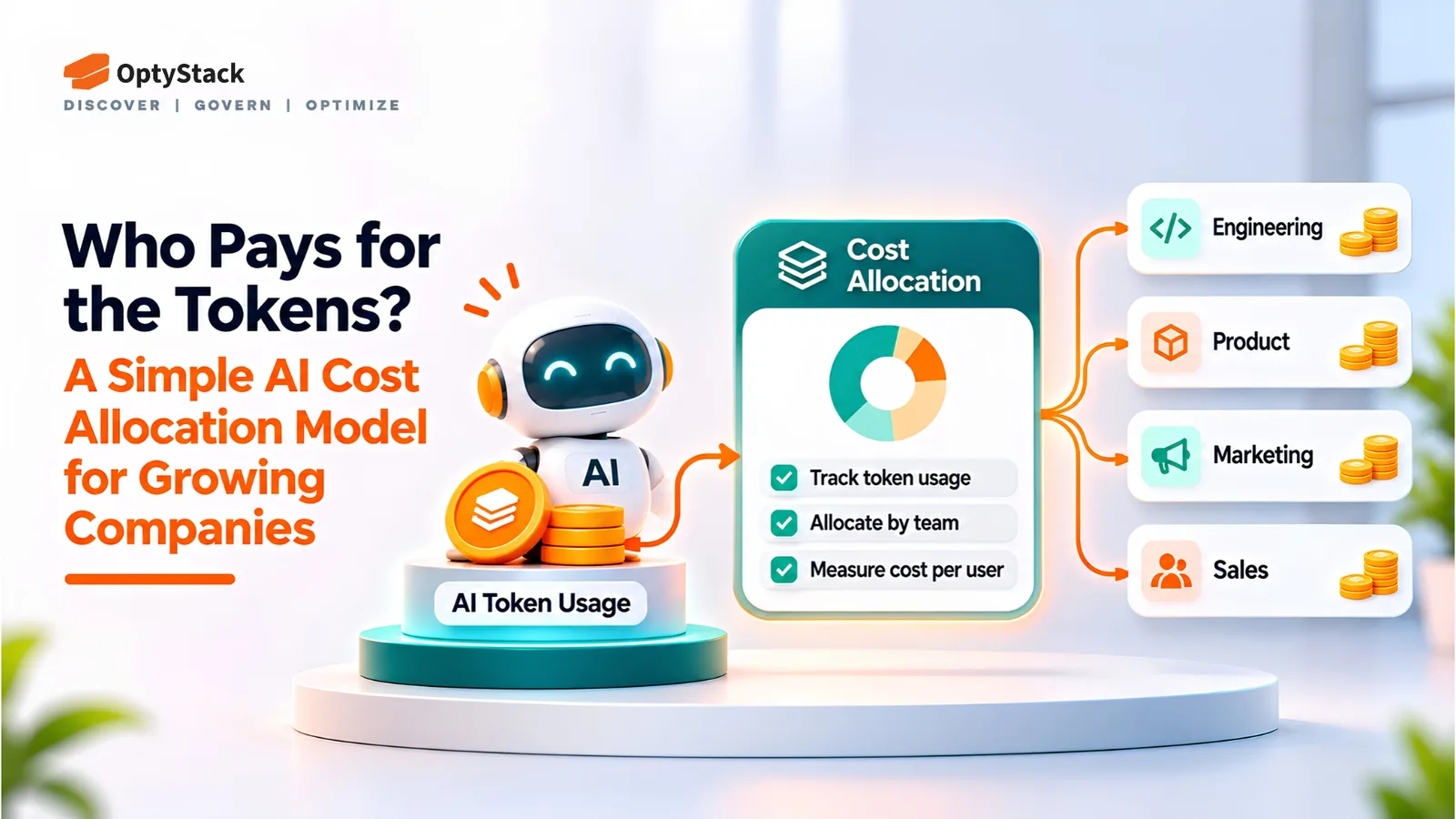
  • Who Pays for the Tokens? A Simple AI Cost Allocation Model for Growing Companies
    SaaS Governance

    Who Pays for the Tokens? A Simple AI Cost Allocation Model for Growing Companies

    Seat counts no longer explain AI bills. Learn how to inventory AI tools and agents, assign owners and budgets, track usage against spend, and bring better cost visibility into contract renewals.

Ask the smartest LLMs about OptyStack

ChatGPTGeminiClaudePerplexityGrokCopilot
OptyStack LogoOptyStack Logo

The complete SaaS spend visibility and optimization platform. Connect, analyze, and optimize your entire software stack.

Product

  • Features
  • Integrations
  • Pricing
  • API

SaaS Directory

  • Browse All Apps
  • Slack
  • Microsoft 365
  • Salesforce
  • Zoom
  • Zoho One

Features

  • Cost Optimization
  • Shadow IT Discovery
  • License Management
  • Contract Renewals
  • App Integrations
  • Identity & Zero Trust

Tools & Resources

  • ROI Calculator
  • Knowledge Base
  • SaaS Inflation Index
  • Compare Tools
  • Getting started with OptyStack

Company

  • About
  • Blog
  • Success Stories
  • Events
  • Careers
  • Contact
  • Review us on G2

Stay updated

Get the latest insights on SaaS optimization

© 2026 OptyStack. All Rights Reserved.

LegalPrivacy PolicyTerms of Service