OptyStack vs JumpCloud SaaS Management: Discovery, Identity, and Fit for Mid-Market Teams
Rohit
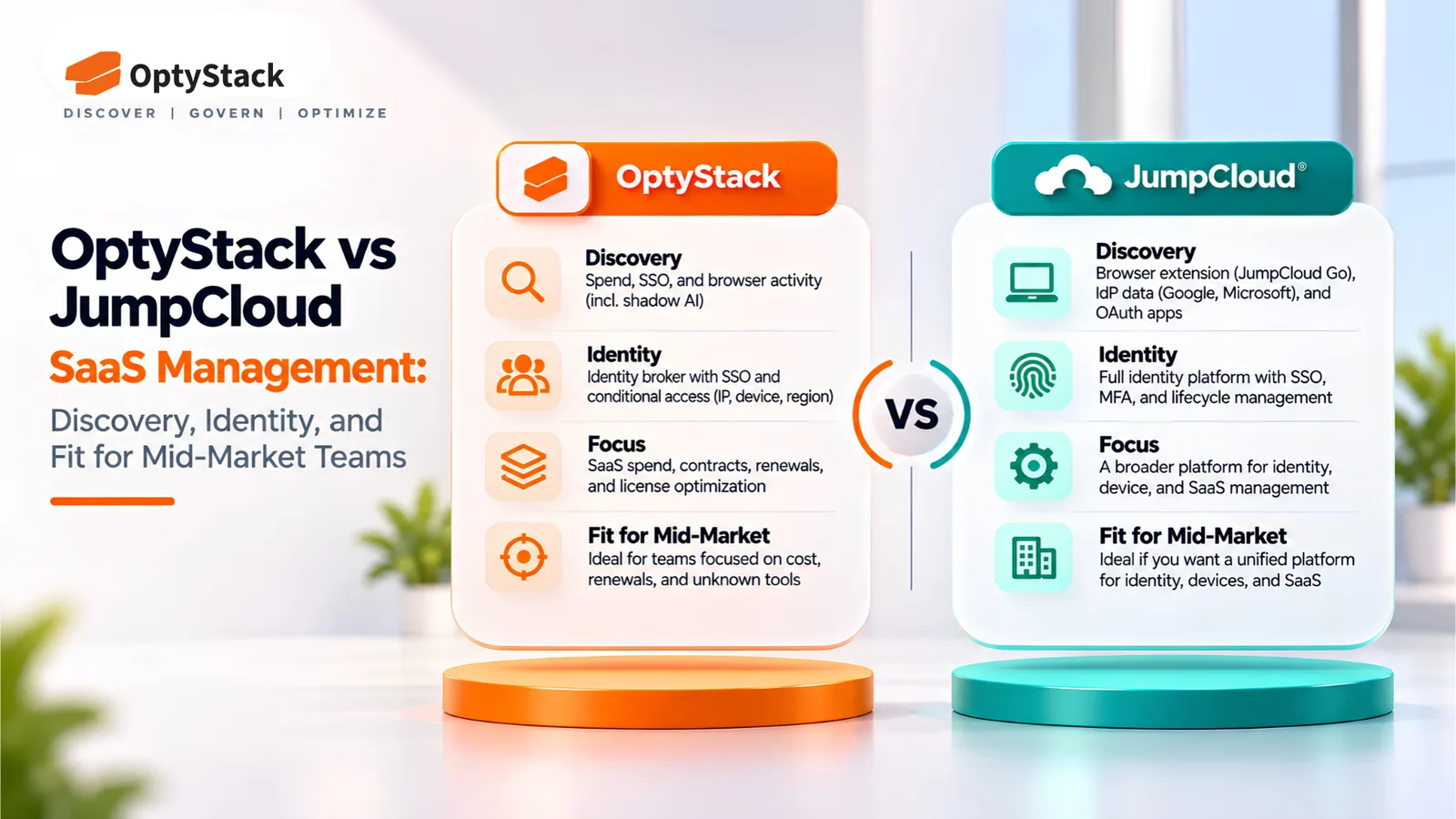
JumpCloud and OptyStack both find unsanctioned SaaS, but they start from different places. This comparison covers how each discovers apps, how each handles identity, what OptyStack costs in INR, and which team each one suits.
JumpCloud is a well-known identity and device management platform, and its SaaS management module competes for the same IT and security budget that OptyStack targets. If you are comparing the two, the useful question is which product fits the problem you are trying to solve first. This comparison covers how each one discovers SaaS, how each handles identity, what OptyStack costs in rupees, and where each fits a mid-market team in India.
What Each Product Is Built For
JumpCloud positions itself as a cloud directory. Its platform covers single sign-on, identity lifecycle management, device management, patch management, and SaaS management. SaaS discovery is one module within a broader identity and device platform. Its shadow IT use case page describes discovery and control of sanctioned and unsanctioned apps as part of that wider suite.
OptyStack is a SaaS spend management platform. Its core work is finding what your organization pays for, tying each tool to an owner, a contract, and a renewal date, and showing where licenses are wasted. Shadow IT and shadow AI discovery sit at the center, with spend, contracts, and renewals alongside them.
That difference shapes the rest of this comparison. JumpCloud starts from identity and devices and adds SaaS management. OptyStack starts from spend and renewals and adds identity signals to find what is in use.
How Each Product Discovers SaaS
Both products find unsanctioned apps, but they draw on different sources.
JumpCloud’s documentation describes several discovery methods. Its browser extension, JumpCloud Go, captures user-level SaaS activity as it happens. The platform also detects third-party apps accessed with corporate credentials and OAuth permissions granted to external tools, using data from Google Workspace and Microsoft Entra ID. IT teams can add apps manually or use native SaaS connectors. JumpCloud says this covers both approved and unapproved apps.
OptyStack’s discovery combines three signal types: spend, SSO, and browser activity. Billing data is central, so a tool bought on a company card or a personal card that was later expensed still appears in the inventory, even if it never touches your identity provider. For AI tools, the platform flags copilots, LLM APIs, and browser plug-ins, then ranks each finding by risk. You can see how this works on the OptyStack shadow IT and identity pages.
The practical difference is where discovery starts. JumpCloud is strongest where identity and browser activity already flow through its platform. OptyStack starts with money, so it catches tools that never pass through identity. Neither approach replaces the other. A thorough discovery program uses both kinds of signal.
Identity Depth
This is where the two products differ most.
JumpCloud is an identity provider. It offers single sign-on, passwordless login through JumpCloud Go, identity lifecycle management, MFA, and conditional access. If you want one directory to manage users, devices, and access to apps, JumpCloud handles that work in one platform.
OptyStack works differently. It is an identity broker, not a directory. According to its identity management page, OptyStack imports users from Google Workspace, Microsoft, or Okta, and acts as the identity provider for connected third-party apps such as Slack and GitHub. Users sign in once through OptyStack, and it checks conditions on every sign-in: IP address, device, and region. A sign-in that fails a condition is denied access to the app. OptyStack does not create a second set of identities. Your existing provider stays the source of truth for who your people are.
This model suits a team that already runs Google Workspace, Microsoft, or Okta and wants a sign-in and conditional access layer in front of its SaaS apps without replacing its directory. If you are looking to consolidate your identity stack into one vendor, JumpCloud is the stronger fit for that job.
We recommend a live demonstration before choosing OptyStack for identity. Ask the team to walk through the sign-in flow, the conditions you need, and how the app connections behave in your environment.
Pricing in INR
OptyStack publishes its pricing on its pricing page, including rupee rates. The Free plan includes unlimited app discovery and up to three app integrations. The Pro plan costs ₹100 per user per month, with a ₹10,000 monthly minimum. Pro adds shadow user discovery, unlimited shadow AI app discovery, unlimited app integrations, a renewal calendar, market intelligence, unused license reclamation, and user lifecycle management. Enterprise is priced on request. Tax is not included in the listed prices.
Here is what that means for a few team sizes on Pro:
40 users: ₹4,000 at the per-user rate, so the ₹10,000 minimum applies. You pay ₹10,000.
100 users: ₹10,000. The minimum and the per-user rate meet here.
150 users: ₹15,000.
We have not added a JumpCloud price to this comparison. JumpCloud prices per user and by package, and third-party listings report different figures for the same tiers. Before comparing costs, check JumpCloud’s current official pricing page for your user count, the packages you need, and any add-ons such as conditional access or SaaS management.
Fit for Indian Mid-Market Teams
Mid-market teams in India usually have a small IT group that handles helpdesk, devices, vendor requests, and access reviews. Finance often owns renewals and budgets, and the two teams need a shared view of what the company pays for.
JumpCloud is a broader platform. It makes sense when one team owns identity, devices, and SaaS access together and wants to consolidate those tools. It also brings more configuration and administration.
OptyStack is narrower. It fits teams whose immediate problem is cost, renewals, and unknown tools. Finance and IT can share one inventory and renewal calendar without running an identity project first. Because OptyStack connects to your existing identity provider rather than replacing it, the rollout is more contained. It also has a clear rupee price on its public pricing page, which makes early budgeting simpler.
We have not verified OptyStack’s data residency options for India, local support hours, or whether INR billing includes GST. Confirm these with the vendor before you commit.
Where Each Product Fits Best
Choose JumpCloud if you want one platform for identity, devices, and SaaS access, and you are ready for a broader deployment.
Choose OptyStack if your priority is SaaS spend, renewal control, and shadow IT and shadow AI discovery, and you already have an identity provider you plan to keep.
Some teams will use both. JumpCloud can manage identity and devices, while OptyStack handles spend, contracts, and renewals across the same SaaS estate. Check whether the two integrate with your stack before you plan around that.
What to Test Before You Decide
Run a proof of concept in your own environment. Connect both tools to your identity provider and productivity suite, then compare what each one finds in the first week. Ask both vendors:
Which discovery sources do you use, and do they find tools bought on company or personal cards?
How do you identify AI tools, and how do you rank their risk?
Can I see renewal alerts and usage data in the same view?
Where is data stored, and what regional options exist for India?
What does onboarding look like for a team our size?
Compare the answers against your own inventory. The tool that finds the apps your team has forgotten is usually the better fit.