Shadow AI Discovery Tools (2026): What Each Category Finds and Misses
Aryan Malik · October 16, 2026
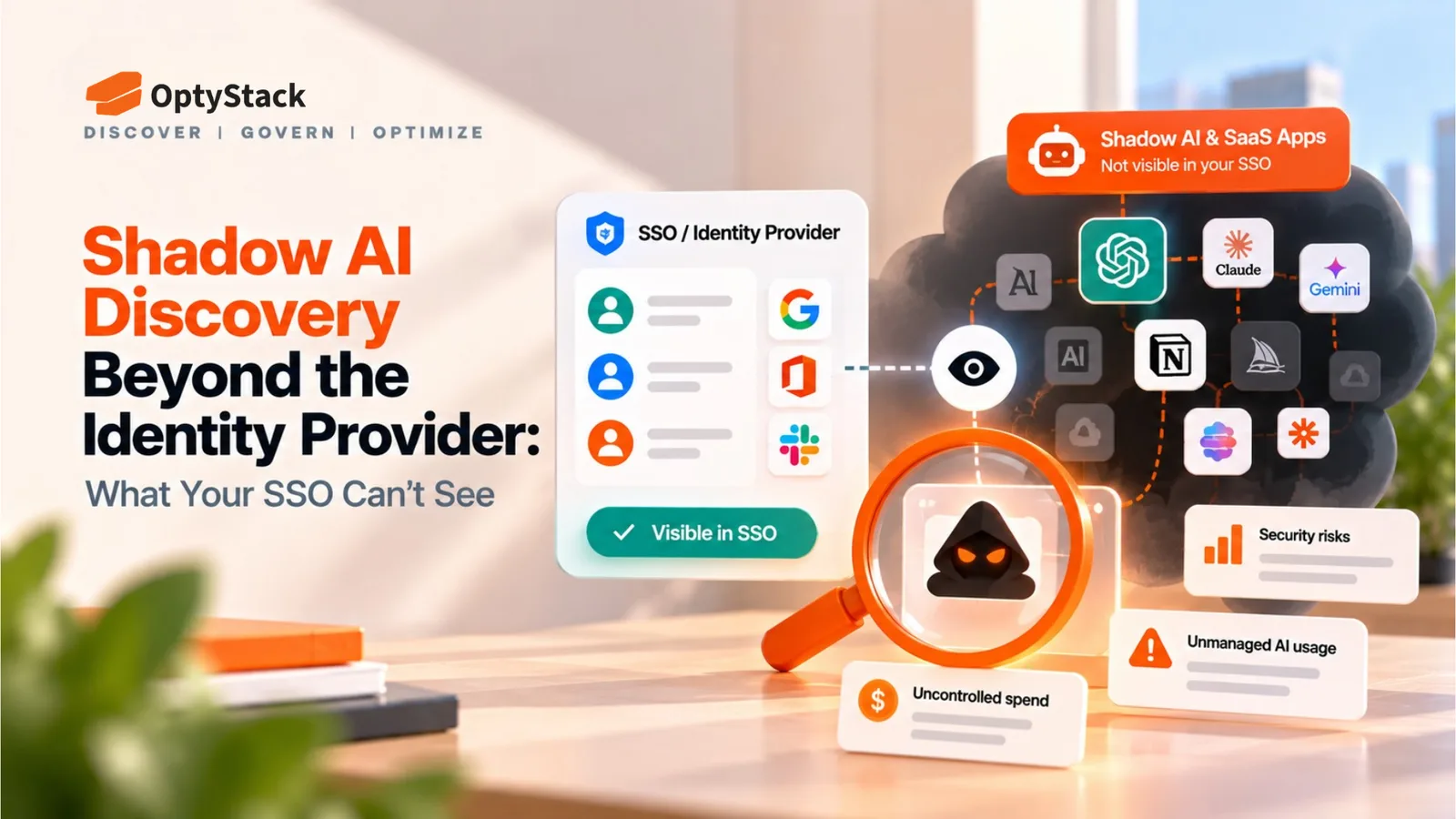
Shadow AI discovery tools aren’t interchangeable. Endpoint, browser and DLP, behavioral, data and SaaS management tools each see a different slice. Here’s what each category finds and misses, with recent launches from Fleet, NordLayer, Darktrace, Veeam and others.
Shadow AI discovery tools don’t compete on a single scale. Some read what’s installed on a laptop, some watch prompts in a browser, some model behavior, and some start from billing and identity. Each finds things the others can’t. This guide groups the main approaches, uses recent launches as examples, and says what each can miss.
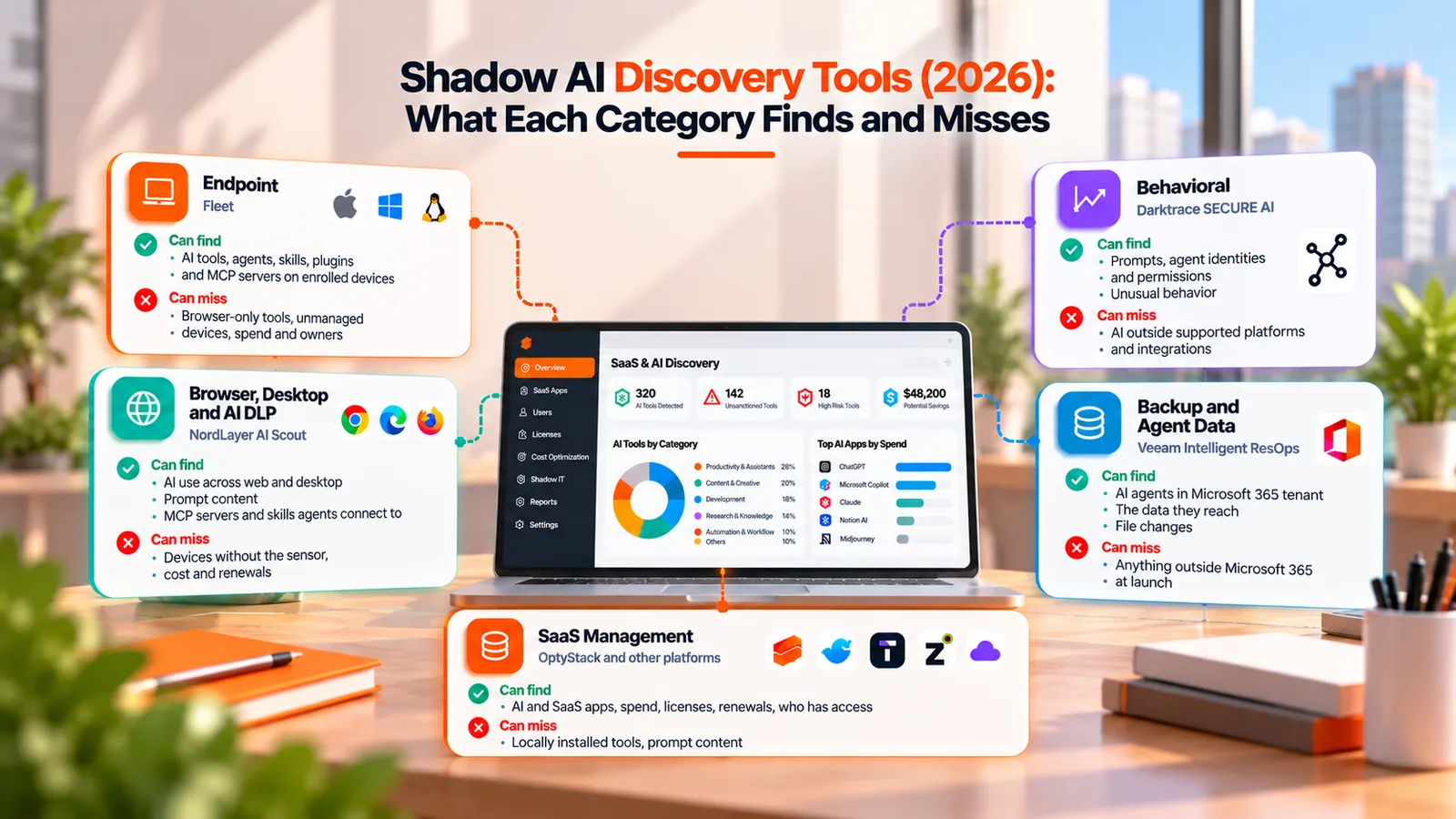
Category | Example | Can find | Can miss |
|---|---|---|---|
Endpoint | Fleet | AI tools, agents, skills, plugins and MCP servers on enrolled devices | Browser-only tools, unmanaged devices, spend and owners |
Browser, desktop and AI DLP | NordLayer AI Scout | AI use across web and desktop, prompt content, MCP servers and skills agents connect to | Devices without the sensor, cost and renewals |
Behavioral | Darktrace SECURE AI | Prompts, agent identities and permissions, unusual behavior | AI outside supported platforms and integrations |
Backup and agent data | Veeam Intelligent ResOps | AI agents in a Microsoft 365 tenant, the data they reach, file changes | Anything outside Microsoft 365 at launch |
SaaS management | OptyStack and other platforms | AI and SaaS apps, spend, licenses, renewals, who has access | Locally installed tools, prompt content |
Endpoint: Fleet
On October 15, Fleet added AI governance to its device management platform: an inventory of AI tools, agents, skills, plugins and MCP servers across macOS, Windows and Linux, filterable by publisher, version and device. Fleet says AI inventory and visibility are included in Fleet Free. Its argument is that shadow AI is now an endpoint problem, because locally installed tooling never appears in an identity provider or SaaS catalog. That holds for local tools. It can miss browser-only AI with nothing installed, devices that aren’t enrolled, and who pays for what.
Browser, desktop and AI DLP: NordLayer
NordLayer’s AI Scout, generally available since October 15, monitors sanctioned and unsanctioned AI use across web and desktop. It includes AI DLP designed to inspect prompts before they’re submitted, and it maps the MCP servers and skills that agents connect to. It can miss devices without the sensor, and it doesn’t give you spend, ownership or renewal context.
Behavioral: Darktrace
Darktrace SECURE AI, generally available since late September, applies behavioral analysis to prompts, agents and shadow AI. According to Darktrace, it identifies unsanctioned AI activity through its telemetry and SASE integrations, including Microsoft Entra Global Secure, and audits agent identities and permissions. Integrations include AWS, Anthropic, Microsoft and OpenAI, so coverage depends on which platforms you use.
Backup and agent data: Veeam
Veeam Intelligent ResOps for Microsoft 365, generally available October 15 as an add-on to Veeam Data Cloud for Microsoft 365, finds Copilot and other AI agents in a tenant, shows the sensitive data each can reach, flags oversharing, tracks file-level changes and can undo them. It answers a different question from the rest: what did agents touch, and can we reverse it? At launch it covers Microsoft 365. Veeam has opened private previews for its Data Platform and Okta.
SaaS management: OptyStack and other platforms
SaaS management platforms start from billing, identity and usage, so they answer which AI and SaaS apps exist, who owns them, what they cost and when they renew. Several also add AI-specific features. CloudEagle says its shadow AI discovery correlates browser, Zscaler and CrowdStrike signals and that AI agent management is now generally available. Freshworks says Torii tracks AI consumption to the token, and it agreed on October 12 to acquire Torii, a deal that hasn’t closed. Zluri became part of Infotech on October 14, and CoreStack announced its acquisition of BetterCloud on March 31. If you’re weighing vendors after those deals, our Zluri alternatives guide covers what to keep independent.
OptyStack brings billing, identity and usage signals into one inventory to show AI and SaaS apps, spend, unused licenses, renewals and who has access, and it offers user lifecycle management. It’s free to start, and the pricing page shows which plan includes shadow AI app discovery. It doesn’t inventory MCP servers on devices, inspect prompts, monitor agents at runtime, or act as DLP.
MCP server inventory for enterprises: who sees what
No single category inventories every MCP server. Fleet reads MCP client configurations and probes local listening ports, and its release notes say it flags configs that store credentials in plain text. NordLayer says it maps the servers agents connect to. Hosted gateways sit elsewhere: this month’s PoeLLM campaign, documented by Lumen’s Black Lotus Labs, exploited exposed LiteLLM instances, which are the kind of thing cloud and code inventories catch. The SaaS apps those connections reach can appear in OAuth grants and identity logs, which is where SaaS management tools look.
How to combine them
This is an editorial suggestion, not a standard. Start with the inventory layer, which answers what exists and who pays. Add endpoint or browser visibility where you manage devices, then behavioral or data-layer tools where agents touch regulated or Microsoft 365 data. Before buying any of them, ask what it observes, where its sensor runs, what it can enforce, and what data it keeps.
See the SaaS inventory layer of your own stack. Start free with OptyStack.