Zombie Licenses: The Subscription Drain You Don't Know You Have
Aryan Malik · August 22, 2026
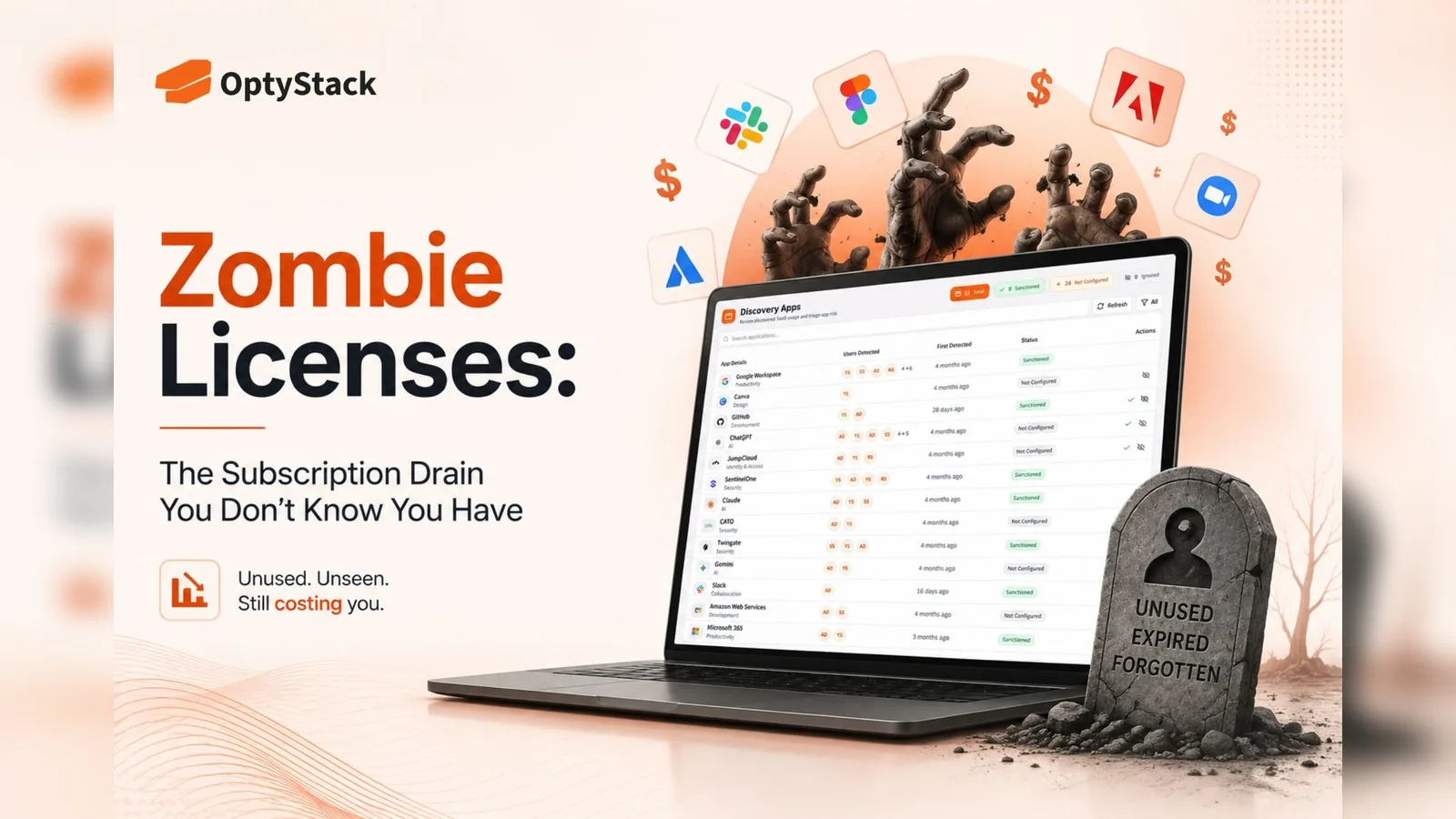
A zombie license is a subscription nobody's made a decision about in months, still renewing every billing cycle by default. Here's how these hidden costs form, why they're so easy to miss, and how to find and eliminate them before they add up.
Low usage alone doesn't make a license a zombie. The defining problem is that nobody has recently made a deliberate decision to keep, reassign, downgrade, or cancel it. It's persisting by default, not by choice, and the charge lands every month regardless.
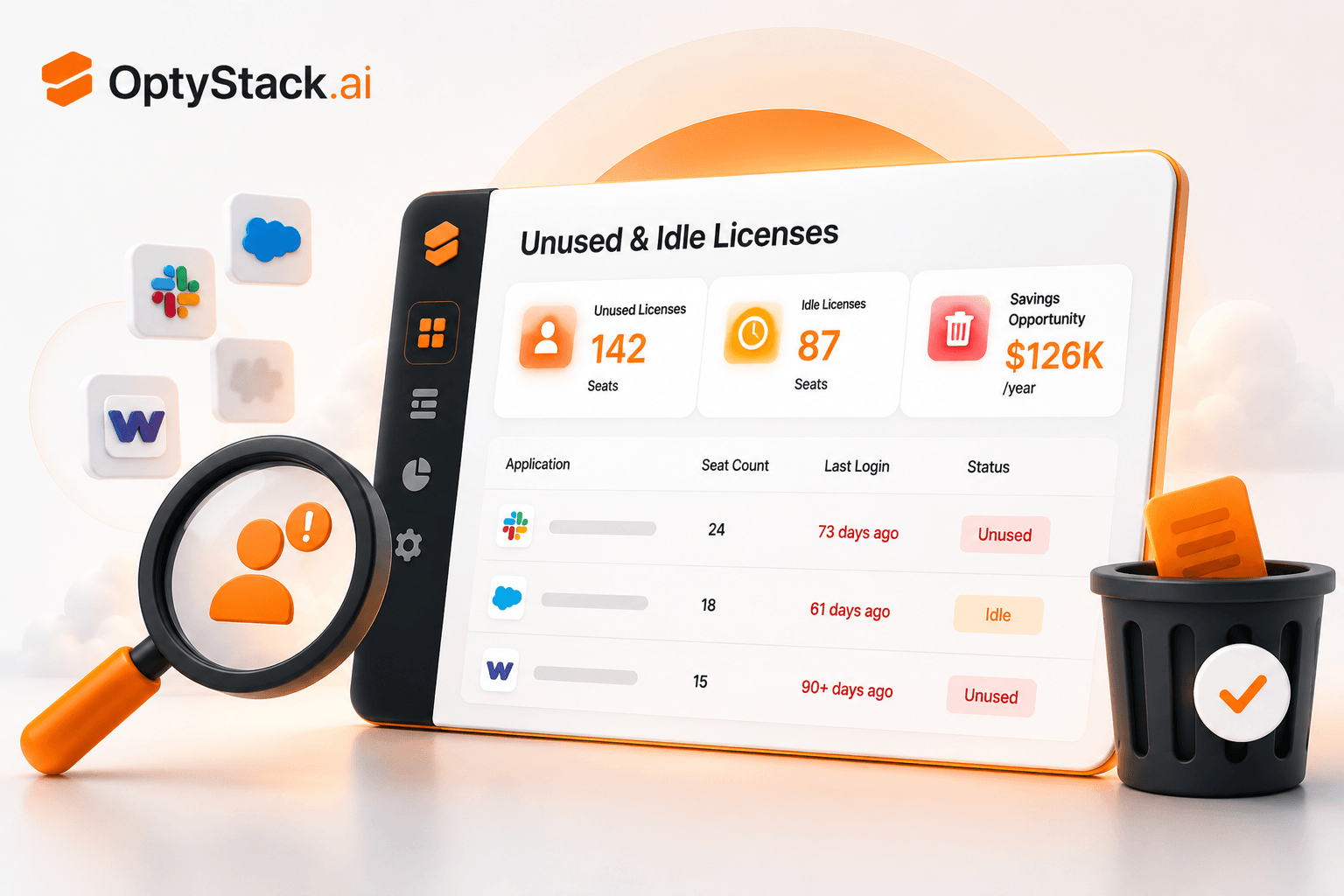
Research aggregated by CostLoop, drawing on Productiv and Zylo data, found that 30 to 40% of licensed SaaS seats see fewer than one login a month. For the purposes of a SaaS audit, you can treat a license with no meaningful usage for 60 days or more as a zombie-license candidate. The tool served a purpose once, a project, a trial, a specific person's role, and when that need passed, the subscription didn't. It just kept coming back, month after month, off everyone's radar.
What makes a license a zombie
Not every underused tool qualifies. A zombie license has two things in common: genuinely low or zero usage over an extended period, and an active billing cycle that keeps renewing without anyone deciding to keep it.
That second part matters more than people think. A tool someone actively chooses to keep on standby isn't a zombie, even if it's rarely opened. A zombie is something nobody's making a decision about at all.
How licenses turn into zombies
A project ends, but the tool doesn't. Someone spins up a subscription for a specific campaign, migration, or one-off piece of work. The project wraps, the person moves on, and the subscription keeps auto-renewing because canceling it was never anyone's job.
An employee leaves, and their account stays open. Offboarding checklists usually cover email and laptop return. They often miss the dozen smaller tools someone had access to, especially anything they signed up for individually rather than through a central IT process.
A trial converts without anyone deciding to buy. Free trials are frequently structured to convert into paid plans automatically unless someone cancels first. If nobody's tracking the calendar, an evaluation quietly becomes a real subscription that nobody chose.
A role changes, and old tools get forgotten. Someone moves teams and picks up new software for the new role, but nobody circles back to remove what they no longer need from the old one.
Duplicate purchases hide behind different names. One person buys a tool for themselves. A colleague on the same team, unaware it already exists somewhere in the company, buys the same tool again under a slightly different plan or account.
Why zombie licenses are so hard to catch
They hide in plain sight, mixed in with legitimate charges on a corporate card statement or an expense report. Unless someone's specifically cross-referencing spend against actual usage, a zombie license looks exactly like a real one: a normal recurring charge, same as every other line item next to it.
Accounts payable teams typically aren't set up to catch this kind of waste either. Their job is confirming an invoice matches a contract, not confirming a human being is still opening the tool. That gap is exactly where zombie licenses survive.
What zombie licenses actually cost
The financial impact adds up faster than most people expect, because nobody's watching the meter until the total gets large enough to notice. A $50-a-month tool nobody's used in eight months has already cost $400 before anyone even flags it. Multiply that pattern across a large SaaS estate, and the numbers stop being trivial.
Beyond the direct cost, zombie licenses can also create a security and access-control risk. The risk increases when nobody knows who still has access, what data the application can reach, or whether the account is still being monitored at all.
How to find zombie licenses in your own stack
A useful review pulls from more than just login data. For each application, check the last meaningful activity, the number of active users versus assigned seats, who the named owner is, when the contract renews, and whether every assigned user is still employed at the company.
Where a tool doesn't expose its own usage data, single sign-on logs help fill the gap. If there's no recent authentication or other meaningful usage signal, flag the application for review rather than assuming it's unused outright — some tools are accessed through integrations or service accounts rather than a direct login, so a quiet dashboard doesn't always mean an idle tool.
Cross-check all of this against your HR records. Any active subscription still tied to a former employee is a high-priority candidate for review.
How to stop them from coming back
Finding zombie licenses once is useful. Stopping them from reappearing is what actually protects the budget long-term.
Build subscription cancellation into the offboarding process directly, the same checklist that covers laptops and email deactivation. Add a role-change review too, not just an offboarding one, since a license doesn't need someone to leave the company to go unused, it just needs them to switch teams and never look back.
Set renewal reviews 30 to 60 days before the contract date, so an inactive license gets addressed before another billing cycle locks it in again. And put a real owner behind every subscription that matters, someone whose job includes periodically asking whether the tool is still earning its place.
Zombie license checklist
A license is a strong candidate for review when it shows any of the following:
No meaningful usage for 60 or more days
No current, named business owner
The assigned user has left the company or changed roles
A duplicate tool already covers the same function elsewhere
Renewal is approaching within the next 60 days
An assigned seat shows no active use at all
Where OptyStack fits
Most teams don't lack the will to fix this. They lack the time to cross-reference a dozen tools' usage dashboards against a spreadsheet of charges every month. That's the actual bottleneck.
OptyStack helps teams identify dormant licenses, connect them to owners and usage data, and surface renewal decisions before another billing cycle begins, instead of waiting for someone to run that comparison by hand.
It's free to start and doesn't require a credit card.
See what's quietly costing you money right now — start free with OptyStack.