Unused SaaS Licenses: How Much They're Really Costing You
Aryan Malik · August 21, 2026
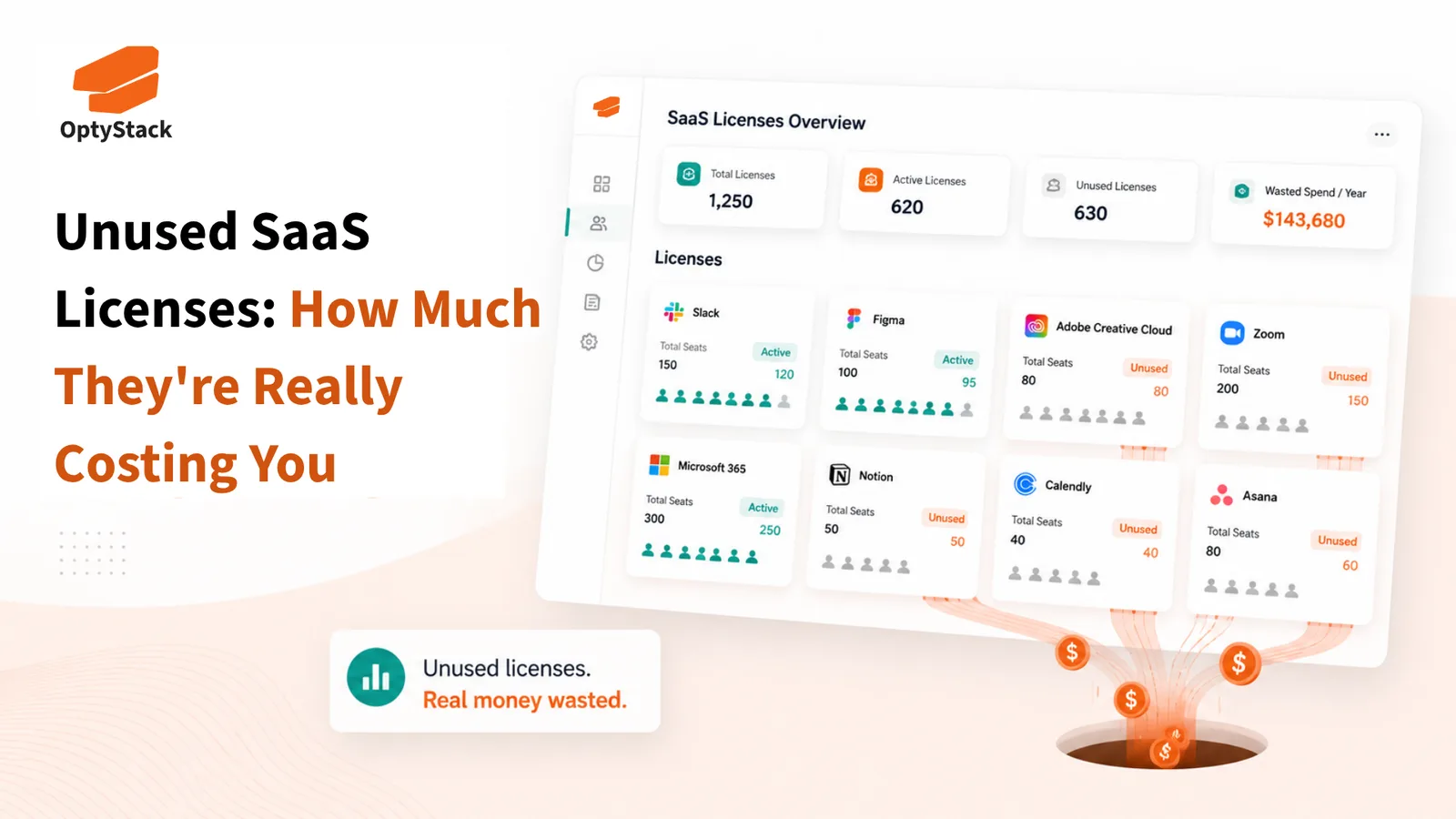
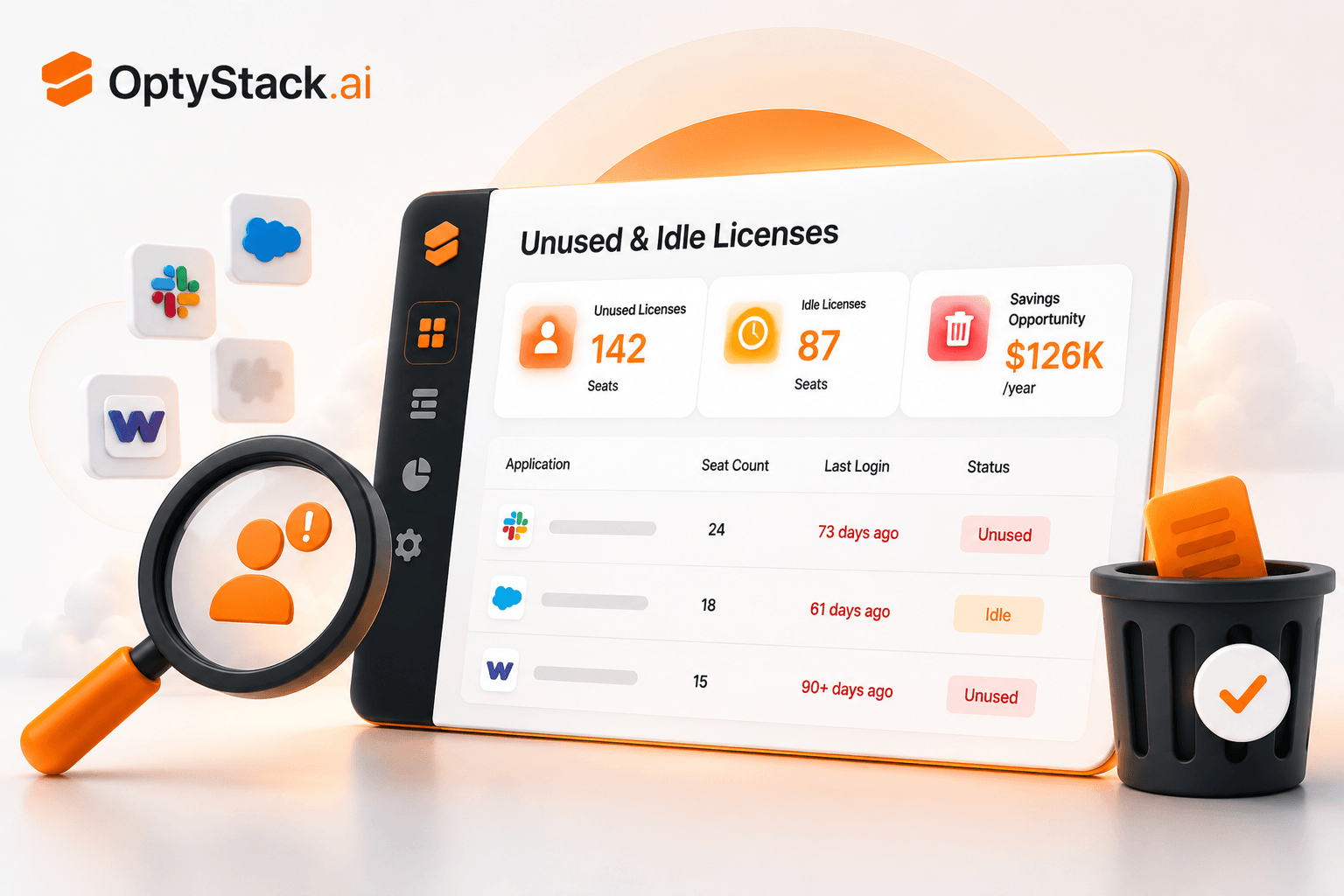
Unused SaaS licenses quietly drain millions from IT budgets every year, hiding across expired trials, forgotten seats, and accounts nobody remembered to close. Here's exactly where that waste comes from, how to find it in your own stack, and what it actually takes to stop paying for software nobody uses.
Most finance leaders can tell you what they spent on software last quarter. Almost none can tell you what they got for it.
That gap is where unused SaaS licenses live. Zylo's 2026 SaaS Management Index found that companies now run an average of 305 SaaS applications, and nearly half the licenses inside that stack, 46%, go unused. Ramp's research lands close to the same place, putting the number at 53% and estimating the average organization burns through $21 million a year on subscriptions nobody touches. Different firms, slightly different math, same conclusion: a huge chunk of what companies pay for software each year buys nothing at all.
If your SaaS bill keeps climbing while your headcount stays flat, this is usually where the money is going.
What actually counts as an unused license
Not every wasted seat looks the same, and lumping them together makes the problem harder to fix, not easier. In practice, waste tends to fall into three buckets.
The first is seats that were never touched to begin with. A company negotiates a volume discount, buys more licenses than it needs to hit a pricing tier, and half of them sit unassigned from day one.
The second is abandoned access. An employee leaves or switches teams, and their account in some tool keeps renewing because deactivating it was never anyone's job.
The third is quiet underuse. Someone's paying for a premium plan and using it like the free version, so the company is covering features nobody's touching.
The fix looks different for each one. Treating all three as "we're overspending on software" tends to produce a generic cost-cutting push instead of a targeted one.
What the waste actually costs
Zylo's benchmark puts the average annual loss from unused licenses at roughly $19.8 million per organization. Ramp's figure runs a bit higher, around $21 million, using a different sample and methodology. Neither number should be treated as gospel for your specific company, but together they make a fair point: this isn't a rounding error on the IT budget. For context, enterprises now spend close to $4,200 per employee per year on SaaS in total, and a meaningful chunk of that figure is money spent on nothing.
Waste also isn't spread evenly. Ramp's data shows education and technology companies running well above the average waste rate, over 45% in both sectors. That tracks with how those industries tend to buy software: fast, decentralized, and with less friction than a traditional procurement process. The lesson isn't "every company wastes the same amount." It's that how you buy software shapes how much of it goes unused.
Why licenses keep piling up unused
The causes aren't exotic. They're the same handful of gaps repeating across almost every company that hasn't fixed this yet.
Buying ahead of need is one of the biggest. Vendors often price volume tiers in a way that rewards buying more seats than you currently need, betting on future growth to fill the gap. Sometimes that growth shows up. Often it doesn't, at least not on the timeline anyone budgeted for.
Offboarding is another. When someone leaves a company, HR closes their email and returns their laptop. Their Figma seat, their analytics tool login, their project management account, those don't close automatically unless someone built a process to close them.
Role changes cause a slower version of the same problem. Someone moves from marketing to product, keeps every tool from their old job, and picks up new ones for the new role. Nobody goes back and removes what they no longer need, because nobody's specifically responsible for asking.
Free trials are a smaller but surprisingly common source. Plenty of tools convert a trial into a paid subscription automatically unless someone cancels it first. If nobody's tracking which trials are about to convert, a $0 tool quietly becomes a real line item.
And underneath all of it is the renewal problem. Most SaaS contracts auto-renew by default, which means the natural moment to ask "do we still need this" never actually happens unless someone forces it to.
Finding the waste in your own stack
There's no single source that shows you the full picture. You need a few, layered together.
Usage data from the tools themselves is the most direct signal, when it's available: logins, active sessions, feature usage. Identity and SSO logs fill in the gaps for tools that don't expose their own usage dashboards, since they show you who's actually authenticating into what. Billing and expense records catch the subscriptions that never touched a central procurement process at all, often bought on a corporate card by a team that never told IT. And cross-referencing all of that against HR's offboarding records is what catches the accounts still open for people who don't work at the company anymore.
Doing this once will surface real savings. The companies that keep the waste from coming back are the ones who do it on a schedule, not as a one-time cleanup.
What to actually do about it
Before you cancel anything, check whether it can be reassigned. An unused seat in one department is sometimes exactly what another team needs, and reassigning it costs nothing compared to buying a new license somewhere else.
Push the review to happen before renewal, not after. If you already know a tool is running at 40% utilization three months before the contract renews, that's the moment to negotiate the seat count down, not six months after you've already paid for another year of empty licenses.
Build license deactivation into your offboarding checklist directly, the same list that covers laptops and email access. If it's not part of that process, it depends on someone remembering, and eventually someone won't.
And set an actual cadence for reviewing your highest-cost tools. A quarterly pass through your top ten or twenty subscriptions by spend catches most of the waste before it has a chance to compound into a bigger number by year's end.
Where OptyStack fits
Doing all of this manually means pulling data out of a dozen different systems and stitching it together by hand, which is exactly why most companies only get around to it once a year, if that.
OptyStack pulls billing, identity, and usage data into one place automatically, so idle and underutilized licenses show up as they happen instead of six months later at a renewal deadline. It shows you which seats are safe to reclaim, which ones make sense to reassign, and which subscriptions have quietly stopped earning their keep. Instead of estimating your waste from a spreadsheet that's already out of date, you can see it directly.
It's free to start and doesn't require a credit card, so you can see what's sitting unused in your own stack in under ten minutes.
Start free with OptyStack and find out exactly how much your unused licenses are costing you.