SaaS Contract Renewal Management
Aryan Malik · August 23, 2026
Most SaaS contracts renew automatically, and most companies find out too late that the window to say no already closed. Here's how to track renewal deadlines, negotiate before you lose leverage, and stop auto-renewal from making decisions for you.
Most SaaS contracts renew automatically, and most companies find out too late that the notice window already closed. Zylo reports the average enterprise manages 211 SaaS renewals a year, roughly one every business day, and missing even one notice deadline can lock the company into another full term at whatever price the vendor sets.
Renewal management is the discipline that keeps that from happening. Done well, you choose what happens at renewal instead of the calendar choosing for you.
Why SaaS renewals are so easy to lose track of
The mechanics work against you by default. Common Paper's 2026 benchmark of cloud service agreements found that 87% include an auto-renewal clause, and the notice window, the deadline by which you have to say no before the contract extends itself, sits at 30 days in roughly 70% of agreements. Some enterprise deals push that window out to 60 or 90 days instead.
The renewal date tells you when the contract ends. The notice deadline tells you when you have to act. Effective renewal management is built around the second date, not the first.
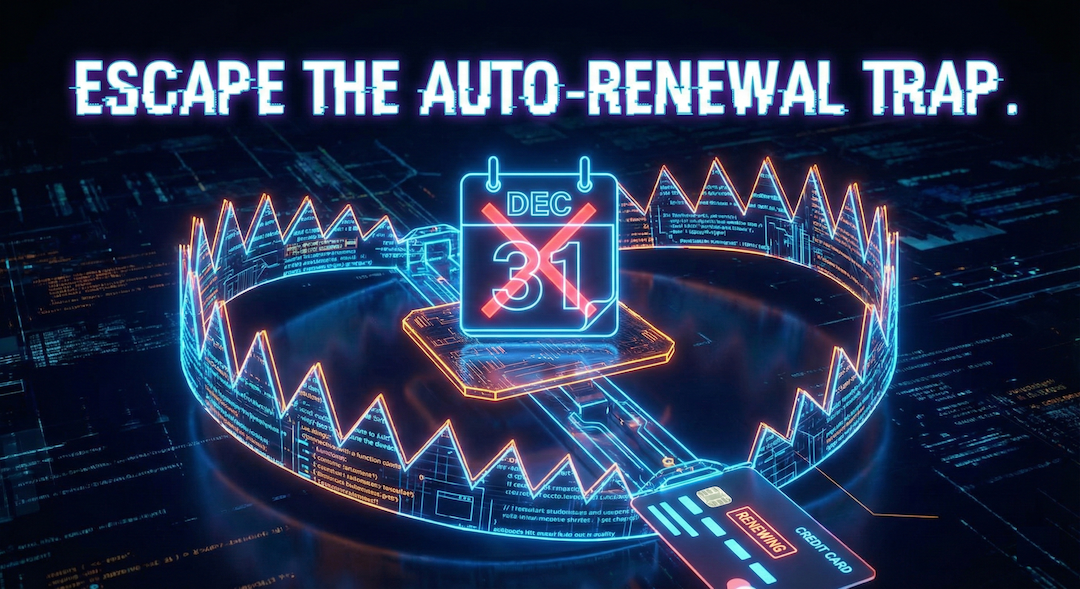
The gap between the two is where most companies get caught. A contract expiring December 31st with a 90-day notice window needs a decision by early October, months before most teams start thinking about next year's budget at all.
Scale that across 211 renewals a year and the math stops being a minor scheduling problem. A handful of missed windows is enough to lock a company into a substantial amount of spend nobody chose.
What's actually at stake at every renewal
Price increases are common at renewal. Zylo's 2026 research found that 79% of IT leaders experienced a price increase at their most recent renewal. Vendor escalation clauses can add another layer of cost, with some agreements allowing fixed annual increases or other pricing adjustments that compound across multiple renewal cycles.
Seat counts rarely match usage. Zylo's 2026 research found 46% of licenses go unused across the average enterprise, representing about $19.8 million in wasted spend a year. A renewal that just rolls forward the same seat count locks in that waste for another full term.
AI is changing how vendors package and price their products. Some are introducing new tiers, usage-based charges, or higher-priced plans that bundle in AI capabilities, whether or not a given customer uses them.
Leverage disappears fast once you're inside the notice window. Starting a renewal conversation with meaningful runway means you can pull usage data, benchmark pricing, and credibly evaluate alternatives. Starting with only a few weeks left means the vendor knows exactly how little room you have to negotiate.
How to actually manage renewals well
Centralize every contract in one place. For each active subscription, record the vendor, contract owner, contracted seats, monthly cost, renewal date, notice window length, the calculated notice deadline, and current usage.
Set the alert at the deadline, not the renewal date. A reminder set relative to the renewal date is useless if the notice window closed weeks before that. Alerts need to fire relative to the actual notice deadline for each individual contract.
Start renewal preparation at least 90 days out, and earlier for larger or strategically important contracts. Pull usage data for the tool. Check the ratio of active users to purchased seats. Look at what comparable companies are paying for similar tools, if you can get that data, since most companies walk into these conversations with no external benchmark at all.
Push back on the notice window itself. Shortening a 90-day window down to 30 is a common, low-cost ask that many vendors will accept, since it costs them nothing and rarely gets requested. A shorter window gives you more runway before you're locked into a decision.
Use every renewal to right-size the contract rather than just signing off on the same terms again. If usage data shows a third of purchased seats sitting idle, that's the moment to renegotiate the count down, not another year into paying for empty licenses.
Cap escalation clauses explicitly. Push for a fixed annual cap, ideally in the low single digits, or tie any increase to a published index rather than letting the vendor set the number unilaterally.
What a missed renewal actually costs
The cost of a missed renewal depends on the contract, but the exposure can be substantial. A $200,000 annual contract that automatically renews for another year creates $200,000 of committed spend before the company has a chance to renegotiate or cancel. Multiply that across 211 renewals a year, and a handful of missed deadlines can represent a meaningful share of the annual software budget, locked in without anyone deciding it should be.
Paying closer attention only goes so far. At that volume, spreadsheets and good intentions eventually miss one. What actually works is a system that tracks every notice deadline automatically and flags it with enough runway to act.
Where OptyStack fits
Tracking 200-plus renewal dates, notice windows, and usage ratios by hand is exactly the kind of task that looks manageable until the fifth contract slips through the cracks in a single quarter.
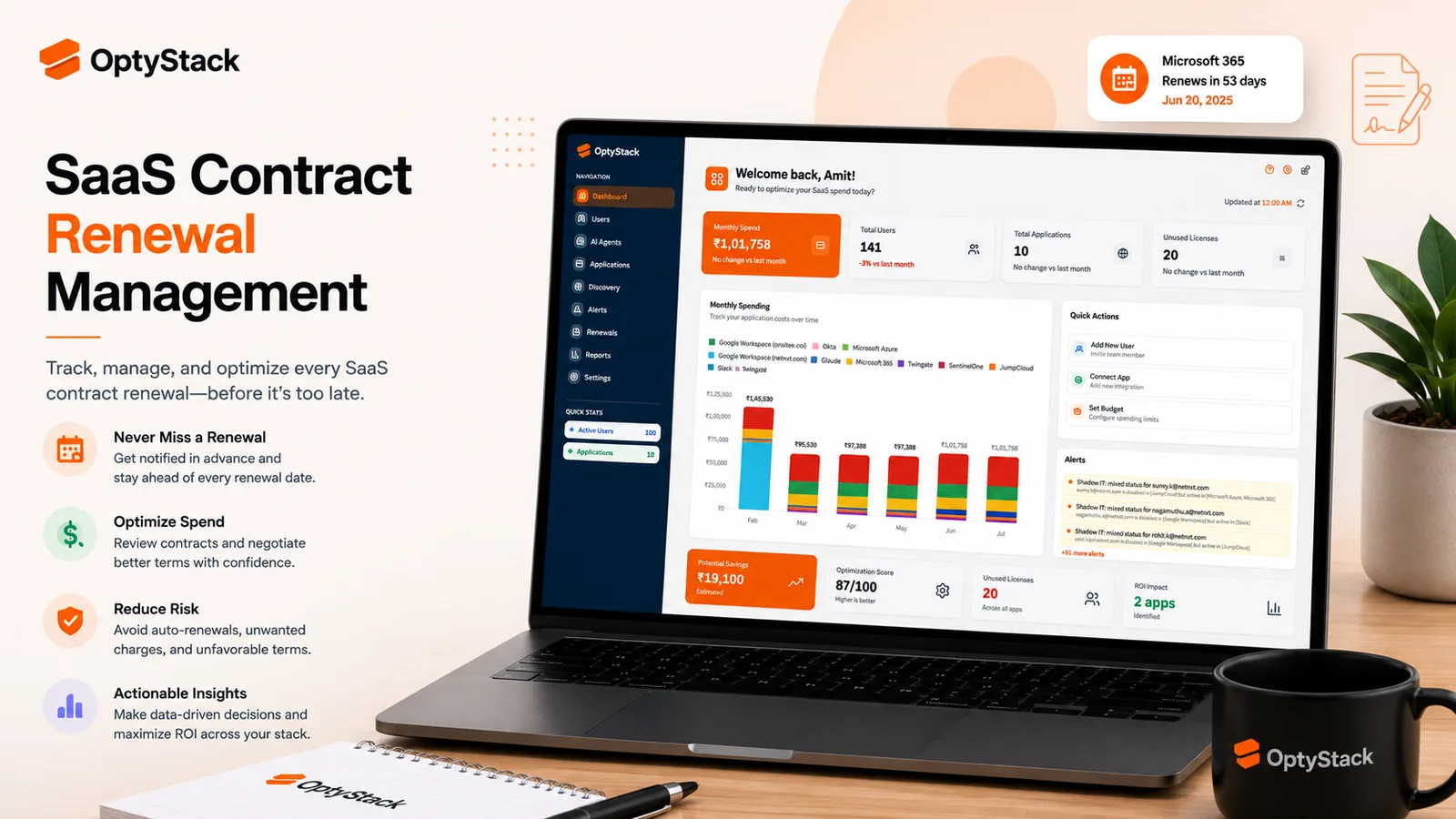
OptyStack keeps every renewal date and notice window in one place, tied to actual usage data for each tool, so a contract due for right-sizing surfaces well before the deadline forces a decision by default. You see a renewal coming with enough time to actually negotiate it, rather than finding out it already happened.
It's free to start and doesn't require a credit card.
Stop letting renewal dates make decisions for you. Start free with OptyStack.