Shadow AI Is Not a Tool List: What One in Five Surveyed Organisations Reveals About AI Risk
Vivek Sharma · November 5, 2026
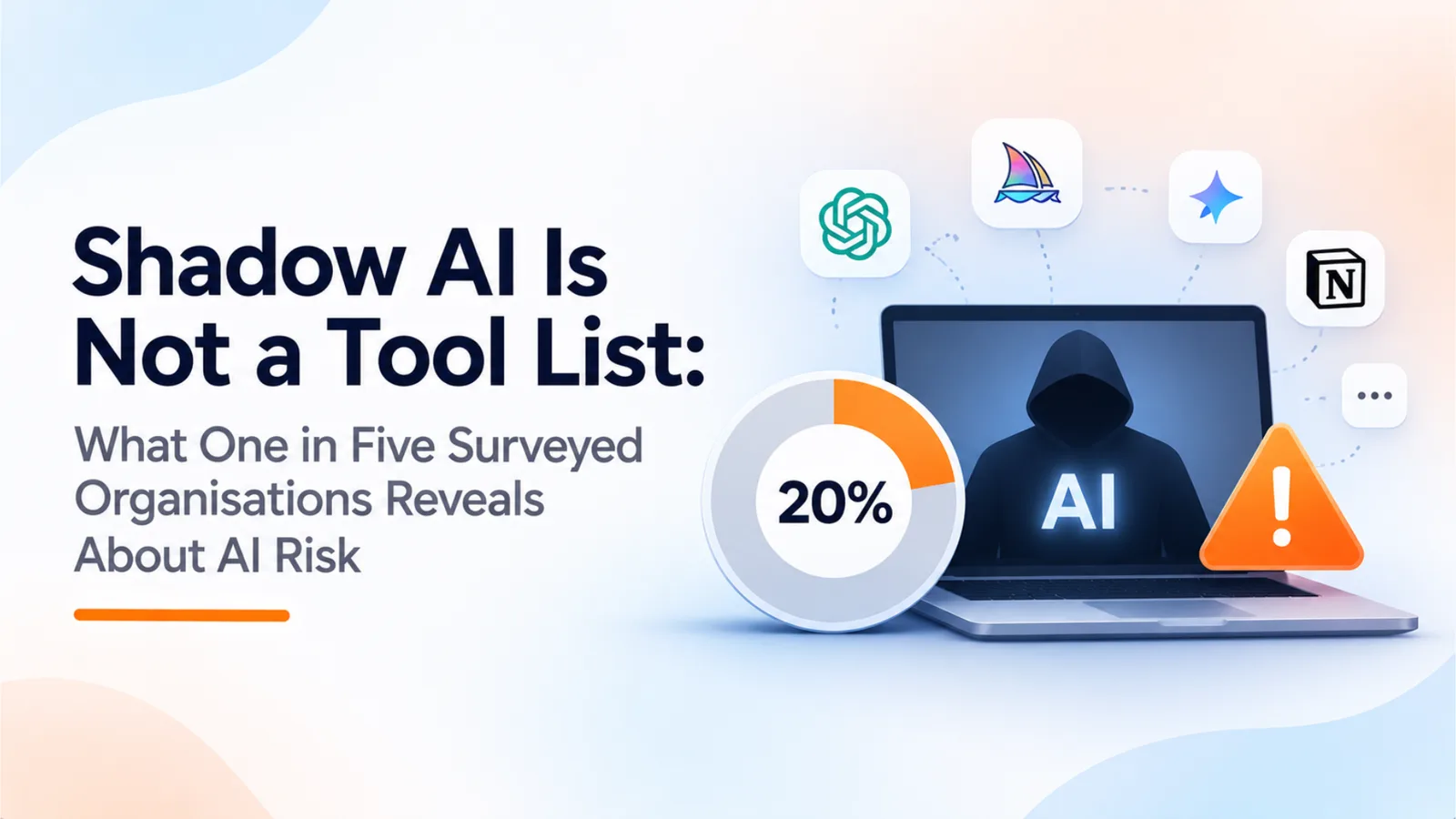
A DNSFilter survey found that 20.1% of surveyed organisations said an unapproved AI connection had caused a security incident. This guide explains why Shadow AI discovery needs more than an app list, examines recent third-party security incidents and provides a four-step checklist for mapping applications, access and data exposure.
AI adoption is moving faster than many organisations’ ability to govern it. Employees are connecting AI tools to work accounts, uploading business information and experimenting with third-party platforms, sometimes without formal IT or security approval.
The scale of the concern is becoming clearer. A DNSFilter survey released on November 3, 2026, found that 20.1% of surveyed organisations said an unauthorised AI connection had directly caused a security incident.
The survey included 400 IT and cybersecurity professionals at manager level or above, working in organisations with 150–5,000 employees across the United States and Canada. The finding is self-reported and should not be interpreted as a global or India-specific incident rate. However, it highlights a growing challenge: organisations need to understand not just which AI tools employees use, but what those tools can access and how they connect to business systems.
Source: DNSFilter – The Cost of Shadow AI
Why a List of AI Apps Is Not Enough
A list of AI applications is a useful starting point, but it does not provide a complete picture of Shadow AI risk.
Two employees may use the same AI platform while creating very different levels of exposure. One might use it for general research, while another connects a company account, uploads internal documents or grants access to business data.
The application name alone does not reveal:
Connected accounts: Is the tool linked to a personal account or a corporate identity?
Permissions: What information or systems can the application access?
Data inputs: Are employees submitting confidential, customer or operational information?
Approval status: Has the organisation reviewed and authorised the application?
This is why organisations need visibility into both application usage and the connections behind it. Effective SaaS and AI discovery can help establish an inventory of applications being used across the environment.
The Credential Side of Shadow AI
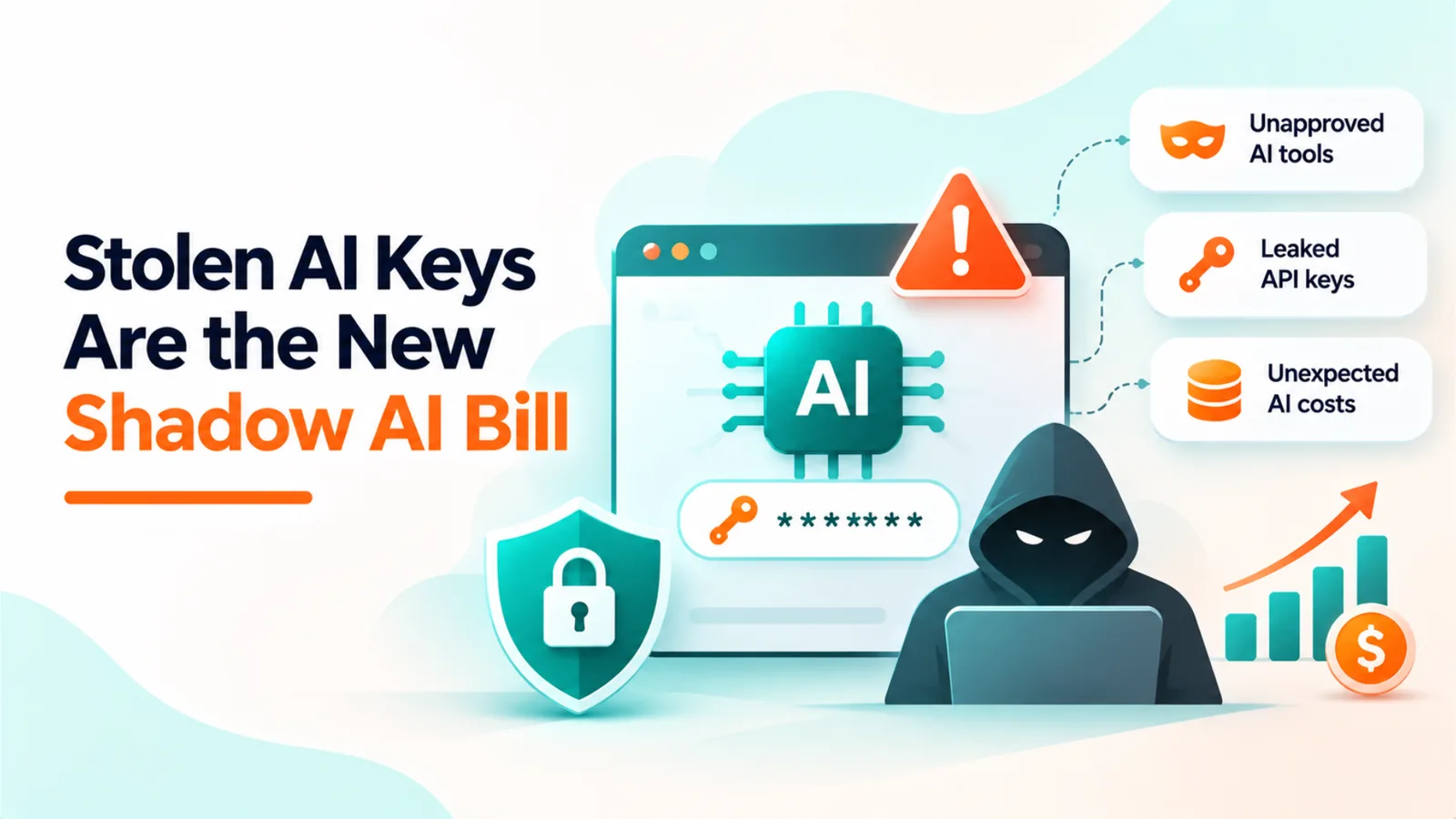
Recent security disclosures show why organisations should pay attention to the systems and credentials surrounding their applications. These incidents are not all examples of Shadow AI, and they should not be treated as proof that AI credentials were compromised in every case. They do, however, demonstrate the potential exposure associated with secrets, environment variables and connected business systems.
Northflank: Environment Variables and AI API Key Concerns
On October 30, 2026, Northflank issued a security advisory telling customers to assume that environment variables stored on its platform had been decrypted and to disable or rotate affected keys.
Customers reported unauthorised use of AI API keys they had supplied to the platform. In its November 2 update, Northflank said available evidence suggested the attack had focused on secrets held in its control plane. The company reported no indication that customer workloads or workload data had been accessed, while its investigation continued.
Source: Northflank Status
Trigger.dev: Exposure of Customer Environment Variables
On November 1, 2026, Trigger.dev disclosed that an attacker had gained unauthorised access to environment variables belonging to a subset of customer organisations.
The company said the exploit had been blocked and affected account owners had been contacted. Its disclosure established unauthorised access to environment variables, but did not establish that AI provider keys or OAuth tokens had been stolen.
Source: Trigger.dev Security Incident – November 2026
WorkOS: Unauthorised Access to an Internal Sales Tool
WorkOS disclosed an October 30 incident involving unauthorised access to an internal sales tool. The information involved included contact details, customer account and relationship histories, summaries or excerpts from sales calls and support discussions, and operational product usage and connection-health metadata.
WorkOS said it had found no evidence that production services or application data were accessed. This was an internal-tool and customer-data exposure; the disclosure did not confirm the theft of AI API keys, environment variables or OAuth tokens.
Source: WorkOS Security Bulletin – October 30, 2026
Together, these disclosures reinforce an important distinction: discovering an AI application is not the same as understanding its access, permissions, connected accounts or associated secrets.
A Four-Step Shadow AI Discovery Checklist
Organisations can make Shadow AI governance more practical by following a repeatable discovery and review process.
1. Discover AI Applications and Connections
Start by identifying the AI tools employees are using, including applications that may not have gone through formal procurement or security review.
Review available spend records, SSO activity and browser signals to build a more complete application inventory. Do not rely exclusively on employee declarations or approved software lists.
A structured SaaS discovery process can help teams identify applications operating across their environment and investigate usage that may otherwise remain outside IT visibility.
2. Map Users, Permissions and Data Access
Once applications have been identified, determine who is using them and how they are connected.
Review whether employees are signing in through corporate identities, whether applications have access to business accounts and what permissions have been granted. Where integrations or OAuth connections are involved, assess the scope of access and whether it is still necessary.
Organisations should also establish what types of information employees are permitted to submit to each AI service.
3. Approve, Restrict or Block Applications
Not every AI application needs to be blocked. Security and IT teams should assess each tool according to its business purpose, data access, permissions and risk.
Create a clear approval process for business use. Where an application presents unacceptable risk, restrict access or block it according to organisational policy.
Identity controls can support this process. For example, identity management can help organisations manage access to connected applications and apply appropriate sign-in conditions for human users.
4. Review Access and Offboard Unused Connections
Shadow AI governance should not end after the initial discovery exercise.
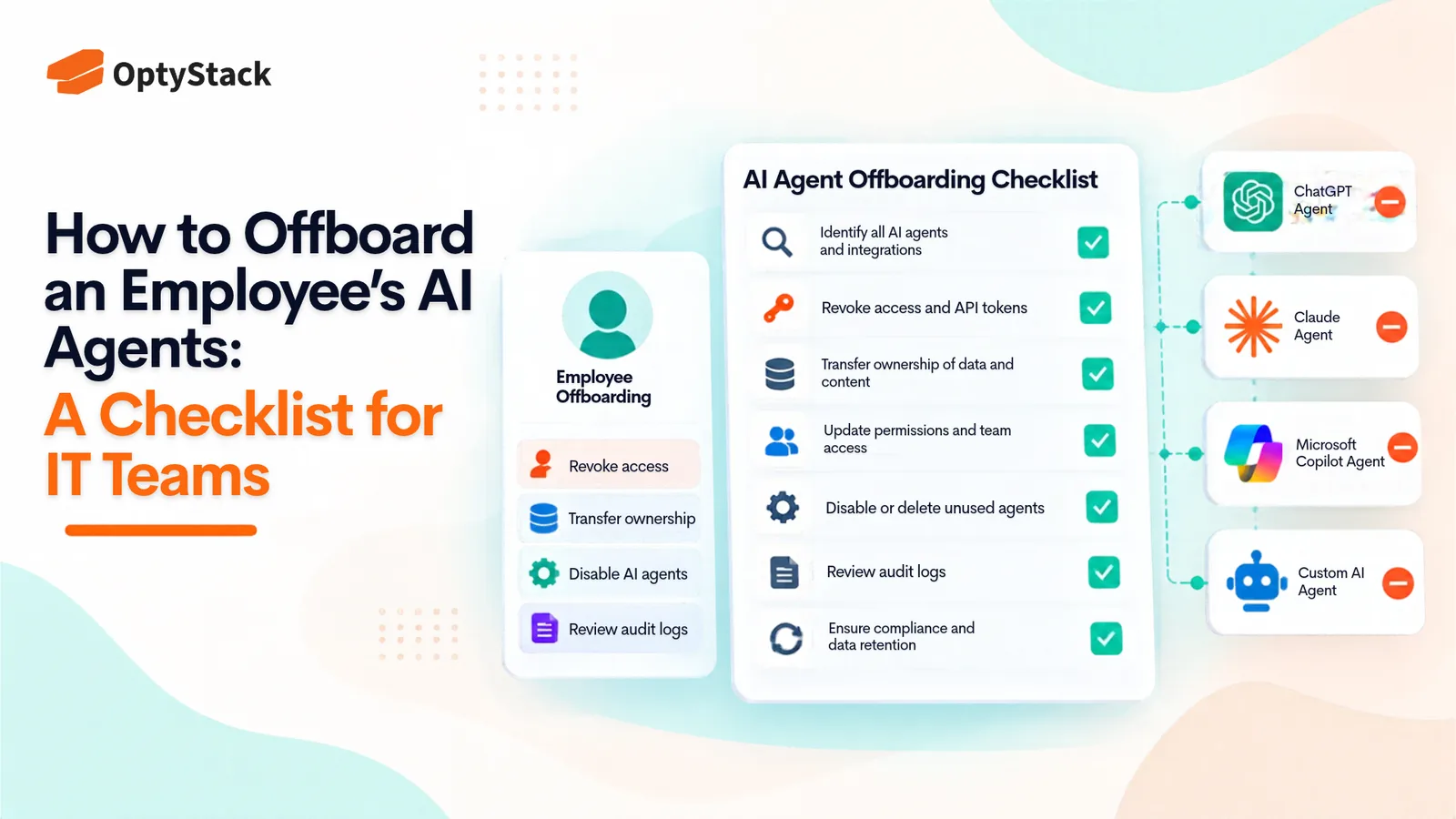
Review application usage and permissions regularly. When employees leave or change roles, remove unnecessary application access and review associated connections. If a credential is suspected of exposure, follow the relevant incident-response process and rotate or revoke it as appropriate.
This ongoing review helps prevent unused accounts, unnecessary permissions and forgotten integrations from becoming persistent security risks.
Where OptyStack Fits
OptyStack helps organisations improve visibility and control across their SaaS and AI application environments.
Its discovery capabilities use spend, SSO and browser signals to help teams identify applications, map app usage to users and flag potential Shadow IT and Shadow AI activity.
OptyStack's identity capabilities support user and application access management, including sign-in conditions based on factors such as IP address, device and region. These controls apply to human users accessing connected applications; they should not be confused with AI-agent identity or API-secret management.
Organisations can also use OptyStack's license management capabilities to identify unused licenses, support reclamation and manage user lifecycle processes.
It is important to distinguish application governance from credential security. OptyStack does not monitor AI API key usage, detect API key misuse or manage AI provider secrets. Organisations that need those controls should use dedicated secrets-management and credential-monitoring solutions alongside their SaaS discovery and governance processes.
To explore how OptyStack can help improve SaaS and AI application visibility, request a demo.
Conclusion
Shadow AI discovery cannot stop at identifying application names. Organisations need to understand who is using each tool, which accounts and permissions are involved, what data employees can access and whether those connections are authorised.
The recent security disclosures involving Northflank, Trigger.dev and WorkOS highlight different types of exposure across modern application environments. They should not be conflated, but they all reinforce the importance of visibility, access reviews and sound security practices.
A reliable Shadow AI strategy starts with discovering applications and connections, assessing their access, applying appropriate controls and reviewing them continuously. The goal is not simply to maintain a list of AI tools. It is to understand and govern how AI is connected to the organisation.