Regulatory Recordkeeping in the Age of Collaboration SaaS: Wikis, Chat, and Defensible Retention
Omar Haddad · April 21, 2026
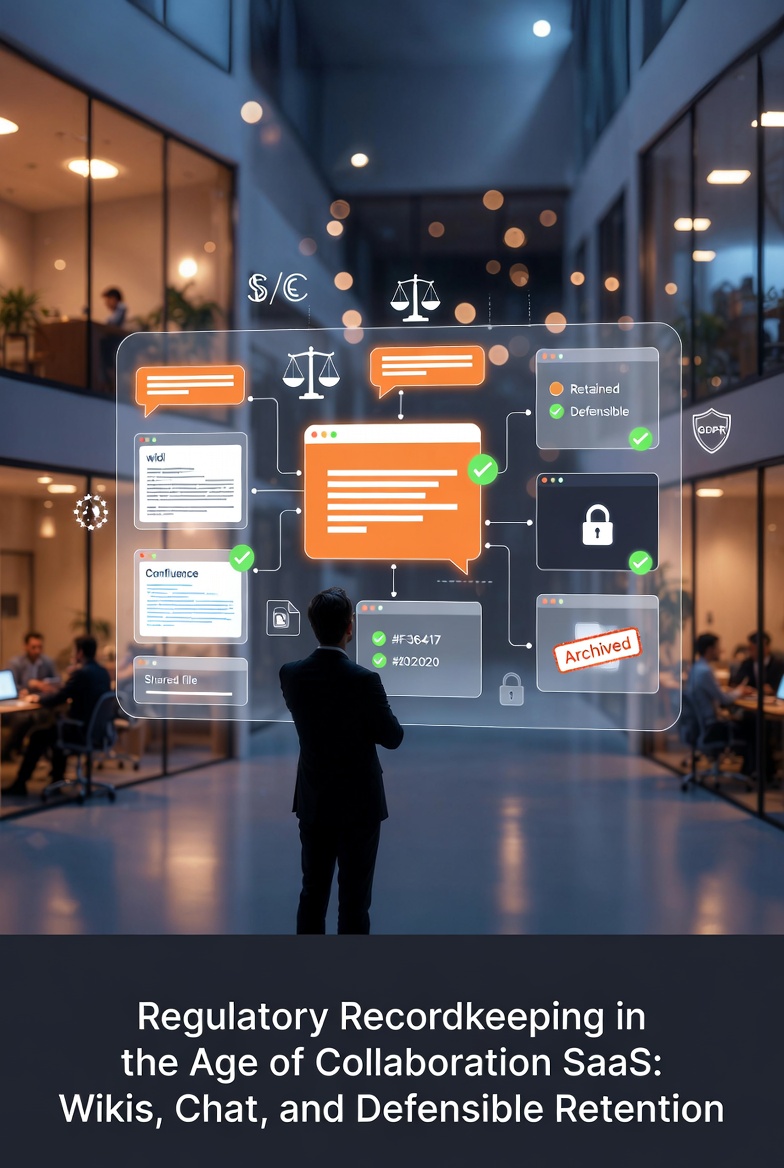
Modern work lives in wikis and chat, not email archives alone. Learn how legal and compliance teams should map retention rules to SaaS surfaces, legal holds, exports, and audit trails without crushing productivity.
Regulators and judges care where decisions were documented, not which UI felt convenient at the time. Employees increasingly record commitments in chat threads, edit wikis in real time, and co-author documents in SaaS suites that sync faster than records management policies were written. When investigations arrive, organizations must produce coherent timelines spanning email, chat, tickets, and attachments—often scattered across dozens of SaaS tenants with differing export formats and retention defaults. Treating collaboration tools as “informal” courts disaster: you either over-retain everything, drowning reviewers, or under-retain, inviting sanctions. A modern program maps obligations to specific SaaS surfaces with technical controls and training.
Inventory where records are born
Start with a data map linking business processes to systems: contract approvals in CLM, engineering decisions in issue trackers, HR policies in intranets, customer promises in CRM notes. For each, classify record type, retention period, legal hold susceptibility, and authoritative export path. Chat platforms deserve special attention because ephemeral messages feel temporary but may be discoverable. Decide organizationally whether certain channels are business records or casual conversation—and enforce configuration accordingly.
Partner with IT to ensure e-discovery tools or native exports cover attachments, reactions, edits, and version history—not only final snapshots. Gaps here dominate production disputes.
Legal hold mechanics in SaaS
Holds must suspend routine deletion without blocking legitimate security operations. Document how each vendor implements legal hold APIs or manual processes, expected latency, and how to verify scope. Train custodians not to “clean up” workspaces when notified of matters; benign housekeeping can look like spoliation under scrutiny. Automate hold notices through HR systems when employees transfer roles so obligations follow the data.
Test holds annually with tabletop exercises: issue a mock hold, attempt exports, measure completeness. The first real case is the wrong time to learn your wiki export omits comment threads.
Retention schedules meet user experience
Aggressive deletion improves privacy posture but frustrates teams relying on search. Segment retention: customer communications longer than internal brainstorming channels; encrypted backups shorter than primary stores where regulations permit. Communicate policies in plain language with examples of what gets deleted when. Users comply better when they understand why.
- Versioning — Decide whether intermediate wiki edits are records or noise; policy should be explicit.
- Guest access — External collaborators may trigger cross-border data issues; log invitations.
- AI features — Summarization tools may copy content into new stores; map those flows for retention.
Oversight and audits
Internal audit should sample whether actual SaaS configurations match policy—retention locks, export capabilities, admin role assignments. Third-party certifications help but do not replace knowing your tenant settings. Maintain evidence of periodic reviews tied to control owners.
Cross-border discovery and privacy
Global investigations may require productions from tenants hosted in regions with blocking statutes. Map where primary stores, backups, and search indices live before matters arise. Negotiate vendor support for narrow legal requests instead of over-broad snapshots that pull unrelated employee chatter into review sets.
Employee monitoring laws differ by country; configure features like DLP, screenshot capture, or always-on transcription carefully with local counsel. A control that is standard at headquarters may be unlawful elsewhere.
Technology roadmap alignment
Vendors ship features that change retention defaults—thread summarization, new bot participants, expanded guest sharing. Subscribe to trust-center updates and route them through change management. A silent feature toggle can invalidate a policy you attested to regulators six months earlier.
OptyStack supports discovery of collaboration applications and ownership patterns so records teams know which workspaces to include in data maps. Visibility precedes governance; you cannot protect records you cannot see.
Human training
Technology alone fails if employees route regulated discussions through unsanctioned tools to avoid friction. Make sanctioned paths easier: fast search, mobile access, sensible permissions. Reinforce with scenarios in training—where to document pricing approvals, how to mark sensitive threads—so habits align with policy.
Collaboration SaaS is not the enemy of compliance; chaos is. With clear maps, tested holds, and respectful retention design, organizations capture the speed of modern work while keeping records defensible when it matters most.
Litigation readiness and privilege workflows
Not every collaboration thread is subject to discovery equally. Where attorney-client privilege applies, train teams on marking channels and avoiding mixed-purpose discussions that waive protection. Consult counsel on vendor capabilities for privilege tagging and whether exports preserve metadata courts expect.
Early case assessment benefits when collections are proportional—knowing which workspaces matter prevents over-collection that balloons review costs and angers employees whose casual chatter was swept in unnecessarily.
Continuous modernization
Assign a records council with quarterly ownership across legal, IT, and business operations to revisit policies when collaboration vendors ship features that change how work is recorded. Static policies in dynamic tools create compliance debt that compounds silently until the next investigation.
Operationalizing collaboration records at scale
Deploy champions in each major business unit who translate records policy into daily habits—where to file customer decisions, how to label regulated threads, when to move from chat to controlled repositories. Champions bridge central policy and messy reality better than annual all-hands slides.
Instrument policy adherence with lightweight sampling: monthly random audits of channel configurations, guest access lists, and retention locks. Small samples catch systemic misconfigurations early without surveilling every message.
Coordinate with insider risk programs so monitoring respects privacy law and union agreements; transparency documents build employee trust. Overreach invites backlash that pushes conversations to unmanaged channels.
Finally, fund continuous improvement: records programs require headcount, tooling, and training—not a one-time policy PDF. Executives who treat recordkeeping as infrastructure avoid the far higher costs of sanctions, failed investigations, and reputational damage.
Measuring records program effectiveness
Track time-to-produce records in mock matters, completeness scores on test holds, and configuration drift rates for retention settings. Leading indicators predict production failures better than waiting for real litigation.
Benchmark training completion and quiz scores; low scores signal policy complexity or poor relevance. Simplify or localize content when needed.
Report to the board with trend narratives, not only compliance checkmarks—executives fund programs they understand are reducing existential risk, not ticking boxes.
Bottom line
Collaboration SaaS changed where records live; compliance must map processes to systems, test holds realistically, and modernize continuously as vendors ship features that alter retention and discovery. Train humans with relevant scenarios, deploy business-unit champions, and sample configurations to catch drift. Respect cross-border privacy and privilege rules; avoid over-collection that balloons review costs. Fund recordkeeping as operational infrastructure with metrics on mock-production speed and training effectiveness. Visibility into which workspaces exist—and who owns them—is prerequisite to every control above; without inventory, policy is only aspiration.
Integrate records requirements into vendor selection scorecards alongside security and price; exit and export capabilities should influence decisions before contracts lock you in.
When regulators publish new guidance, run impact assessments against your top collaboration tenants first—concentrated risk deserves the earliest attention.
Partner with internal communications on change management when retention windows shrink; employees deserve clear timelines and recovery options for personal content that is out of scope for corporate archives.
Measure time legal spends assembling productions before and after tooling improvements—dollars saved in counsel hours often exceed storage savings.
Coordinate with workforce relations when retention policies affect employee-generated content; procedural fairness reduces HR escalations.
Maintain a “records heat map” by system and sensitivity so new projects know which collaboration tools carry the highest evidentiary burden before they adopt them casually.