SaaS Management Platform Lessons from a 60-Tool Startup Stack
Aarav Menon · April 21, 2026
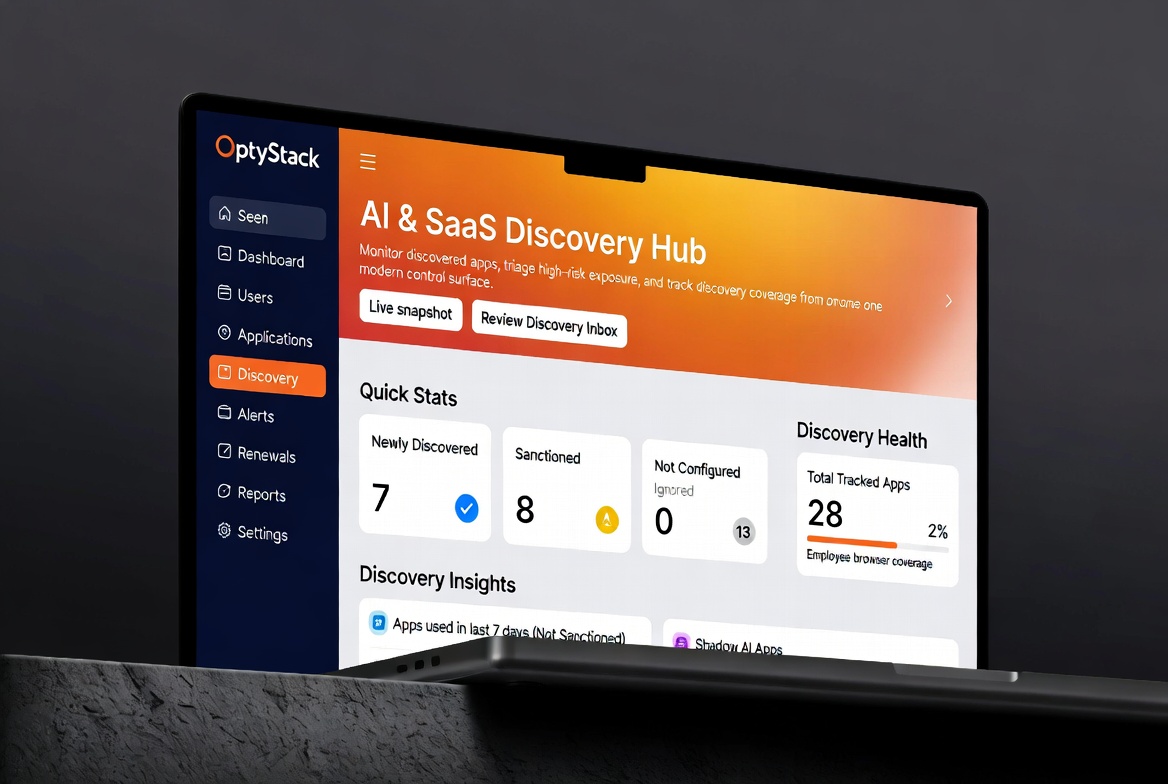
A fast-growing startup found itself running on sixty-plus tools and too many assumptions. This story shows how one operating lead used a SaaS management platform to rebuild clarity before the stack outran the company.
Leena knew something was off the moment the board deck and the finance sheet stopped telling the same story. Revenue was growing, hiring was steady, and customer churn looked manageable, yet the software line items had multiplied with a speed nobody could explain. By the time she printed the spend summary for a leadership review, the startup was paying for sixty-three applications. Some were essential. Some were experiments. Some looked familiar only because someone vaguely remembered approving them six months ago. The team had not become irresponsible overnight. It had simply grown fast enough for harmless shortcuts to turn into a blurry operating model.
When Healthy Autonomy Turns Into Stack Drift
Northstar Health had built its early culture around speed. Sales could trial tools without waiting two weeks. Marketing could buy what it needed to launch campaigns. Engineering could test products that made delivery smoother. Those freedoms helped the company move faster than larger competitors, but they also created a quiet side effect: nobody was building a living map of which apps still mattered. Every department had good reasons for its choices, yet those reasons existed in fragments. Leena could hear them in Slack, catch them in one-off meetings, and occasionally spot them on a corporate card statement, but she could not see them assembled in one place.
The startup crossed an invisible threshold when software choice stopped being local and started affecting cash discipline, support load, security reviews, and renewal timing. A design app purchased by one team now overlapped with another design app used elsewhere. A developer subscription that began as a test now renewed into the fourth month. A webinar platform remained active because no one remembered where the admin password lived. Leena was not trying to centralize every decision. She was trying to avoid a future where the company grew into waste simply because nobody had enough visibility to intervene.
The Question That Changed the Search
The inflection point came during a budget rehearsal. The CFO asked a simple hypothetical: if the company had to freeze discretionary spend tomorrow, which applications would leadership defend first and which would it cut without debate? The room did not lack opinions. It lacked confidence. One leader wanted proof of adoption. Another wanted to know when renewals were due. Someone else asked which tools had sensitive data and no clear owner. That was the moment Leena stopped thinking in terms of software inventory and started thinking in terms of operating context. A SaaS management platform only mattered if it could answer those business questions fast enough to change decisions.
She built her evaluation criteria from that meeting rather than from vendor scorecards. The platform had to reveal hidden apps, connect tools to owners, give finance a usable view of spend, and help the company act before renewals trapped them in lazy decisions. She ignored shiny enterprise flourishes that looked impressive in demos but did not shorten the path from discovery to action. The team did not need ceremony. It needed relief.
What Changed Once the Platform Arrived
The rollout began with an uncomfortable week. The platform surfaced more unknowns than anyone expected, and for a day or two that felt like failure. Then Leena realized the opposite was true. The mess had existed already; now it was finally visible. She shifted the operating rhythm quickly. Fridays became software triage day. New discoveries were matched to owners. Tools without owners were escalated. Overlapping categories were grouped for review. Renewals inside the next ninety days went to the top of the queue whether anyone felt emotionally ready to discuss them or not.
Within the first month, the tone of software conversations changed. Instead of arguing from memory, department heads looked at a shared picture of spend, access, and timing. Some conversations were still awkward, especially when teams had grown attached to tools that no longer fit the company’s current workflow. But awkward with evidence turned out to be far healthier than comfortable with assumptions. By the next leadership meeting, Leena could point to specific actions: redundant tools under review, inactive licenses flagged, and ownership gaps shrinking week by week.
What the Startup Actually Learned
The biggest lesson was not that startups need tighter controls. It was that speed without memory becomes expensive. In the early days, everyone remembered why a tool existed. Later, that context faded while invoices kept coming. The SaaS management platform did not remove the need for judgment, but it gave the company a place to store and revisit that judgment before it expired. Suddenly software decisions had a lifecycle instead of a one-time purchase moment.
Leena also learned that savings are usually a trailing benefit of better habits. Once ownership became visible and renewals were reviewed earlier, the company naturally found waste. More importantly, it stopped recreating the same problems. The platform gave leadership a story it could actually govern: what the stack was, why it existed, where risk was creeping in, and what would happen next. For a startup that had been running on partial memory, that was a more durable win than any single contract reduction.
Lessons Leena Took Forward
- Growth multiplies software decisions faster than shared memory can keep up.
- A SaaS management platform is most valuable when it answers business questions, not just IT questions.
- Weekly operating rhythm matters more than one-time cleanup efforts.
- Savings tend to follow ownership discipline and earlier renewal review.
Related Reading Inside the Same Journey
After the board meeting, Leena sent three follow-up reads to peers who were dealing with similar issues from different angles. For implementation perspective, start with Why Finance Finally Bought Into a SaaS Management Platform. For a different angle on value and governance, continue with The Hidden ROI Story Behind a SaaS Management Platform. Then round it out with How a SaaS Management Platform Supports Shadow AI Governance to see how the same SaaS management platform story changes depending on who is holding the problem.
Closing Reflection
The startup never returned to the illusion that software could manage itself. That was the real transformation. Once the stack became visible, it stopped feeling like background noise and started behaving like a part of the business that deserved stewardship. That is the enduring promise of a strong SaaS management platform: not just fewer surprises on the finance sheet, but a company that can grow without losing the plot of its own software decisions.