How to Build a Single Source of Truth for SaaS Spend Across Finance and IT
Dinesh Singh · March 20, 2026

Create a unified view of applications, owners, spend, and usage with OptyStack so finance and IT can make faster, better software decisions.
Most software organizations do not suffer from a total lack of data. They suffer from too many partial truths. Finance can see invoices, IT can see some administrators and user counts, procurement can see negotiated terms, and department leaders can explain local workflows. What is missing is a shared operating picture that allows all of those perspectives to line up.
OptyStack helps create that shared picture by centralizing SaaS discovery, usage insight, spend visibility, department breakdowns, and optimization signals in one platform. A true source of truth reduces reporting friction, speeds up decision-making, and gives leaders a far more reliable baseline for budget planning and governance.
Why fragmented software data causes bad decisions
When teams operate from separate systems, they often answer the same question differently. Finance may think a vendor is strategic because the invoice is large, while a department may know usage is declining. IT may believe an app is contained, while procurement may be unaware that a second contract exists in another business unit. These disconnects slow decisions and create avoidable waste.
Fragmentation also makes executive reporting hard to trust. If leadership asks for total spend by department, renewal exposure, or software concentration risk, teams may have to manually assemble numbers from several places. That work takes time and still leaves uncertainty around completeness.
- Different teams hold different fragments of the truth.
- Portfolio decisions rely on stale or manually reconciled data.
- Leadership reports are difficult to reproduce consistently.
What should be included in a real source of truth
A source of truth should not just be a list of vendors. It needs to connect applications to their owners, spending patterns, department context, usage quality, and renewal timing. Without that relationship layer, teams still end up bouncing between systems to understand what action makes sense.
OptyStack is especially useful because it organizes these inputs around practical decision-making. Leaders can see where the money goes, which teams are driving spend, whether the seats are being used, and where optimization opportunities are emerging.
- Application inventory with normalized ownership.
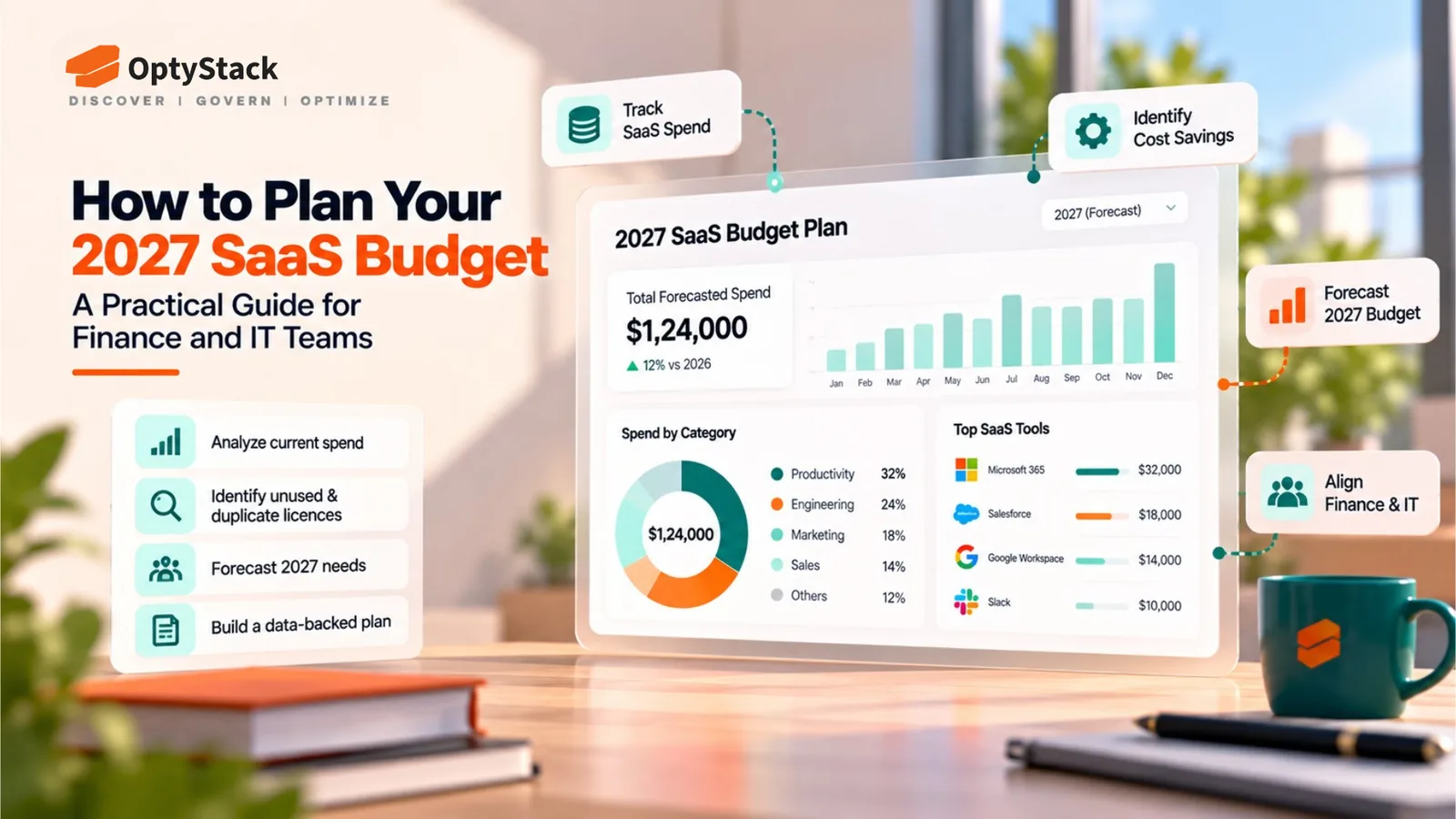
- Spend by app, department, and category.
- Usage versus license data.
- Renewal and alert visibility.
- AI-powered recommendations tied to measurable savings opportunities.
How OptyStack supports cross-functional alignment
Finance and IT often want the same outcome but prioritize different risks. Finance wants cost efficiency and forecast confidence. IT wants visibility, control, and supportable tooling. OptyStack works well in that environment because it gives both sides a common platform without forcing them to abandon their functional lens.
That alignment matters during every major software decision. When both groups can review the same application inventory, usage signals, and spend breakdowns, it becomes easier to agree on whether to expand, renegotiate, consolidate, or retire a tool. The conversation shifts from opinion to evidence.
- Finance gets clearer budget and ROI views.
- IT gets stronger visibility into adoption and governance.
- Department leaders get context for the tools their teams rely on.
Standardizing the way software is classified
A source of truth is only as useful as its taxonomy. Companies need a consistent way to classify applications by category, department, owner, and business purpose. Without that discipline, dashboards may look complete while still hiding duplication or misallocated budgets.
OptyStack helps by giving teams a structure for categorization and reporting. Once spend can be viewed by department and category, leaders are better able to compare similar tools, identify concentration areas, and understand where software complexity is growing fastest.
- Use shared categories to group similar tools.
- Assign clear owners at the app and department level.
- Track the same classification model in monthly and quarterly reporting.
What changes after the source of truth is in place
The most immediate improvement is speed. Reviews that once required several meetings and spreadsheet merges become far easier because the baseline information is already assembled. Teams can spend more time debating the right action and less time debating which number is correct.
The second improvement is accountability. Once ownership, timing, and opportunity are visible, it becomes much harder for redundant tools, stale seats, or poor renewal decisions to hide inside ambiguity. OptyStack gives leaders a practical framework for maintaining that clarity over time.
- Budget planning becomes more evidence-based.
- Optimization reviews become faster and more repeatable.
- Renewal discussions happen with stronger context and fewer surprises.
- Leadership gains a more credible picture of the software portfolio.
Final takeaway
Building a single source of truth for SaaS spend is not a reporting vanity project. It is the foundation for better budgeting, better governance, and better software decisions across the company.
OptyStack helps make that foundation practical by connecting discovery, spend, usage, and optimization into one shared operating view for finance, IT, and business leaders.