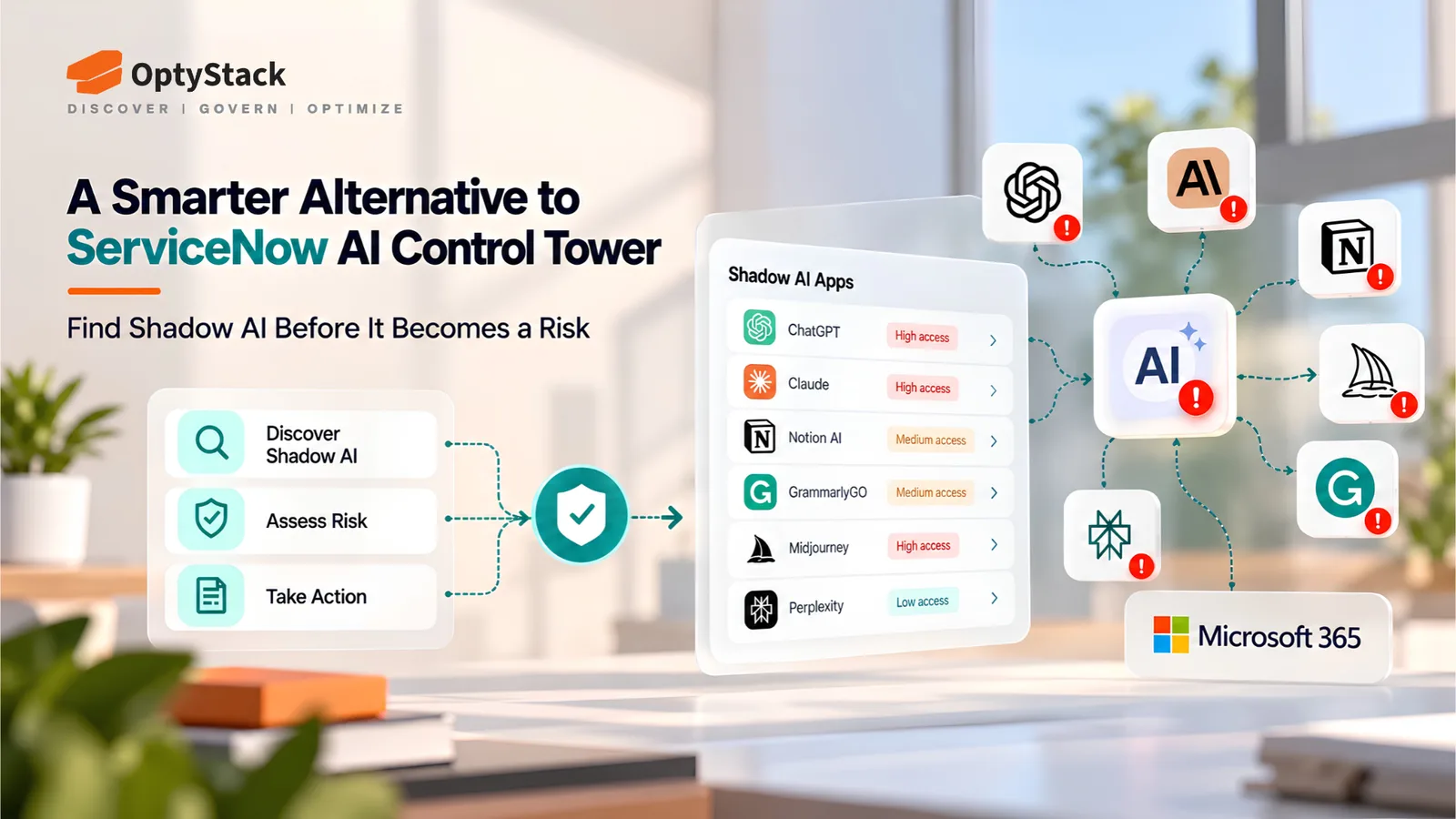
Shadow IT Discovery: How OptyStack Helps Teams Find Hidden SaaS Spend
Amit Dangi · March 17, 2026

See how OptyStack helps businesses uncover shadow IT, classify risk, and turn hidden software spend into a manageable optimization workflow.
Shadow IT is not just a security concern. It is a financial blind spot, a governance problem, and a major source of software duplication. Teams often adopt tools with good intentions because they are trying to move quickly, solve a local problem, or avoid waiting for a formal procurement process. Over time, those decisions compound into overlapping vendors, hidden renewals, and untracked departmental spend.
OptyStack helps organizations bring this activity into the light by combining SaaS discovery, spend visibility, and usage insight in one place. Instead of treating shadow IT as a purely punitive issue, the platform helps companies understand what was adopted, why it was adopted, and whether the tool should be approved, consolidated, downgraded, or removed.
Why shadow IT keeps growing
Modern software is easy to adopt. A credit card, a free trial, or a self-serve plan is often enough to get a team moving. That convenience is useful for execution, but it also means central teams lose visibility over which tools are entering the environment and how much they cost once they expand.
The problem accelerates when business units purchase similar solutions for slightly different use cases. Marketing may buy one AI writing tool, product may buy another, and customer success may subscribe to a third. Each tool may look reasonable in isolation, yet together they create unnecessary cost, fragmented workflows, and inconsistent governance.
- Employees can buy software long before a formal vendor review occurs.
- Free trials often become paid subscriptions without central visibility.
- Departmental autonomy can lead to overlapping tool categories.
The real business cost of hidden applications
When leaders talk about shadow IT, they often focus on data access, compliance, and credential sprawl. Those concerns matter, but the financial dimension is just as important. Hidden applications distort budgeting, weaken vendor leverage, and create surprise renewals that are difficult to unwind once usage grows.
They also reduce the quality of portfolio decisions. If finance does not know the full software footprint, it cannot accurately assess whether a planned budget increase is necessary, whether a department is already over-provisioned, or whether a proposed new tool duplicates something already in use elsewhere.
- Unexpected renewals appear without time for negotiation or cancellation.
- Duplicate functionality increases cost without improving outcomes.
- Leadership reporting becomes incomplete because the software baseline is inaccurate.
How OptyStack discovers SaaS tools across the stack
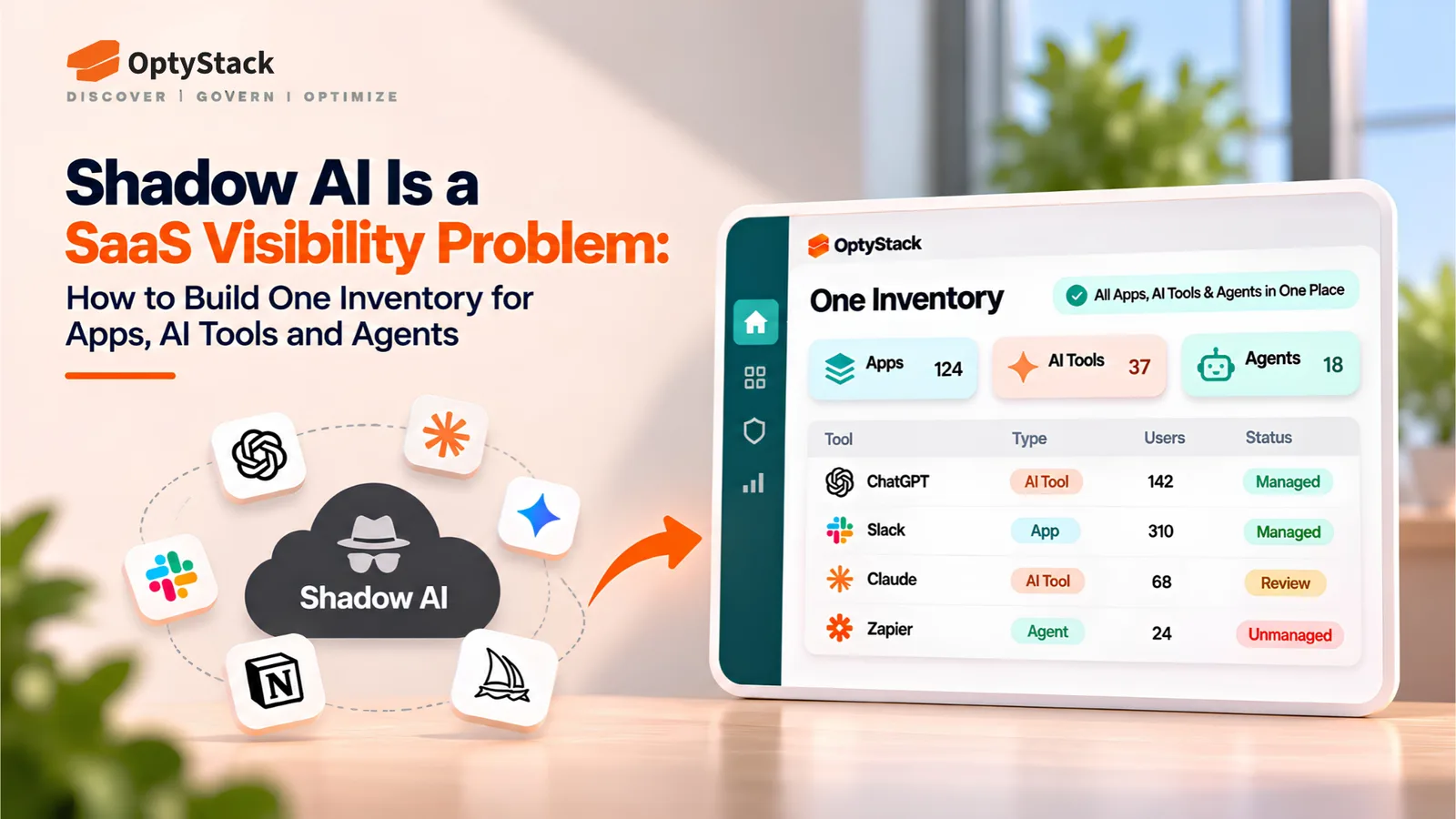
OptyStack is designed to create a more complete picture of the environment by connecting the apps, spending signals, and administrative data that reveal software adoption. As teams connect their stack, the platform can surface the applications in use, show how they are distributed across teams, and highlight areas where visibility was previously weak.
This matters because discovery is only useful when it turns into action. OptyStack does not stop at a list of vendors. It gives context around spend, usage, department ownership, and optimization signals so teams can quickly separate approved tools that need cleanup from truly unmanaged applications that require escalation.
- Centralizes discovery across a growing set of connected applications.
- Maps spend and usage context to newly identified tools.
- Makes it easier to assign ownership and next steps for each app.
A practical triage model for newly discovered tools
Not every shadow IT finding should be treated the same way. Some tools are valuable and simply need proper approval. Others are lightly used and should be removed before they spread. A few may indicate a larger workflow gap that the current stack is not solving well. OptyStack supports a triage process by making the relevant evidence visible at the moment of review.
A simple triage model helps organizations respond quickly without creating friction. Teams can evaluate business need, overlap, usage level, renewal timing, and access risk, then route each application into an appropriate resolution path. That turns discovery into governance rather than just another backlog.
- Identify whether the tool fills a unique business need or overlaps with an approved app.
- Review usage intensity, seat count, and spend trend.
- Assess data sensitivity, access model, and renewal timing.
- Decide whether to approve, consolidate, downgrade, or remove the app.
- Document an owner and recheck the decision in the next operating review.
How to reduce shadow IT without slowing teams down
The wrong response to shadow IT is to turn governance into a bottleneck. If the official path to software approval is slow and opaque, people will keep bypassing it. The better approach is to improve visibility, speed up decision-making, and make it obvious that approved tools will get proper support, security review, and budget clarity.
OptyStack helps by making software conversations evidence-based. Instead of arguing about whether a tool should exist, leaders can discuss actual spend, actual adoption, and actual overlap. That allows companies to protect agility while still keeping the stack coherent and cost-effective.
- Use discovery insights to simplify approval and exception workflows.
- Standardize preferred tools for common categories.
- Review new spending and anomalies before they scale into renewals.
- Educate teams using real examples of duplication and avoidable waste.
Final takeaway
Shadow IT will always exist to some degree in fast-moving companies, but it does not have to remain invisible or expensive. Once the environment is visible, the problem becomes manageable.
OptyStack gives finance and IT teams the visibility they need to discover hidden tools, reduce duplication, and build a governance model that protects speed while improving cost control.