Shadow AI: Discovering Unmanaged LLMs, Copilots, and Browser Tools
Neha Singh · March 26, 2026

Generative AI spread faster than policy. Learn categories of shadow AI, signals that expose usage, and how to triage risk without stifling legitimate experimentation.
Shadow AI is shadow IT for the generative era: employees use consumer chatbots, plug-ins, and API keys to move faster, often past data-handling rules. Unlike traditional SaaS, many AI tools leave minimal SSO footprints and process prompts that may include confidential code or customer data.
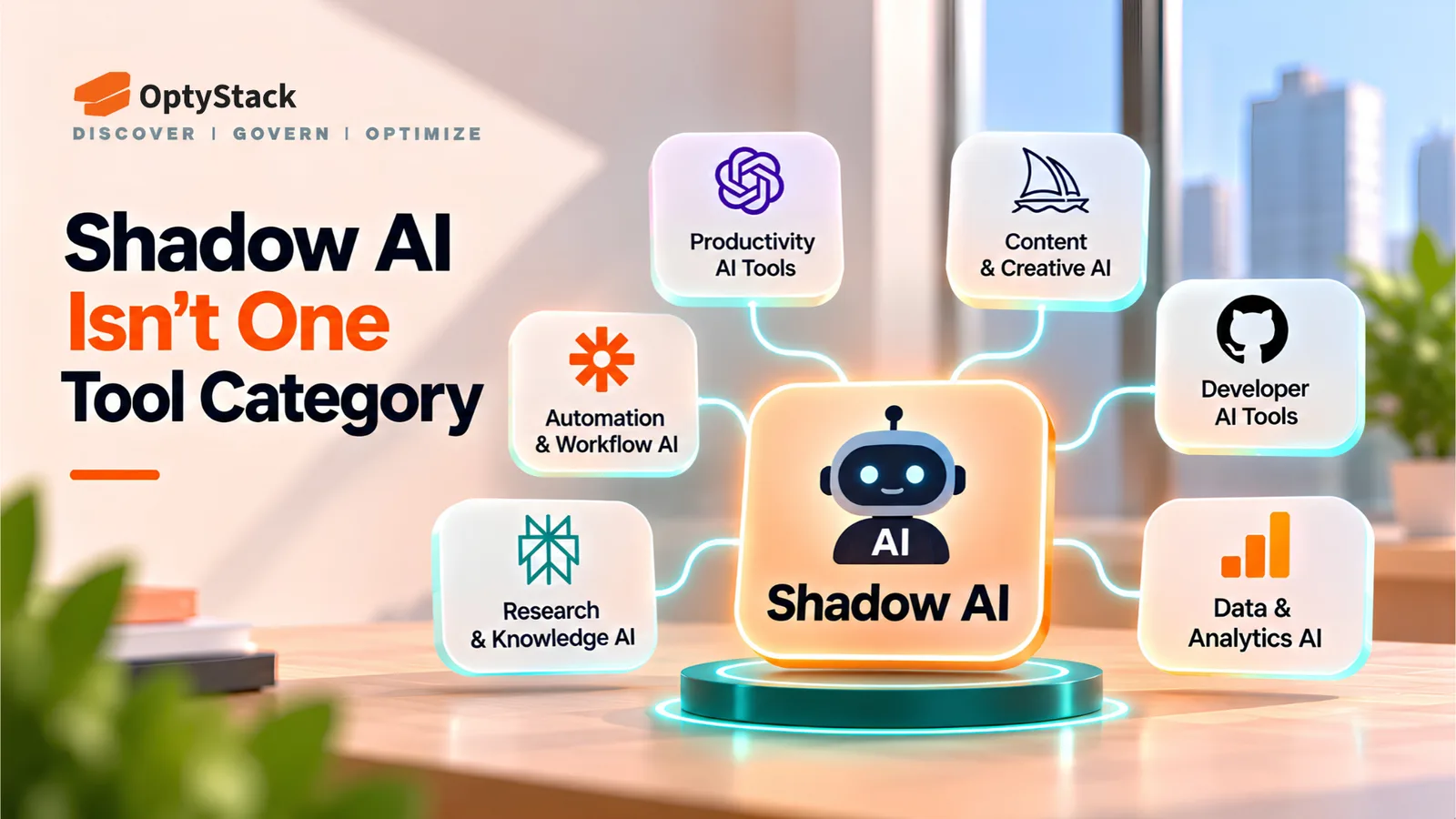
Common categories
Browser extensions that summarize pages or rewrite email. Standalone web UIs accessed with personal accounts. Embedded AI inside design, dev, or sales tools. Direct API usage from scripts or low-code workflows. Each channel needs different detection strategies.
Signals that help
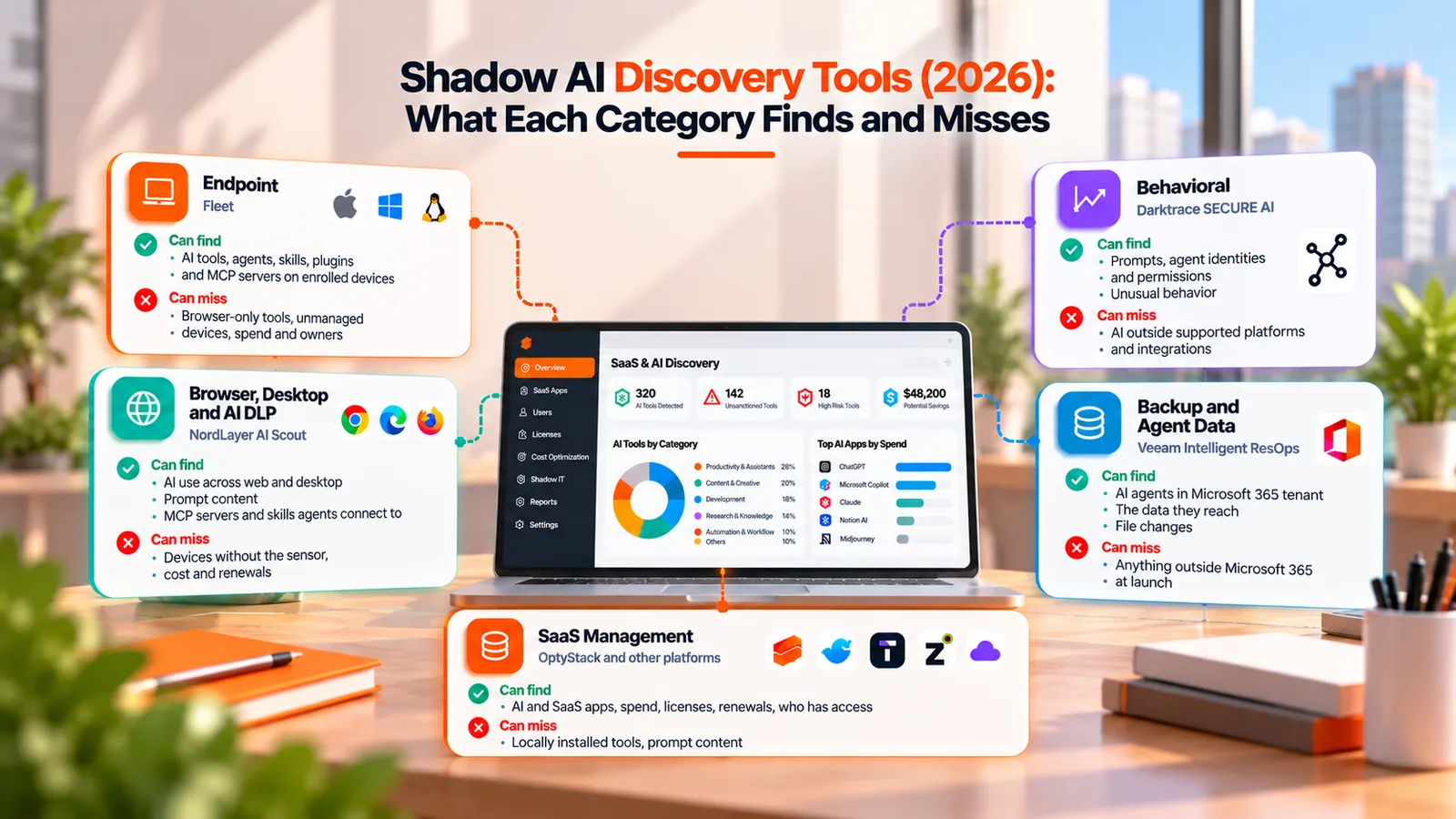
DNS and proxy categories for known AI domains (with privacy guardrails), egress monitoring for unusual API traffic, extension inventories, and security awareness reports. Combine with spend: many AI vendors first appear as small recurring card charges.
Governance without blocking innovation
Publish an approved AI catalog with clear data rules. Offer sanctioned alternatives for common use cases. For experimental teams, use isolated environments or redacted data policies. Measure adoption of approved tools and time-to-remediate for high-risk unapproved usage.
OptyStack emphasizes AI-specific discovery alongside traditional SaaS so security and enablement teams share one prioritized backlog.