Beyond the Invoice: Unveiling the True Cost of SaaS Ownership
Nisha Singh · March 4, 2026
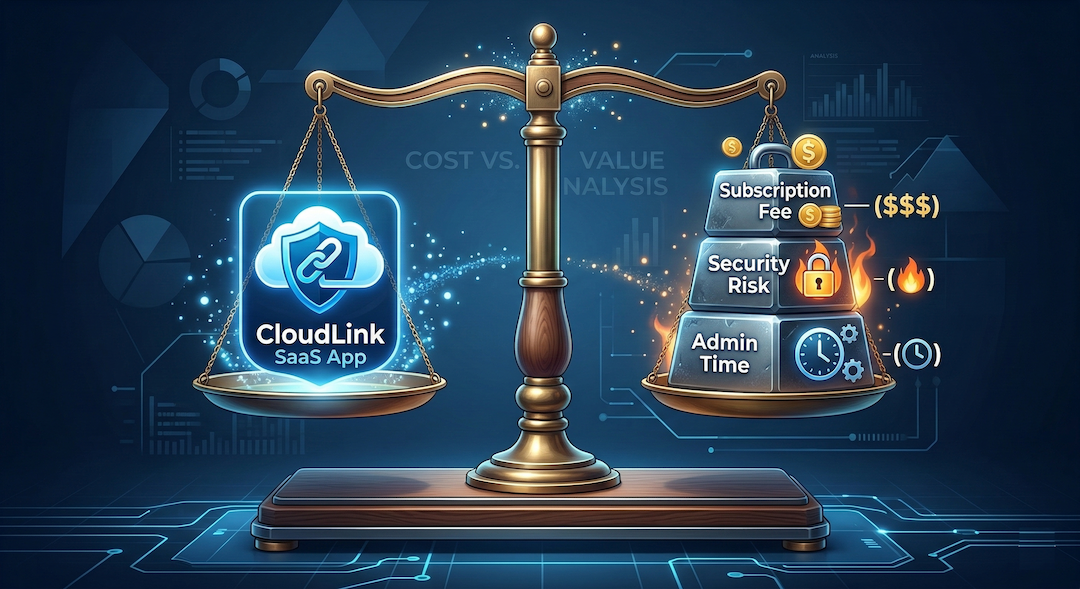
When evaluating SaaS ROI, most IT and Finance leaders stop at the monthly subscription fee. But the invoice is an illusion. Beneath the surface lies a massive accumulation of indirect costs—from administrative burden and security vulnerabilities to wasted licenses—that are silently draining your budget. Here is how to calculate the true cost of your SaaS stack.
When a department head requests a new SaaS application, the justification usually looks something like this: "It’s only $20 per user per month. For our team of 50, that’s just $1,000 a month. The productivity gains will easily pay for it."
On paper, the math seems flawless. It is the classic SaaS value proposition: low upfront costs, predictable operational expenses, and immediate deployment. However, modern IT and Finance leaders know that this calculation is fundamentally incomplete.
The reality of SaaS procurement is that the actual cost of owning, maintaining, and securing a cloud application goes far beyond the vendor’s invoice. If you are only tracking the subscription fee, you are operating with a massive blind spot.
To truly understand the financial impact of your software stack, we have to look beneath the surface and examine the Total Cost of Ownership (TCO) in the SaaS era.
The Iceberg Illusion: What You See vs. What You Pay
Think of your corporate SaaS ecosystem like an iceberg. The subscription fee is the visible tip above the waterline. It is easily quantifiable, neatly categorized in your General Ledger, and predictable.
But beneath the surface lies the massive, unseen bulk of indirect costs. These hidden weights drag down your operational efficiency and quietly inflate your IT budget year over year. These costs generally fall into three heavy categories: Administrative Time, Security & Compliance Risk, and Application Waste.
1. The Hidden Weight of Administrative Time
Software does not manage itself. Every new application introduced into your corporate environment creates a new maintenance burden for your IT and Operations teams. This administrative "tax" is paid in the highly expensive currency of engineering and IT support hours.
The Onboarding Maze: When a new employee joins, they don't just need an email address. They need access to Slack, Salesforce, Jira, Figma, Zoom, and potentially dozens of role-specific micro-apps. If IT is manually provisioning these accounts, configuring permissions, and routing approval workflows, that is hours of labor per hire.
The Offboarding Liability: When an employee leaves, offboarding is a race against time. Manually logging into 40 different admin consoles to revoke access, transfer data ownership, and reclaim licenses is tedious and prone to human error. Every missed application is both a security risk and a wasted license fee.
The Helpdesk Ticket Vortex: "I forgot my password." "Can you grant me access to this project board?" "Why isn't my integration syncing?" The proliferation of decentralized SaaS apps translates directly to a spike in tier-1 support tickets. If an app isn't tied to your Single Sign-On (SSO) provider, your expensive IT personnel are effectively functioning as high-paid password resetters.
The TCO Impact: To calculate this, estimate the number of hours IT spends managing a specific app monthly, multiplied by the hourly loaded rate of your IT staff. Suddenly, that "$20/user" app might actually be costing you $45/user when administrative overhead is factored in.
2. The Silent Tax of Security and Compliance
A new SaaS tool is a new attack vector. The ease with which employees can adopt new software—often by simply swiping a corporate card or signing up for a "freemium" account—has given rise to Shadow IT.
When IT lacks visibility into the applications processing corporate data, the financial risks become existential.
Vetting and Procurement Delays: For sanctioned apps, the security review process takes time. Assessing a vendor's SOC 2 compliance, reviewing their data architecture, and negotiating Data Processing Agreements (DPAs) requires input from InfoSec, Legal, and Procurement.
Overscoped API Permissions: Employees frequently grant third-party applications broad access to your core systems (like Google Workspace or Microsoft 365) via OAuth. A seemingly harmless calendar plugin might have read/write access to your entire company's email infrastructure. Auditing and remediating these connections is a massive, ongoing labor cost.
The Cost of a Breach: If an unvetted, Shadow IT application suffers a data breach that exposes your customers' PII, your organization is liable. The cost of incident response, regulatory fines (like GDPR or CCPA penalties), and reputational damage must be considered part of the risk profile of unmanaged SaaS.
3. Integration Friction and Data Silos
"Best-of-breed" software is great, but only if the tools talk to each other. When an organization adopts highly specialized SaaS apps that do not natively integrate, data becomes siloed.
To bridge these gaps, companies are forced into two expensive workarounds:
Human Middleware: Employees spend hours manually exporting CSVs from one system and uploading them to another, or manually copy-pasting data. This destroys the productivity gains the software was supposed to deliver.
Custom Development & Middleware: IT is tasked with building and maintaining custom API integrations, or the company has to purchase expensive middleware platforms (like Zapier or MuleSoft) simply to get their existing tools to communicate.
4. Application Waste: Paying for Nothing ($$$)
Finally, the most direct hidden cost is the money you are spending on software that provides zero value. Because SaaS is intangible, it is incredibly easy to lose track of what you actually own.
Zombie Accounts: Licenses assigned to former employees or contractors that were never decommissioned.
Under-utilization: Paying for premium, top-tier enterprise licenses for users who only log in once a month to view a dashboard.
Functional Overlap: Paying for Asana for Marketing, Jira for Engineering, and Monday.com for HR. You are paying three different vendors for project management capabilities, missing out on massive volume discounts and creating internal silos.
Recalculating Your TCO: The Path Forward
If you are a CIO, CFO, or IT Director, you cannot manage your budget effectively without factoring in these hidden weights.
The true formula for SaaS TCO looks like this: True SaaS TCO = (Subscription Fees) + (IT Admin & Support Labor) + (Integration Costs) + (Security/Compliance Mitigation) + (Wasted Spend/Shelfware)
You cannot gather this data using a static spreadsheet. To uncover the true cost of your SaaS ownership, you need continuous, automated visibility into exactly what applications are running in your environment, who is using them, and how much time they are demanding from your IT team.
By implementing a centralized SaaS Management Platform, you can pull these hidden costs from beneath the surface, automate the manual admin work, and finally hold your software stack financially accountable.